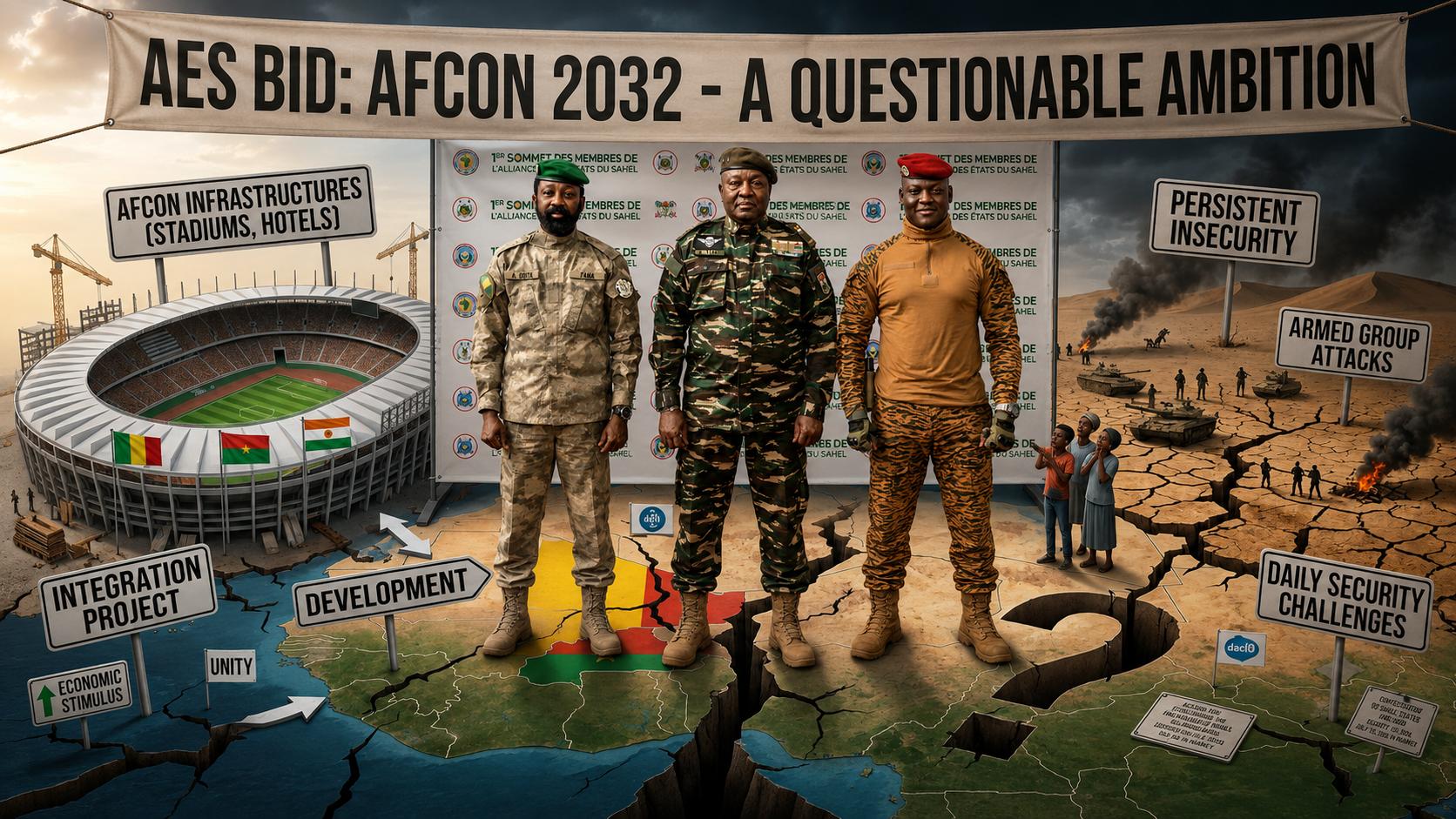
Burkina Faso, Mali and Niger have joined forces to bid for the 2032 Africa Cup of Nations (AFCON), positioning their candidacy as a testament to regional unity under the Alliance of Sahel States (AES). The move is framed as a bold statement of continental solidarity, yet it raises pressing concerns about whether these nations currently meet the essential prerequisites for hosting Africa’s premier football tournament.
Hosting the AFCON is no small feat—it demands far more than stadium construction or cosmetic upgrades. The event requires an environment capable of safeguarding players, officials, media personnel, spectators, and the anticipated influx of international visitors over several weeks. This is where the Sahel trio’s bid faces intense scrutiny.
security remains the unmet challenge
The military-led governments in Burkina Faso, Mali, and Niger ascended to power on promises to restore security and reclaim territory from armed factions. Yet, years after their respective coups, the reality on the ground tells a different story. Violent attacks continue to plague civilians, military personnel, and critical infrastructure across all three nations, with entire regions enduring persistent insecurity.
For critics, the timing of this bid seems misplaced. In a climate where even local populations struggle to move freely without fear, the feasibility of welcoming thousands of foreign visitors remains questionable. The fundamental question lingers: can these governments first ensure the safety of their own citizens before extending that guarantee to the world?
logistical hurdles and financial strain
The demands of an AFCON are exacting. Organizers must deliver robust road and air transport networks, a vast hotel capacity, advanced medical facilities, and an ironclad security apparatus. Yet, the Sahel states are already stretched thin, diverting substantial resources toward countering insurgencies. The financial and operational burden of meeting AFCON standards could further strain already fragile economies.
International credibility is another critical factor. Federations, sponsors, and broadcasting partners prioritize stability above all else when evaluating a bid. Persistent violence or instability could deter potential stakeholders, casting doubt over the viability of the Sahel’s joint proposal.
a test of governance and priorities
The military transitions in Burkina Faso, Mali, and Niger were justified by the urgent need to address rampant insecurity. However, the ongoing violence in multiple regions has eroded public confidence in the effectiveness of these regimes. Citizens, who once pinned their hopes on swift security improvements, now face prolonged uncertainty.
Many argue that before vying for the 2032 AFCON, these nations should focus on demonstrating tangible progress in security, governance, and stability. A continental tournament is a powerful catalyst for development, but its success hinges on the ability to provide unwavering safety to both participants and locals alike. Without this foundation, the bid risks being perceived as a distraction from more pressing national imperatives.
The road ahead is fraught with challenges. While a successful AFCON bid could unite the Sahel and showcase its resilience, the path to securing such an event remains clouded by unresolved crises. Until security and stability are firmly established, the dream of hosting Africa’s greatest football spectacle may remain just that—a dream.