Bamako’s $1 billion investment in Russian military support under scrutiny
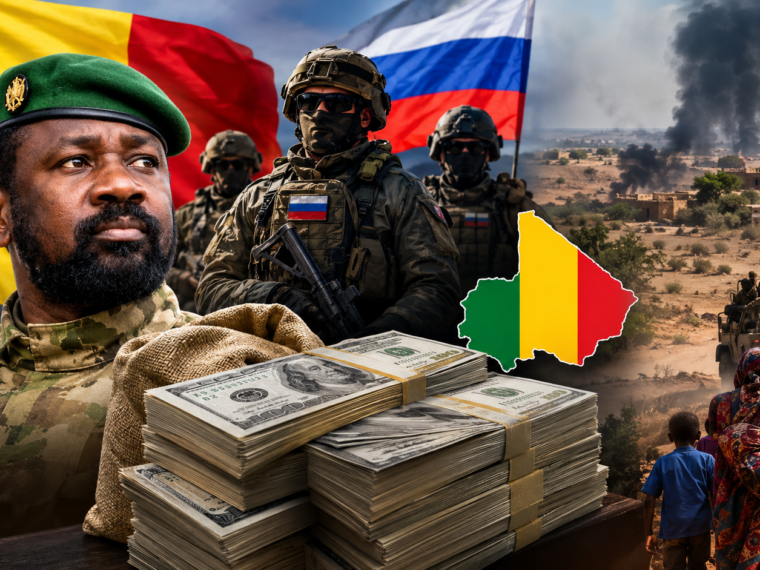
Nearly one billion dollars. That is the staggering figure Bamako has allocated to its military partnership with Russian forces, first through Wagner-linked operatives and later under the Africa Corps framework. With an estimated monthly cost of $10,000 per fighter, this expenditure has placed immense financial pressure on Mali’s transitional government. The central question now looms large: after such a substantial investment, what tangible security outcomes can Bamako demonstrate to justify this strategic pivot?
From political promise to military reality
By severing ties with Western partners particularly France the Malian authorities pledged to reclaim control over the country’s security landscape. The shift toward Russian military cooperation was framed as a sovereign choice, one that would strengthen national defense capabilities and restore state authority across Mali’s embattled regions. Yet, the true measure of any security strategy lies not in political rhetoric but in measurable results: the protection of civilians, the security of supply routes, the reduction of armed attacks, and the restoration of public services in conflict zones.
The billion-dollar expenditure is not merely a military line item; it represents a diversion of public funds that could have otherwise bolstered infrastructure, healthcare, education, or economic development in the nation’s most vulnerable areas. While no military partnership can promise immediate victory against entrenched insurgencies, the scale of this investment demands accountability. The Malian government must now prove that these resources have yielded tangible improvements in security for its citizens.
Africa Corps and the limits of foreign military support
The rebranding of Russian forces from Wagner to Africa Corps signals a structural shift in Moscow’s African military engagements. However, a change in nomenclature does not inherently translate into improved battlefield performance or enhanced coordination with Malian troops. The critical evaluation must focus on whether this evolution has delivered:
More effective intelligence-sharing and operational coordination with national forces
Stronger protection for local communities and critical infrastructure
A measurable reduction in armed group activity and civilian casualties
Sustainable territorial control without over-reliance on foreign fighters
Foreign military support can provide specialized capabilities, but it cannot substitute for a robust, self-sufficient national army. If Mali’s security continues to hinge on costly external partnerships, the government’s claims of strategic autonomy must be critically reassessed.
The transparency deficit in Mali’s security spending
The Malian authorities have justified their pivot toward Russia by emphasizing national sovereignty, the diversification of military partnerships, and a break from past dependencies. Yet, sovereignty is not merely about choosing allies; it is also about transparency, accountability, and the ability to evaluate outcomes without bias. Citizens have a right to know:
The exact financial terms of the Russian military agreement
The specific missions assigned to foreign forces
The measurable security improvements achieved since their deployment
The safeguards in place to protect civilian populations in conflict zones
Without clear answers, the government risks undermining its own credibility. When billions of dollars are at stake, the absence of verifiable results transforms a strategic choice into a liability.
Security for whom? The human cost of unmet expectations
The ultimate test of any security strategy is the lived experience of the people it claims to protect. For Malians living in conflict-affected regions, the partnership with Russian forces must translate into tangible improvements:
Safe passage for farmers to tend their fields
Uninterrupted trade along critical supply routes
The ability of displaced families to return home
A perceptible decline in armed attacks on civilians
If these conditions remain unmet, the government must explain why a billion-dollar investment has failed to deliver the promised dividends. A final assessment will require verified data on expenditures, troop deployments, contract durations, and pre- and post-intervention security metrics. Without such clarity, the $1 billion figure risks becoming a symbol of unfulfilled promises rather than a catalyst for progress.
The billion-dollar question: has Mali secured its future?
This debate transcends the mere presence of Russian forces in Mali. It challenges the transitional government’s ability to convert a diplomatic reorientation into concrete benefits for its people. Changing partners does not, in itself, constitute a security victory. It is a political decision whose success must be measured in lives protected, territories stabilized, and trust restored.
To frame this partnership as a success without demonstrating tangible results would be a disservice to the Malian people. Sovereignty cannot be reduced to slogans, nor can military cooperation be treated as an end in itself. The true cost of this strategy will not be determined by rhetoric but by the reality on the ground: How many lives have been saved? How many communities have been secured? And how much of Mali’s future has been safeguarded?
These are the questions the authorities must answer not with speeches, but with evidence.
By Agnès Mvogo — Journalist