Russia’s Africa Corps steps in as Sahel states face harsh financial realities
Following the forced departure of Western troops from Mali, Burkina Faso, and Niger, the military juntas in these countries built their legitimacy on reclaiming sovereignty. Yet, the rise of the Africa Corps—a direct offshoot of the Wagner Group—has replaced one costly dependency with another. How much is this alliance with Moscow costing these nations, not just in money, but in security and human lives?
The promise of freedom vs. the weight of new obligations
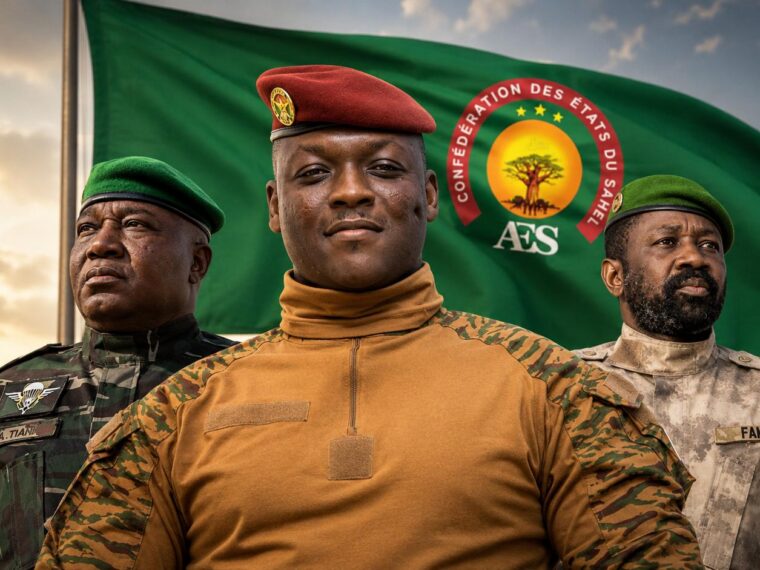
Between 2021 and 2023, coups in Mali, Burkina Faso, and Niger were framed as a necessary break from Western influence. The presence of French and allied forces was framed as a colonial relic that failed to curb the spread of jihadist groups. By September 2023, the Alliance of Sahel States (AES) formalized this shift with a mutual defense pact, reinforcing the juntas’ domestic credibility.
However, the reality on the ground tells a different story. Far from achieving true independence, these regimes now rely heavily on Russian military support—an arrangement that carries significant financial and operational consequences.
Mali’s heavy burden: cash payments and combat risks
Mali has emerged as the most revealing case of this transition. Data from Africa Defense Forum shows Bamako has spent over $1 billion on Wagner and now the Africa Corps since 2021, averaging nearly $10 million per month. Unlike Burkina Faso and Niger, where Russian involvement is mostly limited to training, Africa Corps fighters have taken active combat roles in Mali.
Despite these massive payments, no major mining concessions have been officially transferred to Russian forces, according to investigations by The Sentry. This means the Malian public treasury is bearing the full financial weight of this military partnership without economic returns.
Security gains elusive despite Russian boots on the ground
The Africa Corps, currently estimated between 1,000 and 1,500 personnel, has struggled to stabilize Mali’s security situation. Reports indicate that since a retreat from the Kidal region in April 2026, rebel groups have reclaimed key towns such as Tessalit, Anéfis, and Aguelhok. Further south, near Gao and Ber, state control continues to weaken, with rural areas slipping from government authority.
Such setbacks have led think tanks like the Montaigne Institute to suggest that a broader political negotiation may soon be inevitable.
Sahel states risk becoming de facto Russian protectorates
International observers warn that this pattern of dependency could turn Sahel nations into ‘virtual protectorates.’ The International Crisis Group highlights a growing gap between political sovereignty—the freedom to choose allies—and genuine operational autonomy, which has significantly eroded.
While juntas have diversified their military suppliers by turning to Turkey, Iran, or China, outsourcing combat operations to foreign forces leaves them vulnerable. This shift echoes Cold War interventions in Angola and Ethiopia, where regime survival hinged on external backers like the Soviet Union or Cuba. When that support vanished, underlying state weaknesses became impossible to ignore.
Can Sahel states break the cycle of external dependence?
The future of the Sahel no longer hinges solely on severing ties with the West. The real test lies in whether these regimes can develop truly autonomous national defense capabilities—without merely exchanging one patron for another. With African Corps operations failing to secure the region and financial costs mounting, the question remains: will sovereignty ever be more than a political slogan?