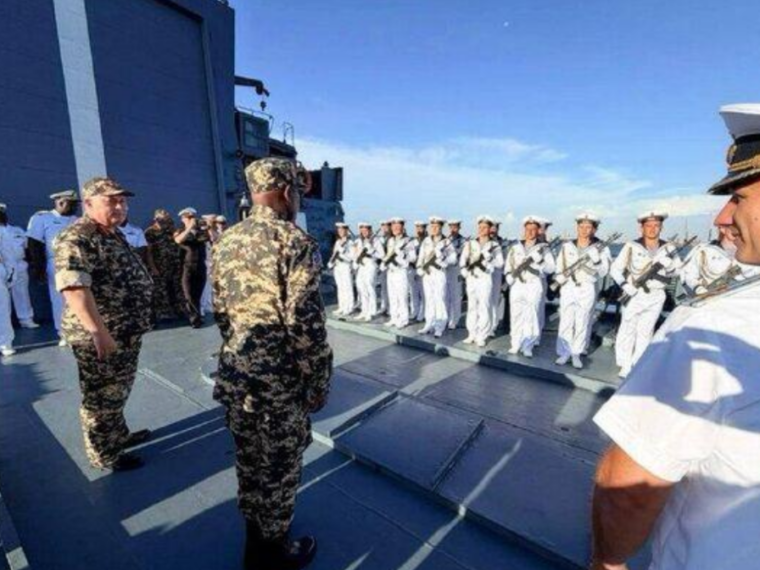
The arrival of a Russian naval vessel in Namibia’s key maritime hub has sparked international attention, but the full implications go beyond its stated training mission. On October 20, the Baltic Fleet training ship Perekop made port at Walvis Bay, a move officially framed as routine maritime education for future naval officers. With seven days of transit covering over 1,800 nautical miles, the vessel’s journey reflects Russia’s growing naval engagement across Africa.
More than a training exercise
While Moscow presents the Perekop’s mission as strictly educational—focusing on navigation exercises and long-distance route planning—the visit occurs amid rising global naval competition. A military port call rarely serves a single purpose; it frequently combines formal training with diplomatic signaling and strategic positioning.
Russian authorities emphasize the ship’s educational role, with cadet officer training forming a documented component of the voyage. However, naval exercises also serve dual functions: they facilitate international military diplomacy while allowing fleets to operate in distant waters. The visit included meetings between Russian naval officers, Namibian military representatives, and embassy officials, indicating active engagement at multiple levels.
No public evidence suggests the development of a covert military agreement. Instead, the interactions highlight existing cooperation frameworks between Russia and African nations in defense and maritime security.
Why Walvis Bay matters strategically
Namibia’s Walvis Bay port occupies a critical position on Africa’s Atlantic coast, serving as a logistics hub for southern African maritime traffic. Beyond its geographical advantages, the facility offers essential services such as refueling, maintenance, and emergency support—capabilities Moscow may seek to leverage for future naval operations.
Analysts tracking Russian military engagement note that while Africa lacks permanent Russian naval bases, provisional port access and routine escales help extend operational reach. Current observations confirm no permanent agreement exists for Russian facilities at Walvis Bay, though the port’s strategic location could facilitate future deployments.
Diplomatic dividends
The visit’s political significance extends beyond technical training. For Russia, maritime diplomacy reinforces partnerships in defense and military education, aligning with broader efforts to strengthen influence across Africa. These interactions serve multiple purposes: they maintain visibility in key regions, foster military-to-military relationships, and reinforce Russia’s status as a global power despite economic constraints.
For Namibia, the engagement demonstrates a foreign policy choice to diversify international partnerships. African states increasingly leverage global rivalries to secure development assistance, defense cooperation, and trade advantages—positioning Walvis Bay as a potential node in evolving security dynamics.
Geopolitical signals and unanswered questions
In a period of heightened tensions with Western nations, Moscow’s naval presence in Africa acts as both practical engagement and geopolitical messaging. The Perekop’s arrival reminds observers of Russia’s continued ability to project power beyond traditional maritime zones.
Analysts caution against interpreting this single event as definitive proof of anti-Western strategy. While the timing coincides with broader international rivalries, no public evidence confirms the visit was designed as a direct challenge to Western interests in Africa. The potential symbolic value remains secondary to measurable indicators: future port calls, formal agreements, or joint military exercises.
What comes next?
Military observers will carefully monitor developments following the Perekop’s departure. Key indicators include:
- The frequency of future Russian naval visits to Walvis Bay
- Any signed agreements regarding port access or logistical support
- Concrete plans for bilateral naval exercises or training programs
- The presence of combat vessels or dedicated logistical support ships
Without additional developments, the visit should be read primarily as a diplomatic and military engagement—routine in structure but significant in context. The true measure of its strategic impact will emerge in the months following the ship’s departure, when patterns beyond a single training mission may become discernible.