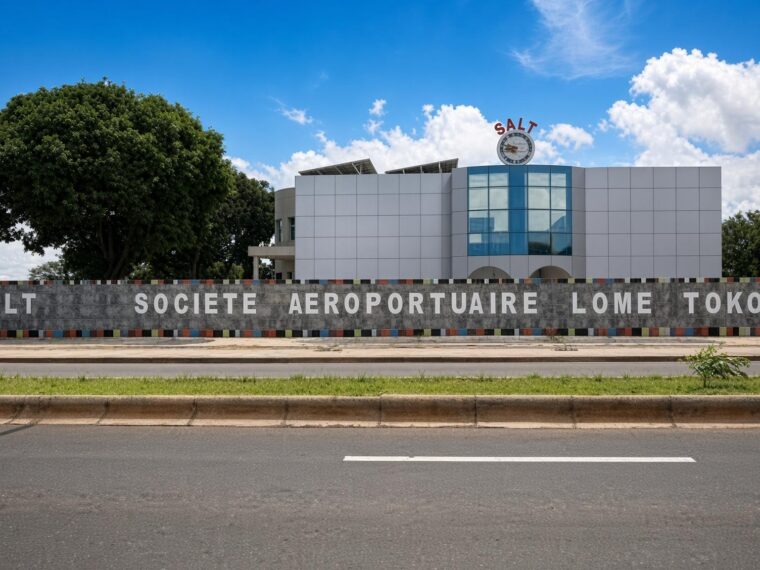
Togo has made a decisive pivot in airport management strategy following a crippling sanitation failure at Lomé’s international gateway. After years of mismanagement by the state-run Société aéroportuaire de Lomé-Tokoin (SALT), authorities have concluded that only an international operator can restore the airport’s credibility and functionality.
From public failure to private takeover
The turning point came in October 2026 when a catastrophic sewage overflow in the departure hall exposed the true state of the airport’s dilapidated infrastructure. What began as a minor technical explanation from management quickly spiraled into a viral scandal, with images circulating online depicting what travelers described as a “fecal rain” in the terminal. The incident became a symbol of SALT’s chronic neglect of basic maintenance and hygiene standards.
Public confidence evaporated overnight. Airlines and passengers alike began questioning how an airport positioning itself as West Africa’s next commercial hub could operate with such fundamental flaws. The government’s admission that it could no longer manage the facility to international standards set the stage for an unthinkable solution: handing commercial operations to a foreign consortium.
Lagardère Travel Retail emerges as Togo’s pragmatic choice
French retail giant Lagardère Travel Retail, already a dominant force in airport duty-free markets worldwide, has been selected to take over the commercial concession at Lomé’s Gnassingbé-Eyadéma International Airport (AIGE). The decision reflects a clear priority: operational efficiency over national ownership. While the move promises immediate improvements in infrastructure maintenance and revenue generation, it also introduces complex economic considerations.
- Fast-track modernization: Lagardère’s global expertise in airport retail and services promises rapid upgrades to match international standards
- Commercial transformation: The French operator will revamp duty-free and retail spaces to boost non-aeronautical revenue
- Operational discipline: Strict adherence to hygiene and maintenance protocols aims to prevent future crises
Sovereignty concerns shadow privatization deal
The partnership raises eyebrows among economic analysts and local business groups. With Lagardère Travel Retail operating under the umbrella of the Louis Vuitton Group’s parent company Bolloré, critics argue the deal effectively places a strategically vital infrastructure under French corporate control.
Local entrepreneurs and artisans fear being sidelined as international brands dominate the revamped commercial zones. Small businesses that once supplied products to the airport’s shops now face potential exclusion in favor of global luxury retailers. The government must now balance the need for foreign investment with the preservation of domestic economic opportunities.
The stakes couldn’t be higher. Lomé’s airport serves as the country’s primary gateway for trade, tourism, and diplomatic relations across West Africa. Restoring its reputation as a modern, reliable facility isn’t just about improving passenger experience—it’s about safeguarding Togo’s economic ambitions in the region.
Can Lagardère deliver a win-win partnership?
For the French operator, the challenge extends beyond mere facility upgrades. Lagardère will need to prove that its commercial strategy can benefit both shareholders and the Togolese economy. Key deliverables include:
- Job creation and local integration: Training programs and partnerships with Togolese suppliers to ensure inclusive development
- Revenue sharing: Structured agreements to guarantee the government receives fair returns from expanded commercial activities
- Brand alignment: Balancing international retail standards with local cultural and economic sensitivities
The next 12–18 months will determine whether this privatization experiment succeeds or becomes another cautionary tale of lost sovereignty overshadowing short-term gains. One thing is certain: the feces-strewn terminal of October 2026 marked the end of business as usual for Lomé’s airport.