Why did Senegal lose its Africa Cup of Nations title at CAN 2025?
The CAF has stripped Senegal of its Africa Cup of Nations title, awarding it to Morocco instead. This unprecedented decision raises questions about how competition results can be overturned after the fact—and what comes next after Senegal’s appeal to the Court of Arbitration for Sport on March 25, 2026.
Why did the CAF revoke Senegal’s title and award it to Morocco?
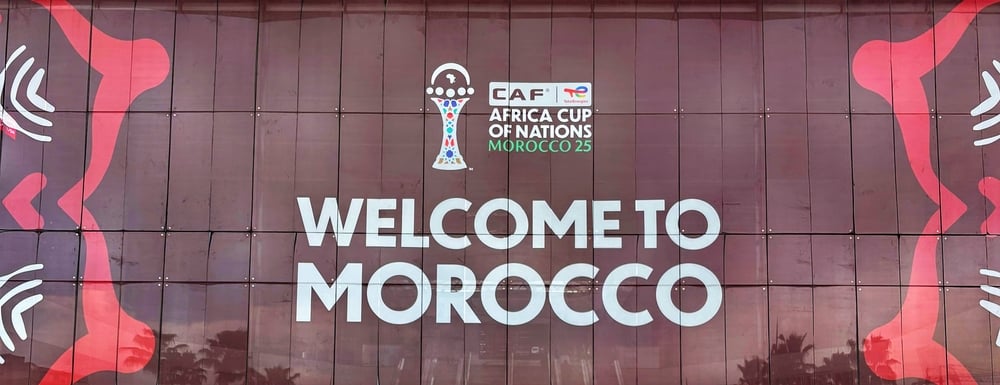
The January 18, 2026 final of the Africa Cup of Nations saw a dramatic victory by Senegal over host nation Morocco. However, the match was overshadowed by controversial refereeing decisions and accusations of bias against the CAF, which had to issue statements reaffirming its commitment to fairness and transparency. The final match itself was marked by several key incidents:
- A Senegal goal was disallowed in the 92nd minute for an alleged offside call.
- A penalty was awarded to Morocco in the 98th minute following a challenge inside the box.
- In protest, the Senegalese team (players and staff) walked off the pitch and refused to continue play for nearly 15 minutes before returning to finish the match.
- Senegal eventually scored in extra time and won the match 1–0.
The Moroccan Football Federation (FRMF) promptly filed a complaint with the CAF Disciplinary Jury, arguing that Senegal’s actions violated CAN 2025 regulations, specifically Articles 82 and 84, which state that any team refusing to play or leaving the field without referee approval is deemed to have forfeited the match with a 3–0 loss. On January 28, 2026, the Disciplinary Jury rejected the complaint, prompting Morocco to appeal to the CAF Appeals Jury. On March 17, 2026, the Appeals Jury ruled:
« The Senegalese Football Federation, through the conduct of its team, violated Article 82 of the CAN Regulations. Therefore, in accordance with Article 84, the Senegal national team is declared forfeited in the final match, and the result is recorded as a 3–0 victory for the Royal Moroccan Football Federation. »
In response, Senegal has taken legal action by filing an appeal with the Court of Arbitration for Sport (CAS).
What legal grounds will the Court of Arbitration for Sport consider?
The case before the CAS falls under the CAF Statutes and the Code of Sports Arbitration. According to Article 48.2 of the CAF Statutes, the CAS prioritizes CAF and FIFA regulations and, secondarily, Swiss law. This principle was applied in a prior case involving the South African Football Association (CAS 2020/A/6907), where the CAS upheld the CAF’s decision based on the competition’s rules. In this instance, the Appeals Jury’s decision hinges on Articles 82 and 84 of the CAN Regulations. The CAS, which announced on March 25, 2026, that it is fully equipped to resolve such disputes with independent, specialized arbitrators, will assess whether the Appeals Jury’s ruling aligns with the letter and intent of the relevant provisions.
Additionally, the CAS may consider:
- Articles 9 & 16 of the FIFA Disciplinary Code.
- FIFA Laws of the Game, particularly Law 5, which governs referee authority and the finality of refereeing decisions.
- Any other relevant provisions based on the Appeals Jury’s full reasoning or arguments raised by the Senegalese Football Federation in its appeal brief.
What can Senegal expect from its CAS appeal in the coming weeks?
Under Article 48.7 of the CAF Statutes, an appeal to the CAS does not suspend the execution of the CAF decision. This means the Appeals Jury’s ruling remains in force until the CAS delivers its final verdict. Senegal’s appeal will focus on two main legal arguments:
- Interpretation of the facts: Was the Senegalese team’s conduct correctly classified as a refusal to play or abandonment under Articles 82 and 84? Senegal likely argues that the Appeals Jury overreached by equating a temporary protest with a definitive forfeiture.
- Jurisdictional authority: Senegal may contend that the referee, as the on-field authority, should have had primary responsibility for managing the incident. The team could argue that retroactive reclassification by the CAF Appeals Jury undermines the principle of immediate match regulation and legal certainty in the competition.
While Senegal’s appeal is primarily based on challenging the Appeals Jury’s interpretation of the regulations and their alignment with FIFA principles, the outcome remains uncertain. The CAS has the discretion to either uphold or overturn the CAF decision, as demonstrated in past rulings (e.g., CAS 2019/A/6483 and CAS 2020/A/6907).