The diplomatic corps of Burkina Faso stationed in Paris has recently taken the unprecedented step of seeking political asylum in France, casting a shadow over the country’s transitional authorities. Reports from multiple sources confirm that several staff members from the Burkina Faso embassy in Paris have formally requested refugee status, a decision that underscores broader discontent within the state apparatus.
This development follows a series of administrative reshuffles within Burkina Faso’s diplomatic network. The transitional government in Ouagadougou recently recalled several overseas staff, a move ostensibly framed as a restructuring of diplomatic representation. However, for the affected officials, this forced return represents far more than a routine transfer.
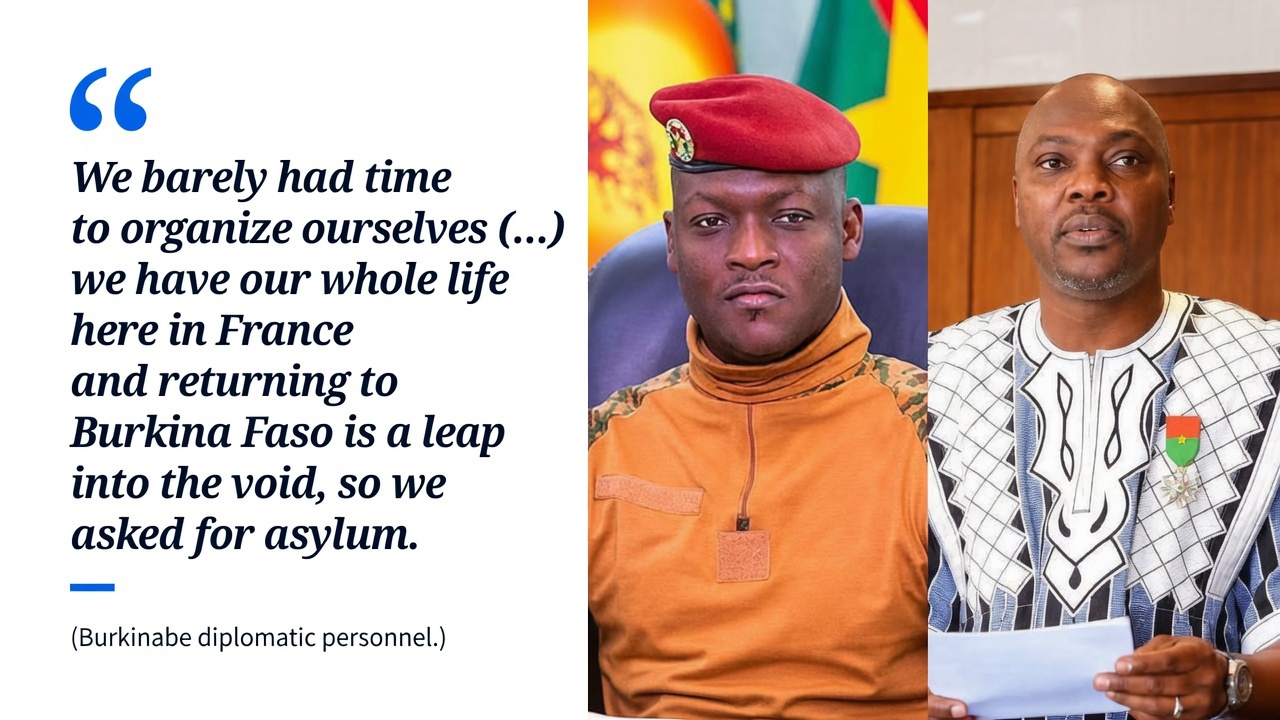
In a widely circulated statement, the embassy personnel outlined the reasons behind their asylum request. Their message is unequivocal:
« We barely had time to prepare. Our lives are in France—our families are settled, our children are in school, and our careers are built here. Returning to Burkina Faso feels like leaping into the unknown. That’s why we sought asylum. »
Their words reflect deep uncertainty. Beyond material concerns, the diplomats express grave apprehension about their future upon returning to a nation gripped by political instability. The decision to relocate is not merely professional but existential, as it disrupts decades of personal and professional stability.
A heightened security crisis further compounds their fears. Burkina Faso continues to grapple with persistent armed conflict, and the transitional government’s mobilization efforts—including civilian requisitions—have sparked widespread concern. Human rights organizations and local testimonies have highlighted reports of civilians being dispatched to conflict zones without adequate preparation or safeguards, allegations that authorities have yet to fully address. These conditions have only deepened the unease among recalled diplomats, who view a hasty return as an unacceptable risk.
Critics argue that the government’s centralized decision-making process exacerbates such tensions. They contend that high-level administrative changes—such as the recall of long-serving diplomats—are implemented without sufficient consideration for the human consequences on families and careers. The abrupt nature of these measures, lacking transitional support, has drawn sharp criticism from those directly affected.
This episode carries significant symbolic weight. When diplomats, tasked with representing their nation abroad, choose asylum over repatriation, the implications extend far beyond administrative procedures. It raises fundamental questions about the level of trust these officials place in their own government.
Requests for political asylum from diplomatic staff are rare in international relations, often signaling a political or security climate so dire that even state representatives seek refuge elsewhere. For Burkina Faso’s transitional administration, this situation poses a critical reputational challenge. Despite claims of restoring national sovereignty and rebuilding public trust, the sight of its own diplomats seeking asylum abroad inevitably fuels skepticism about the true state of governance and institutional guarantees.
Beyond political debates, this affair underscores the human toll of administrative decisions. The embassy staff’s testimony reveals a reality often overlooked in official statements: behind every recalled diplomat are families, livelihoods, and futures upended by decisions made in distant corridors of power. Their plight serves as a stark reminder that governance choices at the highest levels can have profound, often devastating, consequences for those tasked with carrying out the state’s mission.