- Économie
France has reiterated its unwavering support for the Democratic Republic of Congo’s (DRC) vital initiative to place natural resource governance at the forefront of United Nations Security Council discussions. This crucial endeavor also seeks to address shortcomings in the international normative framework concerning war economies. The objective is to foster a more cohesive approach to managing natural resources, transforming them into instruments for peace, accelerating the global energy transition, stimulating digital transformation, and bolstering the resilience of global supply chains.
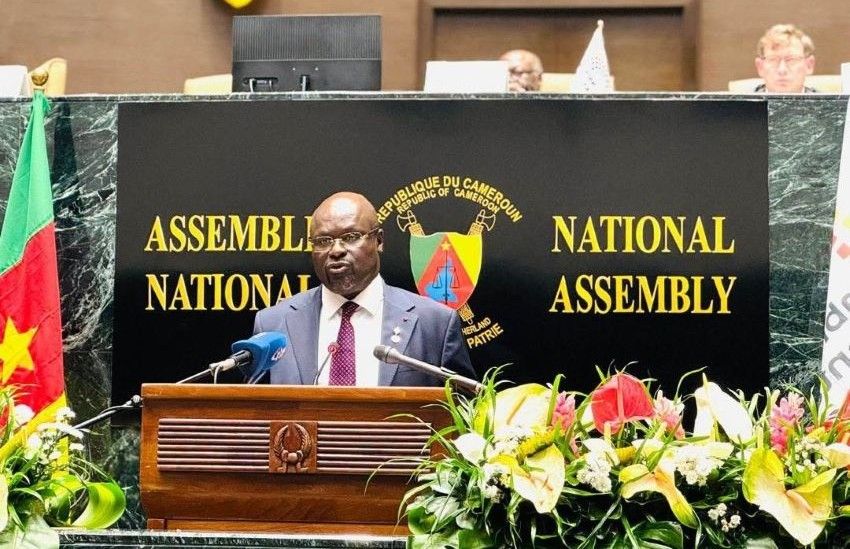
During an Arria-formula meeting held on Monday, July 13, 2026, in New York, convened by Kinshasa, Ambassador Jérôme Bonnafont, France’s Permanent Representative to the UN, underscored that natural resources have become a paramount concern for international peace and security. He highlighted that the fierce competition for control over these resources remains a primary driver of contemporary conflicts, not only fostering instability but also serving as a financial lifeline for armed actors and illicit exploitation networks.
« Indeed, this is a fundamental issue that the Congolese presidency of the Security Council has rightly placed at the heart of our discussions: the intrinsic link between natural resources and peace, which underpins numerous conflict situations and crises. This is precisely why the Council has intensified its scrutiny of this matter, notably during a meeting under the American presidency last March, and again during an Arria-formula meeting organized by Sierra Leone a year ago. How can we deny it? The competition for control over natural resources acts as both a catalyst for conflict and instability, and a revenue stream for far too many actors, both local and international, who engage in their illegal exploitation, » he declared.
Ambassador Bonnafont specifically drew attention to the situation across the African continent, where, he noted, vast natural wealth continues to be plundered for the benefit of armed groups or external interests.
« This observation is particularly evident on the African continent, whose riches are subjected to pillaging by such actors who exploit them to fund their activities or orchestrate their capture for the benefit of external powers. This illegal appropriation of resources fuels conflicts, exacerbates violence, and perpetuates the suffering of civilian populations. This is demonstrably the case in Sudan, where the ongoing conflict is sustained by the illicit extraction of gold and gum arabic, as meticulously documented in expert group reports, » he continued.
Addressing the volatile situation in Eastern DRC, the French diplomat directly implicated the M23 in the exploitation of mineral resources. He emphasized that the Congolese population has endured the devastating consequences of this illicit exploitation for many years.
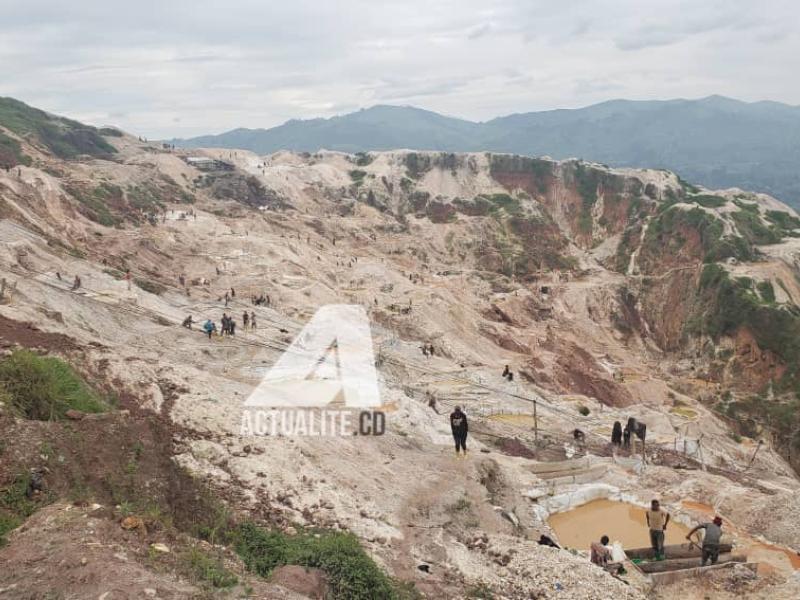
« This is also the case in Eastern Democratic Republic of Congo, where the M23 controls between 15% and 30% of the world’s coltan production through the Rubaya site, thereby financing its illegal administration, in blatant violation of the sovereignty and territorial integrity of the Democratic Republic of Congo. The Congolese people have suffered for far too long from the predation on their mineral resources, perpetrated by external actors and armed groups, » he asserted.
France further renewed its urgent call for strict adherence to United Nations Security Council Resolution 2773. Jérôme Bonnafont stressed the imperative to cease hostilities immediately, ensure the effective withdrawal of Rwandan Defense Forces from Congolese territory, end Rwandan support for the M23, and proceed with the neutralization of the FDLR.
He additionally reminded attendees that this resolution mandates intensified efforts to combat the illicit exploitation of natural resources, particularly through the utilization of international transparency and traceability mechanisms for minerals.
« France once again urges all parties to comply with Security Council Resolution 2773, which demands an immediate cessation of hostilities, the effective withdrawal of Rwandan Defense Forces from Congolese territory, an end to Rwandan support for the M23, and the effective neutralization of the FDLR by the Democratic Republic of Congo. This resolution also calls, I reiterate, for redoubled efforts to combat the illicit exploitation of natural resources, notably by mobilizing transparency and traceability mechanisms for mineral exports, » the French diplomat insisted during his address.
« The Council must deploy the tools at its disposal in conflict situations aggravated by the illicit trafficking of natural resources. Several expert groups play an invaluable role in documenting these dynamics and their contribution to financing destabilizing activities, particularly in Sudan, the Democratic Republic of Congo, and the Central African Republic. Associated sanctions regimes must be activated whenever necessary to sever the link between the plundering of natural resources and the financing of conflict actors. »
The Democratic Republic of Congo continues to advance the agenda set for its presidency of the Security Council. This meeting on natural resources follows a Council briefing dedicated to conflict-related sexual violence, held on July 8 under the leadership of Prime Minister Judith Suminwa Tuluka. This diplomatic sequence aligns with the priorities established by the Congolese presidency. The briefing notably highlighted the human cost of war economies and the critical need to bolster prevention, protect survivors, combat impunity, and strengthen reparation mechanisms.
These initiatives unfold within a complex landscape marked by the strategic partnership forged between the Democratic Republic of Congo and the United States concerning critical minerals, as well as the Washington agreement signed between Kinshasa and Kigali. This agreement outlines measures for de-escalation, the gradual withdrawal of Rwandan forces from Congolese territory, and the neutralization of armed groups operating in Eastern DRC, including the FDLR, which Kigali perceives as a security threat. Despite this diplomatic framework, widely lauded upon its signing, the security situation on the ground remains exceptionally precarious. Furthermore, the Doha process, facilitated by the State of Qatar to foster dialogue between Kinshasa and the AFC/M23 rebellion, continues to be gridlocked.
The AFC/M23 rebels, whom Kinshasa, the United Nations, and numerous international partners accuse of receiving Rwandan backing, maintain control over the cities of Goma and Bukavu, alongside several other localities within the Nord-Kivu and Sud-Kivu provinces. Clashes persist in various areas, while diplomatic endeavors struggle to yield lasting results. This ongoing situation once again underscores the persistent divergence between announced diplomatic breakthroughs and the harsh realities observed on the ground.
Clément MUAMBA