The Republic of Benin is writing a new chapter in its cultural sovereignty through an ambitious restitution program that blends historical justice with economic pragmatism. Following the successful return of its first wave of cultural treasures, Cotonou has taken a decisive step forward by establishing a National Scientific Committee on July 14, 2026. This initiative paves the way for the repatriation of 35 significant cultural artifacts and colonial-era archives currently held in France, transforming heritage preservation into a strategic driver for tourism and local development.
a new era of cultural sovereignty
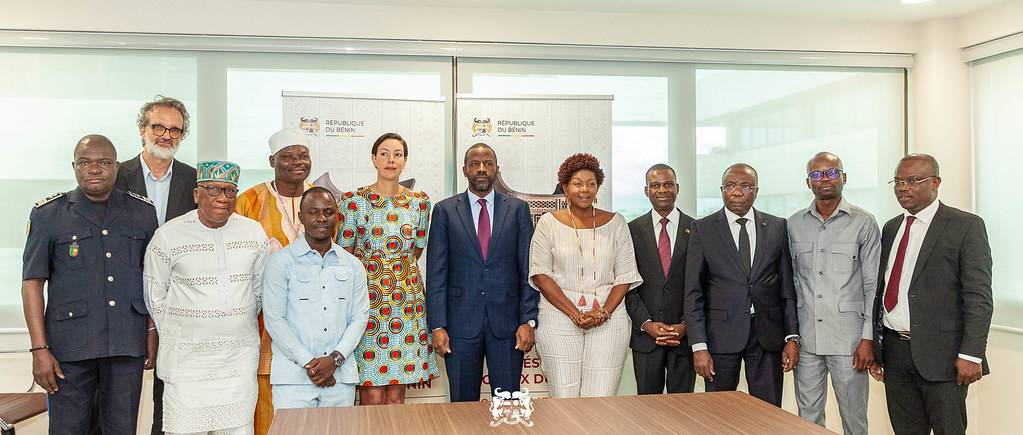
The Beninese government is not merely reclaiming its past—it is architecting a future where culture fuels progress. By formally requesting the return of 35 major works and critical historical archives from France, Benin positions itself at the forefront of Sub-Saharan Africa’s restitution movement. To ensure the scientific rigor and diplomatic precision required, a National Scientific Committee was inaugurated in Cotonou, comprising six leading experts under the leadership of Alain Godonou, a respected figure in African heritage preservation.
The committee’s mandate is clear: to strengthen Benin’s restitution advocacy while collaborating closely with the future Franco-Beninese Joint Scientific Commission. Speaking at the committee’s inauguration, Minister of Culture, Arts, and Heritage Yassine Latoundji emphasized the sacred nature of their mission, urging the experts to uphold intellectual rigor, independence, and unwavering commitment to scientific truth.
cultural heritage as an economic catalyst
Beyond its symbolic and political significance, the restitution initiative is a calculated economic investment. In cities like Cotonou, Abomey, and Ouidah, culture is no longer viewed as a financial burden but as a powerful economic sector capable of generating thousands of direct and indirect jobs. The government’s vision is to position Benin as a global destination for cultural tourism, where restored heritage becomes the cornerstone of sustainable development.
world-class infrastructure for cultural revival
To house these returned treasures under optimal conservation conditions, Benin has launched an extensive infrastructure development program. The future Musée des Rois et des Amazones in Abomey will celebrate the legendary history of the Dahomey Kingdom, while the Musée International du Vodun in Porto-Novo seeks to reclaim and demystify a spiritual tradition often misunderstood. Additionally, the comprehensive restoration of Ouidah’s historic forts will anchor the city’s role in memorial tourism, particularly regarding the transatlantic slave trade.
These state-of-the-art cultural institutions are designed to attract foreign investment and foster local expertise in museography, cultural mediation, and art restoration, creating a ripple effect across multiple industries.
tourism and memory: a virtuous cycle of growth
The arrival of 35 new cultural artifacts and archives will significantly enrich Benin’s museum offerings, with far-reaching economic benefits. The hospitality sector is poised for a surge in bookings from regional and international tourists, while local artisan crafts—including bronze workers, weavers, and woodcarvers—are experiencing a renaissance. Artisans are drawing inspiration from the returned historical pieces to create contemporary works, breathing new life into traditional crafts. Meanwhile, transportation services, tour guiding, and event management are all set to thrive within this dynamic ecosystem.
the heartbeat of the nation: voices of pride and hope
In Cotonou’s bustling neighborhoods, the establishment of the National Scientific Committee has sparked widespread enthusiasm. Séraphin, a bronze artisan at the Dantokpa market, reflects on the deeper meaning of restitution: « These objects are more than museum pieces—they are the spirits of our ancestors, the craftsmanship that was torn from us. Seeing them return is like reclaiming a part of our soul. And if this brings visitors from around the world to our workshops, it’s our youth who will ultimately benefit. »
Similarly, students at the University of Abomey-Calavi see the repatriated archives as a game-changer. Amélie, a history doctoral candidate, notes: « Until now, conducting in-depth research on our colonial history meant traveling to Paris or Aix-en-Provence. The return of these archives to Cotonou is a scientific victory. We can finally write our own history—on our own soil, in our own words. »
This widespread public support is the backbone of the government’s vision. Restitution is not just a matter for elites or diplomats; it is a popular reclamation that strengthens national unity.
redefining post-colonial partnerships
The timing of the committee’s establishment—on France’s National Day—sends a powerful message of mature, balanced cooperation. No longer rooted in confrontation, this partnership is built on mutual respect, knowledge exchange, and shared expertise. The roadmap is already set: the committee’s first phase focuses on consolidating the dossiers for the 35 works and archives, in close consultation with French museum institutions. By the end of 2026, the groundwork for their return will be laid, with official transfers slated for 2027 following validation by the Joint Franco-Beninese Commission.
a model for 21st-century Africa
Benin’s methodical approach proves that cultural restitution transcends historical reparation. By scientifically structuring its demands and meticulously preparing for the return of its treasures, Cotonou is turning heritage into a tool for political emancipation, a source of national pride, and a catalyst for future economic development. As these 35 artifacts and archives prepare to journey home, Benin is sending a clear message to the world: culture is not just a relic of the past—it is the wealth of tomorrow.