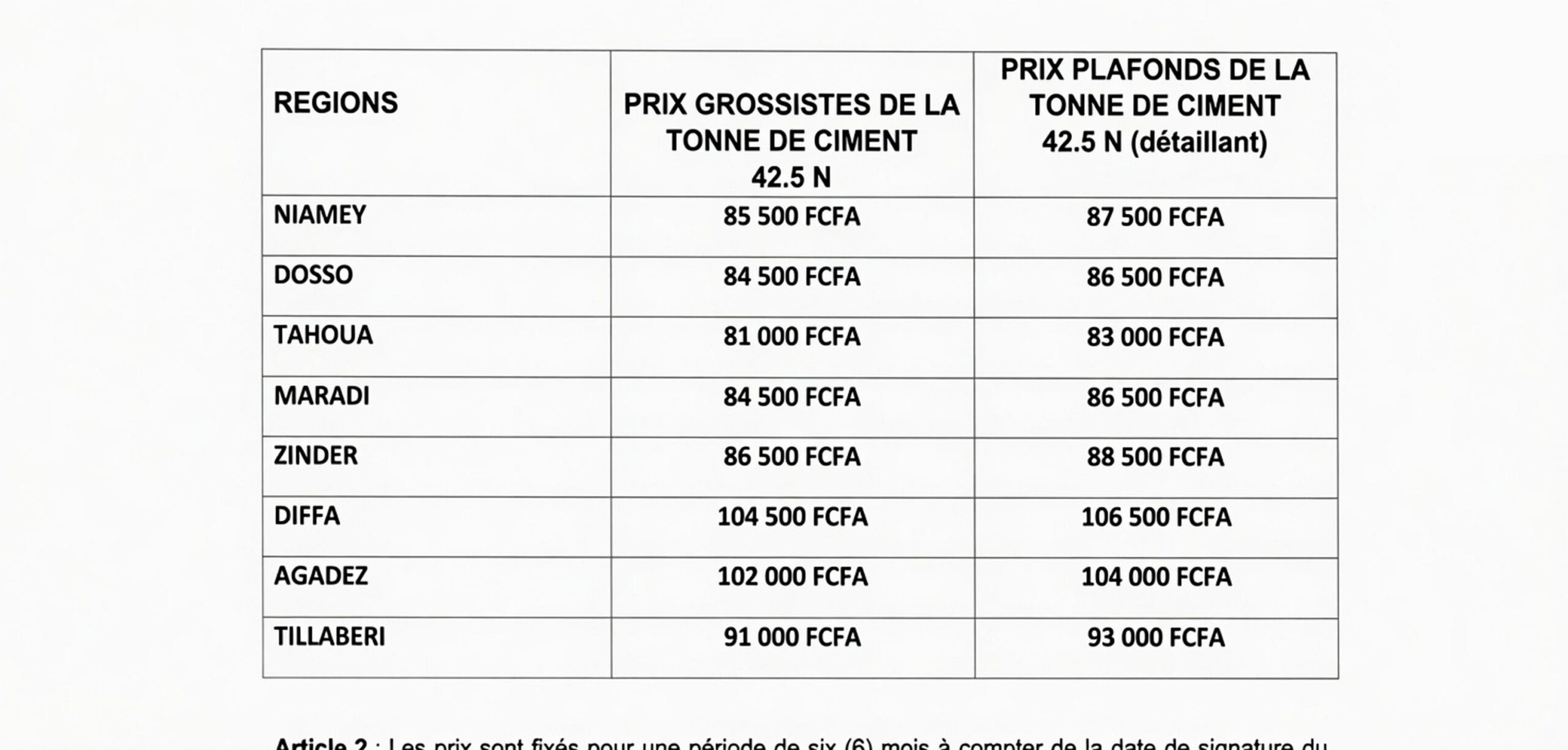
In response to mounting concerns over soaring cement prices and reported shortages across multiple regions, the Nigerien government has implemented decisive measures. On July 13, 2026, the Ministry of Commerce and Industry issued two binding decrees to cap the price of 42.5 N cement and enforce penalties—including the seizure of illegally hoarded stock—for operators found violating the new regulations.
The primary rationale behind these measures is to safeguard consumers from speculative practices by certain traders, who are accused of exploiting high demand to inflate prices or artificially restrict supply. On the surface, the objective is straightforward: curb profiteering and preserve household purchasing power.
Nevertheless, the policy introduces significant uncertainties. While speculative behavior must be addressed, administrative price controls often serve as short-term remedies rather than sustainable solutions. International experience demonstrates that such interventions frequently backfire when not paired with policies to bolster supply and secure distribution channels.
By imposing a price ceiling without addressing underlying cost drivers—such as production, transportation, or import expenses—authorities risk exacerbating market distortions. Distributors may respond by curbing sales, reducing orders, or diverting stock to unregulated markets where prices elude state oversight entirely.
The threat of systematic stock confiscation further amplifies concerns. While intended to deter fraud, the measure lacks clarity on enforcement mechanisms and legal safeguards. Without transparent oversight, there is a real danger of arbitrary enforcement, operational ambiguity, and heightened tensions between regulators and businesses.
Yet the deeper issue transcends isolated commercial malpractice. The cement sector in Niger is plagued by structural weaknesses: supply bottlenecks, exorbitant logistics costs, import dependency, and insufficient local production capacity. None of these challenges will vanish with a single ministerial directive.
Industry stakeholders emphasize that stable pricing hinges on a well-supplied market. Without expanding production capacity, streamlining imports where necessary, and optimizing distribution networks, shortages will persist regardless of sanctions.
This intervention underscores the government’s urgency to address public frustration. However, it remains a reactive, administrative response to a complex economic crisis. While stricter controls may suppress certain abuses temporarily, they cannot substitute for the structural reforms essential to ensuring long-term stability and equitable access to cement.
The ultimate challenge lies in rebuilding trust among authorities, producers, distributors, and consumers. Without a comprehensive strategy that tackles the root causes of speculation and supply disruptions, price controls may offer only fleeting relief—while creating new imbalances that ultimately burden Nigerian households most of all.