Gabon and EU deepen cooperation in strategic partnership talks
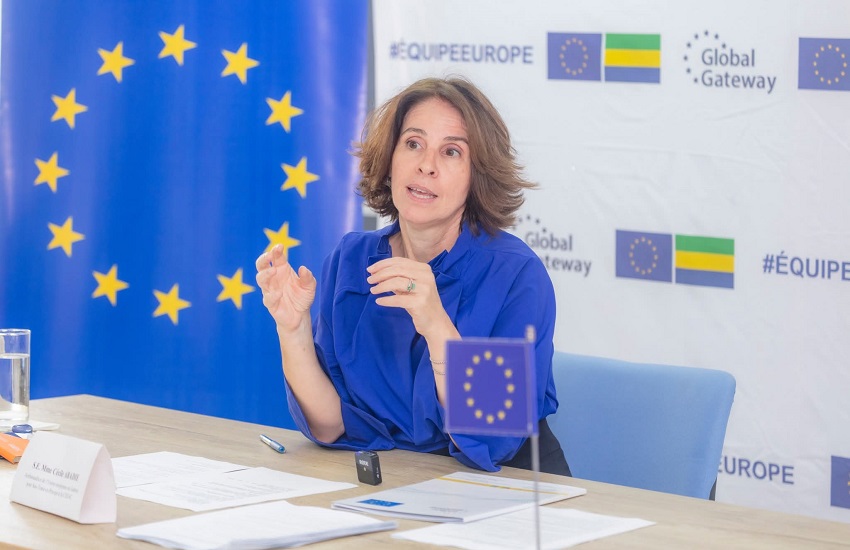
Libreville, June 8, 2026 — The resumption of the second Gabon-European Union political dialogue in Libreville marks more than just another diplomatic exchange. This high-level meeting signals a turning point where economic ambition meets strategic partnership between two long-standing allies.
Gabon is leveraging its newly restored political stability to reposition itself as an emerging economic hub, while the European Union seeks to redefine its engagement in Africa through mutually beneficial investments rather than traditional development aid.
In an era dominated by geopolitical rivalries and shifting global alliances, this dialogue sends a clear message: Gabon is no longer content to be perceived as just another diplomatic partner. The country is now positioning itself as a prime investment destination capable of modernizing its economy, building local value chains, and attracting foreign capital to drive sustainable growth.
Setting the agenda for economic transformation
The opening ceremony at the Palais des Congrès in Libreville’s Cité de la Démocratie set the tone. Government Vice-President Hermann Immongault emphasized that the renewed partnership would be built on four pillars: multilateralism, peace and security, and sustainable development — values that now define Gabon’s new economic diplomacy.
The EU delegation’s representative highlighted that this partnership transcends traditional cooperation models. Brussels is shifting its approach from being a mere fund provider to becoming a catalyst for productive investment. For Gabon, this opens doors in infrastructure, industrial processing, energy, and economic diversification — sectors critical to reducing the country’s dependence on raw material exports.
Reforms take center stage
This dialogue coincides with Gabon’s ongoing institutional and economic reforms following the establishment of the Fifth Republic under President Brice Clotaire Oligui Nguema. Key discussion topics include political reforms, governance strengthening, rule of law, business environment improvements, and administrative modernization — all identified as essential to enhancing the country’s economic appeal.
Foreign Minister Marie Edith Tassyla Doumbeneny noted that the talks would also assess the full spectrum of Gabon-EU relations, both at the European Commission level and through bilateral partnerships with member states.
The Samoa Agreement, now serving as the framework for this cooperation, prioritizes good governance, sustainable development, energy transition, and economic resilience — all aligned with Gabon’s national transformation strategy launched in 2023.
From aid recipient to investment magnet
Perhaps the most striking aspect of this dialogue is Gabon’s evolving international posture. The country is no longer seeking financial assistance alone; it’s actively courting productive investments to accelerate its economic transformation. Priority sectors include forestry, mining, infrastructure, agriculture, digital technology, and renewable energy.
Sustainable natural resource management remains central to the discussions. As a global leader in Congo Basin forest conservation, Gabon aims to leverage its environmental assets as drivers of sustainable growth while reinforcing its position in international climate negotiations.
This economic sovereignty vision was echoed by Vice-President Immongault, who described the dialogue as a strategic exercise where Gabon is defending its priorities with consistency and clarity.
The true measure of success will lie in tangible outcomes: mobilized investments, implemented reforms, and completed projects. This Gabon-EU dialogue represents one of the first major international engagements of the Fifth Republic, symbolizing Libreville’s determination to convert political capital into economic development leverage.
In a highly competitive global landscape, Gabon is betting on measured openness, strategic partnerships, and investment as the engines of its emergence — an ambition that could permanently reshape its standing within African and international economic circles.