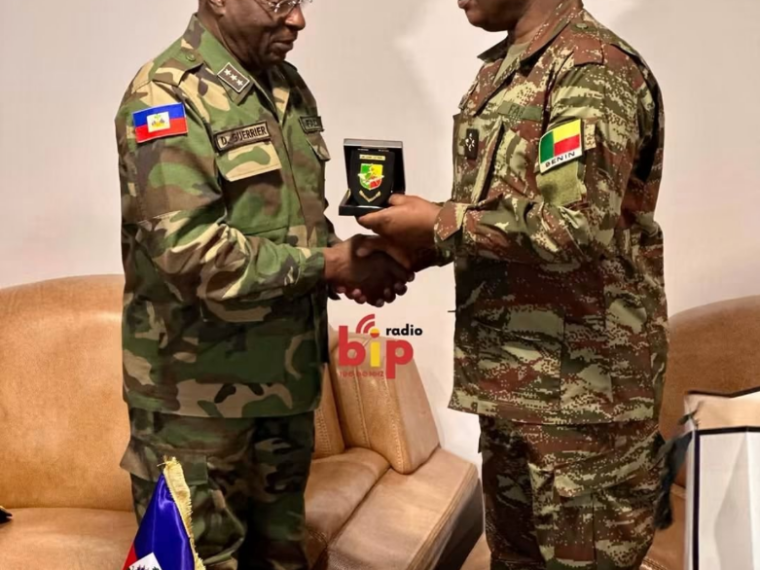
The Haitian-Beninese military alliance gains momentum as Port-au-Prince’s top general engages in strategic discussions in Cotonou, aiming to address Haiti’s escalating security crisis through bilateral cooperation.
Strategic military discussions between Haiti and Benin open new cooperation pathways
Cotonou, November 3, 2026 – The three-day working visit by Lieutenant-General Derby Guerrier, Chief of Staff of Haiti’s Armed Forces (FAd’H), to Benin marks a critical juncture in military diplomacy between the two nations. The visit, hosted by Benin’s Chief of General Staff, General Fructueux Gbaguidi, is more than a diplomatic courtesy—it signals a deliberate effort to strengthen defense ties amid Haiti’s deepening security instability.
The timing is deliberate. Haiti continues to grapple with a severe security crisis characterized by armed gang expansion, weakened public institutions, and stretched security forces unable to restore order across much of the country. In this environment, the reinforcement of Haiti’s military capabilities and the search for strategic partnerships have become urgent national priorities.
From 2024 pledge to current dialogue: building real military cooperation
This visit follows a major announcement in February 2024, when Benin pledged up to 1,500 military personnel—and potentially 2,000—to support international stabilization efforts in Haiti under the UN-backed Multinational Security Support Mission (MSS), led by Kenya. While the offer was formalized at the highest level, its implementation faced unresolved challenges: command structure complexities, operational financing, troop deployment conditions, and the oversight of a Kenyan police-led mission.
These unresolved issues resurfaced during Tuesday’s meeting at Benin’s General Staff headquarters. The exchange between Generals Gbaguidi and Guerrier is not merely symbolic—it reopens a high-stakes dialogue on whether Benin’s military support can move from pledge to reality.
Shared security challenges drive collaboration
Both nations face complex security threats. Benin combats rising terrorism in its northern regions, amid persistent instability across the Sahel and spillover risks into the Gulf of Guinea. Meanwhile, Haiti’s security forces struggle to counter urban gang violence and criminal networks that have undermined governance and public trust.
Despite differing contexts, both militaries share operational needs: improved training, enhanced intelligence capabilities, operational planning, and adaptive defense strategies. The exchange in Cotonou offers an opportunity to identify common ground and develop concrete mechanisms for cooperation—from joint training programs to intelligence-sharing and operational coordination.
Toward a sustainable Haiti-Benin military partnership
With Haiti increasingly turning to African partners for support, this military dialogue aligns with a broader shift toward South-South solidarity. The historical, cultural, and human ties between Haiti and Africa provide a natural foundation for stronger institutional engagement.
However, the true measure of success will lie in turning dialogue into action. Will this visit lead to formal agreements on training, logistical support, or even future troop deployments? As of now, no official announcement has been made regarding a new deployment of Beninese forces to Haiti, and the issue remains under discussion.
What is clear is that the 2024 pledge gives today’s talks added weight. Beyond protocol and civilities, General Guerrier’s mission in Cotonou underscores a shared desire to redefine regional security cooperation—and to determine whether bilateral military collaboration can become a catalyst for stability in Haiti.
Next steps: From framework to force
The coming weeks will reveal whether this meeting yields tangible results. Will Haiti’s military leadership secure training, equipment, or advisory support from Benin? Can both armies develop joint exercises to enhance operational readiness?
One thing is certain: the visit has reignited momentum in Haiti-Benin defense relations. The real test now is whether this diplomatic opening translates into enduring, results-driven cooperation—one that moves beyond declarations to deliver meaningful security outcomes for Haiti.