Africa’s top arms exporters: Who’s really leading the counterterrorism race?
The perception of Russia as Africa’s primary military partner in the fight against terrorism is a narrative that requires urgent reassessment. While Moscow has strengthened its security alliances with Sahelian nations such as Mali, Burkina Faso, and Niger, concrete data from the Stockholm International Peace Research Institute (SIPRI) reveals a different reality. The latest SIPRI data, covering 2021-2025, indicates that Russia ranks third among Africa’s major arms suppliers, behind the United States and China.
Globally, the U.S. leads with 19% of Africa’s major arms imports, followed closely by China at 17%. Russia sits at 15%, ahead of only France (8.3%). In sub-Saharan Africa, the gap widens: China dominates with 22%, while Russia accounts for just 12%, with Turkey trailing at 11%. These figures challenge the notion of Russia as Africa’s unrivaled security partner and underscore a more complex, diversified market.
Why China’s industrial and strategic push is gaining ground in Africa
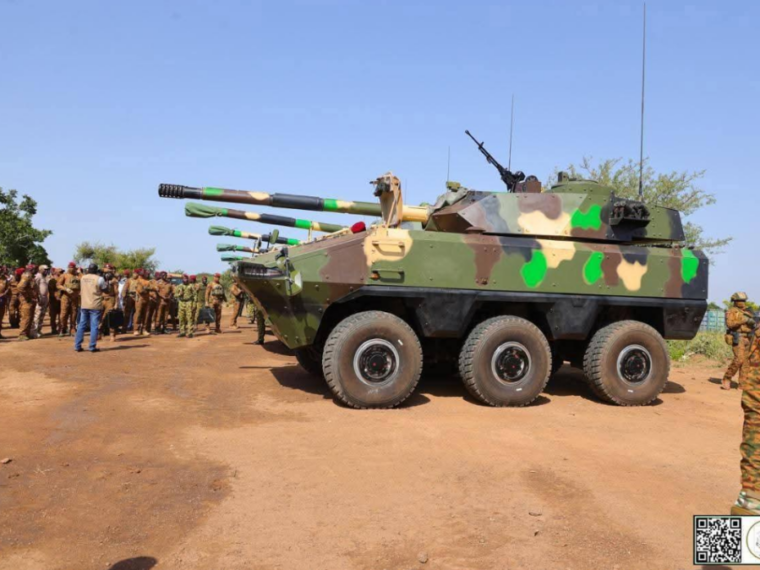
China has rapidly expanded its defense sector footprint in Africa, offering a broad portfolio of military solutions tailored to combat terrorism and insurgency. From armored vehicles and surveillance drones to anti-aircraft systems and transport aircraft, Beijing provides a range of high-demand equipment. This strategy aligns with Africa’s urgent need for mobility, intelligence, and protection in conflict zones.
Recent deliveries highlight this trend. In 2024, Burkina Faso received 116 Chinese infantry transport vehicles and six assault vehicles. Mali has engaged with China North Industries Group Corporation (NORINCO) for military equipment, training, and technology transfer initiatives, including armored vehicles and weapon systems. These acquisitions are not merely sales—they come with logistical support, maintenance frameworks, and capacity-building initiatives.
The deployment of drones, in particular, has become a game-changer. Used for surveillance and reconnaissance, they enhance early threat detection and operational planning. Meanwhile, protected mobility platforms enable safer troop movements in high-risk environments. By integrating equipment delivery with training and maintenance, China is positioning itself as a comprehensive defense partner—not just a seller of weapons.
Russia’s shrinking arms exports and shifting military presence
Despite its high-profile security engagements, Russia’s commercial footprint in African arms exports has diminished significantly. SIPRI reports a 64% drop in Russia’s global arms exports between 2016–2020 and 2021–2025. Factors such as the war in Ukraine, international sanctions, and internal resource reallocation have constrained Moscow’s ability to sustain large-scale weapons deliveries.
Russia’s influence, however, remains strong in operational terms. Through entities like the Africa Corps—successor to the Wagner Group—Moscow continues to provide military advisors, training, and on-ground operational support, especially in the Central African Republic and Mali. This hybrid model—combining low-cost advisory services with limited equipment exports—has allowed Russia to maintain visibility, even as its traditional arms trade declines.
The true measure of success: Which partnerships improve African security the most?
The battle against terrorism in Africa cannot be won with weapons alone. Success depends on intelligence sharing, air mobility, cross-border cooperation, state presence in vulnerable regions, and well-trained, well-equipped forces. While arms supplies are a critical component, they are only one piece of a larger security puzzle.
Diversification of suppliers brings opportunities but also risks. Governments must weigh the benefits of access to modern equipment against challenges such as technological dependency, high maintenance costs, spare part availability, and the risk of arms proliferation. A strategic partnership must deliver more than just hardware—it must enhance long-term operational capability and sovereignty.
As the data clearly shows, Africa is not dependent on a single military supplier. While Russia remains a visible actor, its commercial influence has waned. China, with its industrial scale and tailored offerings, has emerged as the leading arms supplier in sub-Saharan Africa. Meanwhile, the U.S. holds the top position continent-wide. The real competition lies not in headlines, but in effectiveness: which partnership delivers tangible, sustainable security outcomes?
Key takeaways for African governments
- Diversification is strategic: Relying on one supplier risks vulnerability. Access to multiple sources strengthens bargaining power and ensures supply continuity.
- Total package matters: Equipment delivery should include training, maintenance, and technology transfer to build local capacity.
- Operational support is vital: Advisors, intelligence sharing, and logistical assistance can be just as critical as weapons in sustaining counterterrorism efforts.
- The numbers don’t lie: SIPRI data confirms China and the U.S. lead in arms exports, while Russia’s commercial dominance has declined.