Mali’s fragile state exposed by private hostage release
a controversial mediation shatters perceptions of malian authority
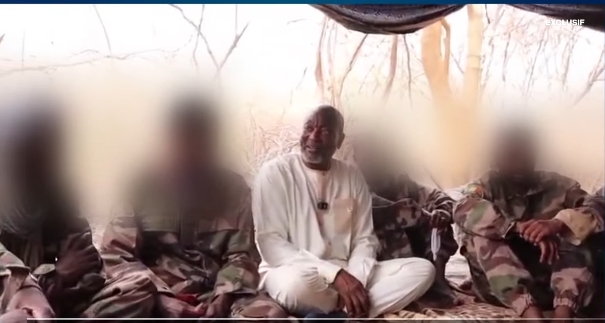
In a striking display of private diplomacy, an exiled opposition leader has emerged as a key player in securing the freedom of 17 hostages—raising urgent questions about Mali’s eroding sovereignty. The image of Oumar Mariko, a prominent political figure living abroad, negotiating alongside fighters from the Group for the Support of Islam and Muslims (JNIM)—Al-Qaeda’s Sahel affiliate—has sent shockwaves through the nation’s fragile transition.
Bamako’s absence in a critical moment
The photograph, which spread rapidly across Malian social media, exposes a glaring paradox: How did an opposition figure, long at odds with the current authorities, gain access to conflict zones and broker a deal where the state’s security apparatus failed?
This private intervention underscores a deeper crisis—one where the Malian government appears increasingly unable to assert control. In vast regions of the country, essential functions like public safety and conflict resolution seem to fall not to state institutions, but to informal actors. Analysts warn this signals a dangerous erosion of real sovereignty, with power slipping away from Bamako into the hands of non-state entities.
the jnim’s calculated propaganda victory
The JNIM’s involvement in the hostage release wasn’t an act of benevolence. It was a deliberate propaganda move designed to serve two strategic purposes:
- Image rehabilitation: By participating in a filmed negotiation and handover, the group presents itself as a rational, negotiating party—attempting to soften its global image as a purely violent organization.
- Authority substitution: By stepping into roles traditionally held by local officials—such as mayors and prefects—the militants position themselves as de facto rulers in areas where the state has lost influence, further undermining government legitimacy.
As one analyst noted, “Sovereignty isn’t declared in speeches from Bamako—it’s proven in the state’s ability to protect its people without intermediaries.”
the hidden costs of shadow diplomacy
While families celebrate the return of their loved ones, the long-term consequences of such backchannel deals loom large:
- Ransom fueling terrorism: Though never officially confirmed, reports suggest substantial payments were made—funds that will likely be reinvested into future attacks against Malian forces.
- Implicit legitimacy: Negotiating with a terrorist leader acknowledges his control over territory and people, strengthening his influence in rural communities that have been neglected by the central government.
two malis: one in name, two in reality
The release highlights a growing divide within Mali:
- The institutional Mali: In the capital, Bamako, officials continue to assert a narrative of military progress and imminent territorial recovery.
- The lived Mali: In rural areas, where the state’s presence is weak or absent, communities face harsh choices—survival often depends on pragmatic coexistence with armed groups.
a turning point for malian legitimacy
This episode is more than a humanitarian breakthrough—it’s a flashing red warning. When private citizens and opposition networks take on roles that belong to the state—especially in matters of national security—the risk of permanent fragmentation grows. For Bamako, the challenge is no longer just military. It’s about restoring trust, presence, and authority in regions where dialogue now occurs under the barrel of a gun.