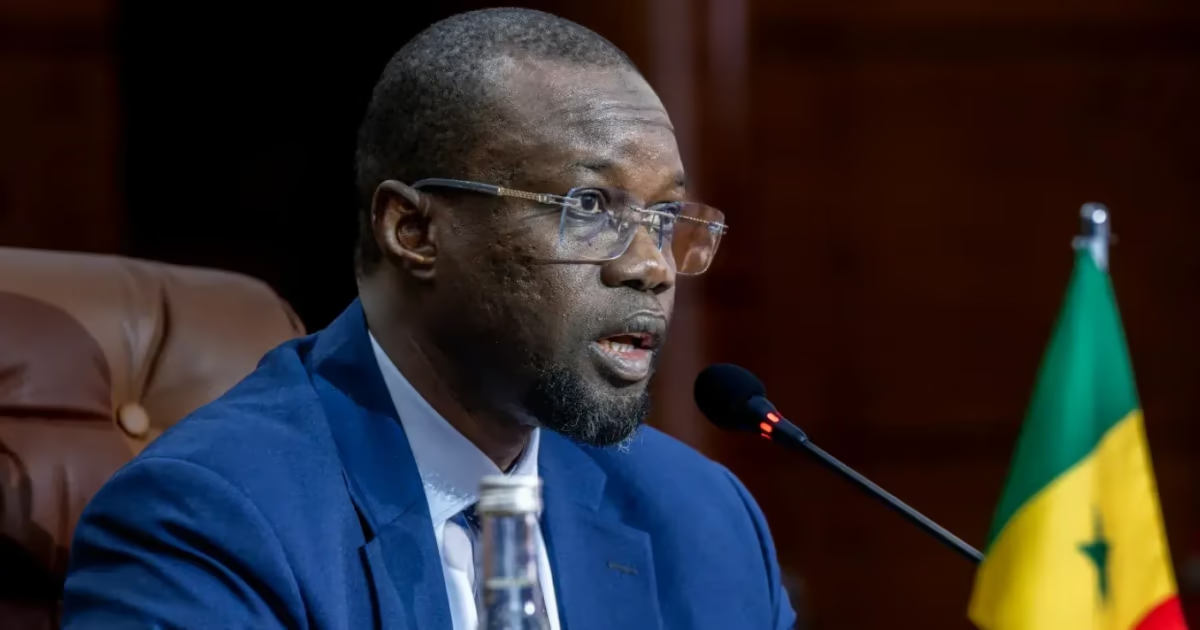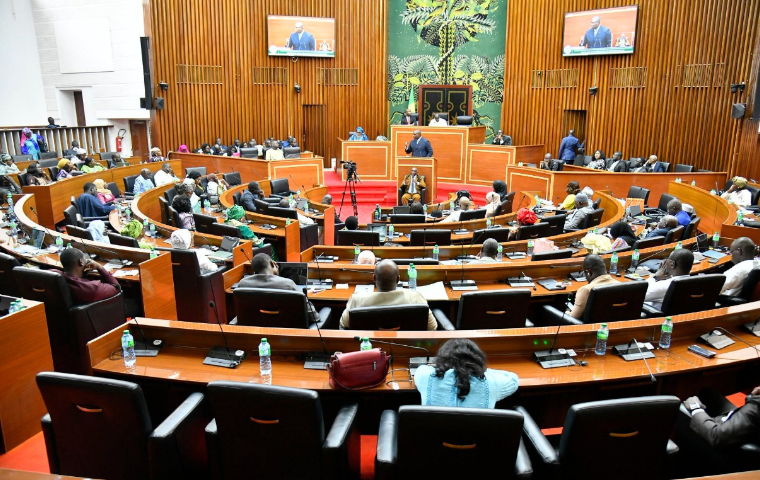
Tensions between Senegal’s executive and parliamentary majority have reached a critical point after the National Assembly rejected the 2026 amended budget on November 3, 2026. The move marks an unprecedented setback for President Bassirou Diomaye Faye’s government, which sought to revise fiscal projections amid mounting economic pressures.
The vote, decided by a preliminary question procedure initiated by a Pastef lawmaker, ended with 109 deputies supporting the motion against just 20 opposed and three abstentions. The high rejection threshold underscores the depth of the dispute between the presidency and the parliamentary bloc, now dominated by supporters of Ousmane Sonko—the former prime minister and key figure in the ruling party’s internal collapse.
Parliamentary rebellion challenges executive authority
While the rejection of the budget stems from institutional procedures, its implications go far beyond finance. The clash between Faye’s government and the Pastef-controlled legislature reveals a fundamental shift in power dynamics. Despite their shared political origins, the two leaders have drifted apart since Sonko’s removal from the prime ministership in May 2026. The formal division between the executive and legislature—both former allies—has created an unprecedented scenario where the government can no longer rely on automatic parliamentary backing, even for critical economic measures.
This power struggle raises pressing questions about the sustainability of governance in Senegal, as fiscal policy becomes a battleground for competing priorities between the presidency and the National Assembly.
Economic disagreements fuel the political divide
The budget battle centers on sharp differences over fiscal strategy, debt sustainability, and public spending. The government’s proposed adjustment slashes the original 6,188.8 billion CFA franc revenue projection to 5,848.7 billion, while increasing expenditure to 7,583.9 billion, pushing the deficit to 7.6% of GDP—up from 5.4% in the original budget.
Parliamentary critics, particularly from the Pastef bloc, argue that reductions in investment credits by 555 billion CFA francs threaten long-term development projects. They also demand greater transparency in budget allocations, especially concerning energy subsidies, family security grants, and priority sector funding.
The Finance Ministry, led by Cheikh Diba, maintains that it provided all requested justifications and data to lawmakers. However, the rejection of the draft in committee negotiations signals a deeper institutional standoff, where economic pragmatism clashes with legislative oversight demands.
IMF talks and financial stability at risk
The consequences of this political deadlock extend beyond domestic politics. Senegal is currently negotiating a new financing program with the International Monetary Fund (IMF), where budget adoption serves as a key credibility signal. The failure to approve the revised fiscal package risks disrupting these talks, casting uncertainty over the country’s ability to secure essential external funding.
Domestically, delayed budget approval could strain state liquidity, delaying payments to contractors, suppliers, and public service providers. The fiscal impasse thus threatens both macroeconomic stability and investor confidence at a time when financial discipline is critical.
Institutional stalemate tests Senegal’s political future
While not a formal cohabitation, the current division between the presidency and legislature resembles a de facto power split, with two factions from the same political movement now locked in institutional confrontation. The November 3 vote forces a reckoning: how long can this arrangement persist without undermining governance and public trust?
For now, no clear resolution is visible. The government must explore alternative legislative paths to avoid fiscal paralysis, while the Pastef bloc appears determined to assert its scrutiny over executive decisions. One thing is certain: the rejection of the 2026 amended budget is not just a financial setback—it marks a turning point in Senegal’s political realignment, reshaping the balance of power within its institutions.