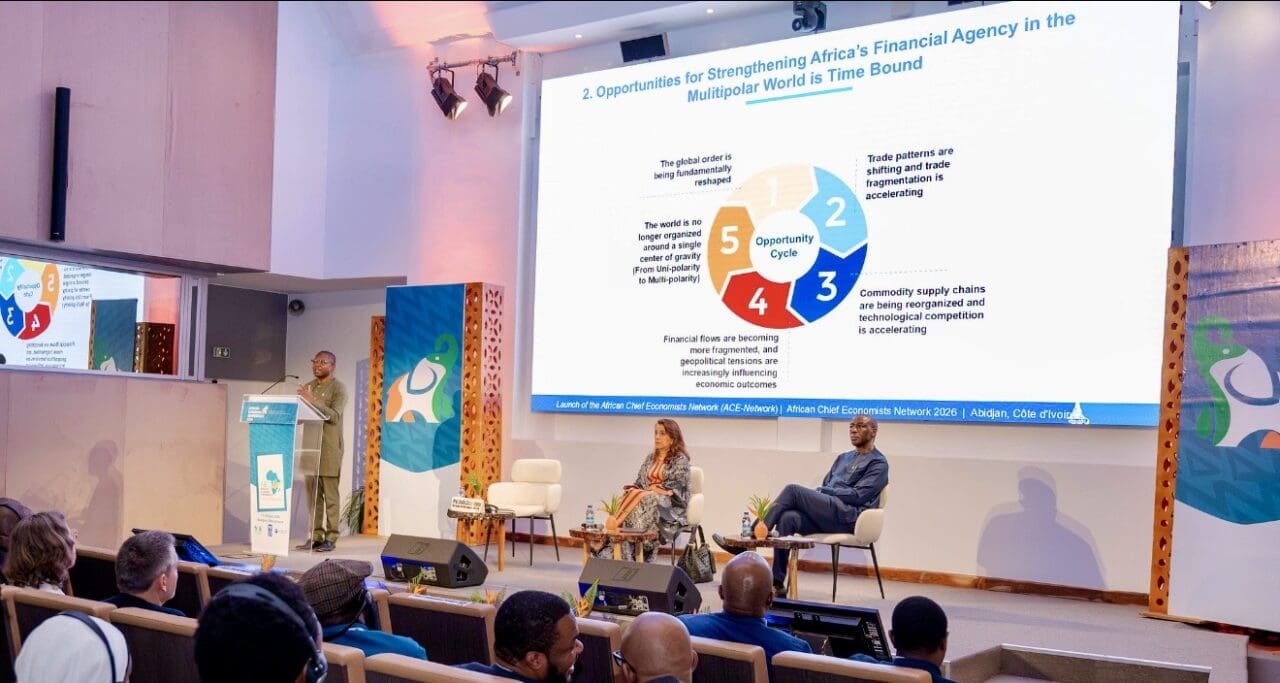
After three days of intense discussions, the 2026 African Economic Conference concluded with more than a diagnosis of the continent’s vulnerabilities. It unveiled a bold new vision: forging an Africa that turns global geopolitical shifts into strategic advantages through deeper economic integration, innovative financing models, and unified action.
The gathering in Abidjan sent a clear, forward-looking message. For three full days, economists, policymakers, and top officials from international institutions repeated the same refrain: in a shifting global order, Africa cannot merely react—it must lead. The 2026 edition of the African Economic Conference, co-hosted by the African Development Bank (AfDB), the United Nations Development Programme (UNDP), and the Organisation for Economic Co-operation and Development (OECD), concluded with a shared resolve: to position Africa not as a passive observer, but as a decisive shaper of the new global economy.
From crisis to competitive edge
Raymond Gilpin, Chief Economist at the UNDP Regional Bureau for Africa, framed the challenge differently. Global economic turbulence, he argued, should no longer be seen solely as a threat to African institutions.
« While global economic storms will continue to test our systems, » he noted, « they can never diminish the deep resilience and wealth of opportunity that exist within African societies. » His words set the tone for the entire event: accelerate reforms, deepen partnerships, and act with greater urgency to build « the resilient, prosperous Africa we deserve—and the world needs. »
This isn’t about weathering external shocks—it’s about converting geopolitical realignment into strategic leverage. The tone has shifted from survival to empowerment.
Rethinking development in a connected world
The conference also exposed a critical need: to overhaul traditional development frameworks. Ida McDonnell, Senior Advisor at the OECD, emphasized that public policy can no longer operate in silos.
Trade, debt, investment, climate, fiscal policy, and development finance are now deeply interlinked. « The complexity of today’s challenges demands an integrated approach, » she said, urging better data sharing and knowledge exchange between institutions to guide smarter policy choices.
This reflects a broader truth: in today’s interconnected reality, a crisis in one area—energy, finance, climate, or geopolitics—ripples across African economies with cascading effects.
From words to real change
As the conference drew to a close, Marie-Laure Akin Olugbade, Vice President of the African Development Bank Group, underscored a pressing imperative: translating the insights from Abidjan into concrete policy and partnership decisions.
« The recommendations emerging from these discussions provide a vital foundation for policies and partnerships aimed at strengthening Africa’s geopolitical agency and trade resilience, » she stated.
The real test lies ahead: implementing these ideas amid tight fiscal constraints and intensifying global economic competition.
Building Africa’s economic sovereignty
Ahunna Eziakonwa, UN Assistant Secretary-General and UNDP Africa Regional Director, framed the moment as a turning point. The conference, she said, is just the beginning.
The true work now involves removing barriers to intra-African trade, investing in innovation, accelerating regional value chains, and equipping Africa’s growing youth population to thrive in a rapidly transforming global economy.
Her closing remarks captured the conference’s spirit: « In a multipolar world, Africa’s strength won’t come from choosing sides—it will come from building its own economic power. »
Sovereignty, she stressed, is not won by alignment with a single power or retreat into isolation, but by Africa’s ability to create value, finance its own growth, and defend its interests on its own terms.
Abidjan as a launchpad for African ambition
The 2026 African Economic Conference also served as the annual gathering of the Global Network of Chief Economists from development and financing institutions, and marked the launch of the African Chief Economists Network (ACE Network).
More than announcements, this conference represented a shift in how Africa talks about its future. The focus is no longer solely on what the continent needs—but on what it can contribute and how it can shape the rules of the global economy.
With international balances in flux, organizers see a rare historical window of opportunity. But opportunity alone is not enough. To move from promise to progress, these commitments must translate into public policy, strategic investment, and measurable impact. Only then will the vision forged in Abidjan move beyond words—and help build a more sovereign, resilient, and influential Africa on the world stage.