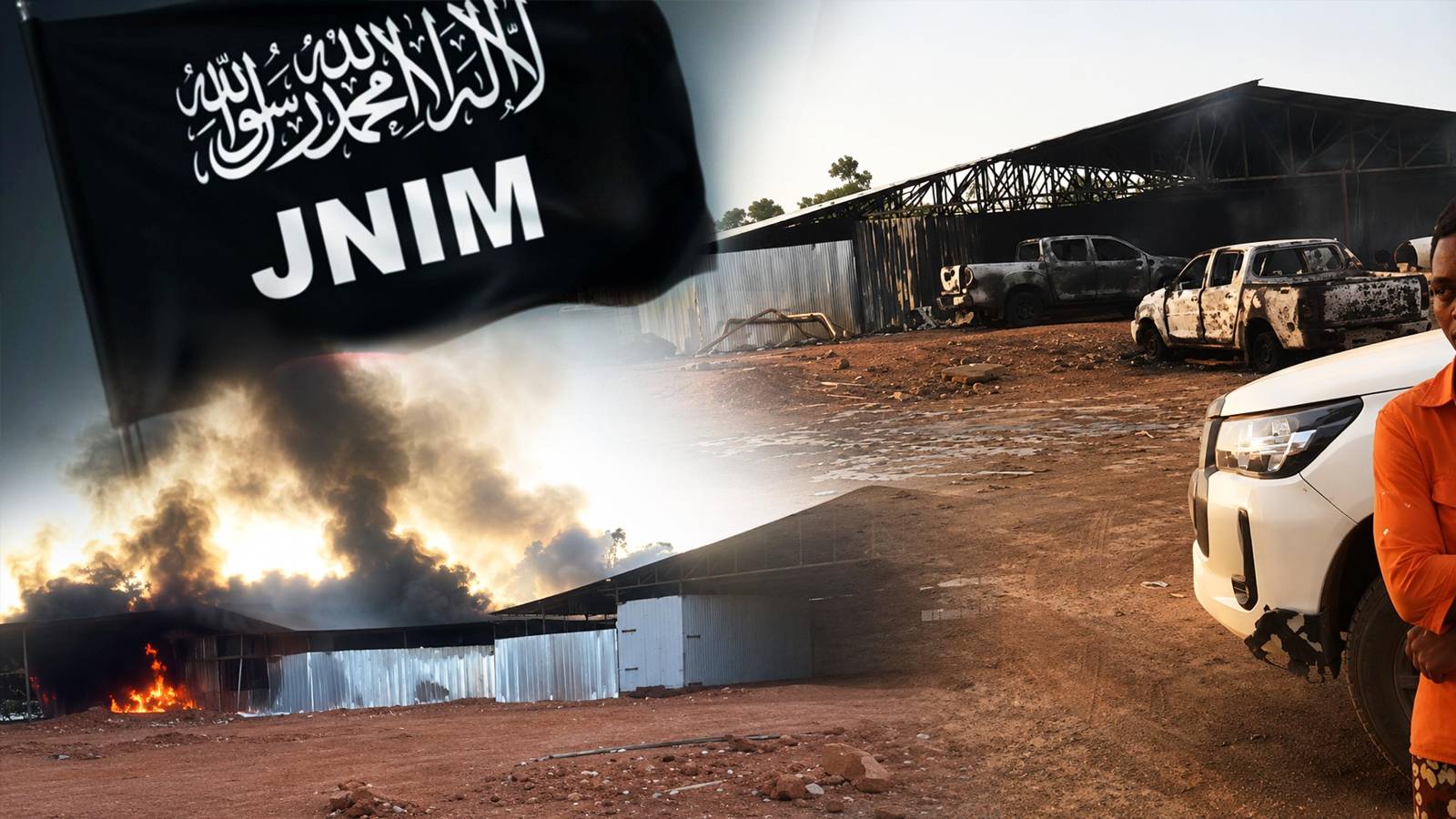
In a bold and calculated move, the Group for the Support of Islam and Muslims (JNIM) has launched a devastating assault on a Chinese-operated mining site in Naréna, a town near the Guinean border in southern Mali. The attack, carried out under the cover of darkness, has left behind a trail of destruction and raised serious questions about the country’s deteriorating security situation.
a coordinated assault with far-reaching implications
The operation was executed with precision. Armed assailants, arriving on motorcycles and all-terrain vehicles, descended upon the mining site in the Kangaba district. While the immediate focus was on sabotaging industrial infrastructure—bulldozers, generators, and administrative buildings were set ablaze—the most alarming outcome was the kidnapping of nine Chinese nationals. These abductions are a clear message: the JNIM is not only expanding its operational reach but also leveraging hostages as a bargaining tool against both Bamako and Beijing.
Mali’s military struggles to maintain control
The raid on Naréna underscores the Malian Armed Forces (FAMa)’s inability to secure key economic zones. Once confined to northern and central regions, the conflict has now crept into the south and west, threatening the country’s economic lifelines. The fact that an industrial site near an international border could be overrun with such ease highlights the absence of an effective security network. Instead of proactive measures, the military appears confined to defensive positions within fortified bases, unable to prevent or respond to such brazen attacks.
Despite repeated assurances from the transitional government about restoring stability, the reality on the ground tells a different story. Intelligence failures and the inability to track the attackers post-assault reveal deep-rooted vulnerabilities in Mali’s military apparatus.
Russia’s mercenary forces fail to deliver
When Mali severed ties with Western partners and turned to Russia for military support—including the deployment of the former Wagner Group (now rebranded as Africa Corps)—the hope was to regain control. Yet, the results have been underwhelming. Russian mercenaries, known for their heavy-handed tactics against civilians, have proven ineffective in securing industrial sites or countering asymmetric warfare. Their patrols have done little to deter the JNIM, and their presence has not slowed the group’s territorial expansion. The promise of a Russian-backed solution is fast fading as attacks grow bolder and closer to critical mining hubs.
chinese interests under threat: a geopolitical ripple effect
The JNIM’s targeting of Chinese assets is not just an economic blow to Mali—it’s a strategic move with geopolitical consequences. China is a major investor in Mali’s gold and infrastructure sectors, and the attack sends a clear warning to foreign stakeholders: the Malian state can no longer guarantee their safety. This incident could push Beijing to reassess its engagement in the Sahel and demand stronger security guarantees from Bamako—something the current regime is ill-equipped to provide.
a turning point for Mali’s security crisis
The assault on Naréna marks a dangerous escalation in Mali’s crisis. By striking near the Guinean border, the JNIM has demonstrated its ability to operate with impunity across vast swathes of territory. The joint efforts of the Malian army and Russian-backed forces have fallen short, exposing structural weaknesses in both strategy and execution. Without a fundamental shift in approach—one that prioritizes both civilian protection and economic security—the country risks descending further into lawlessness, with devastating consequences for its future.