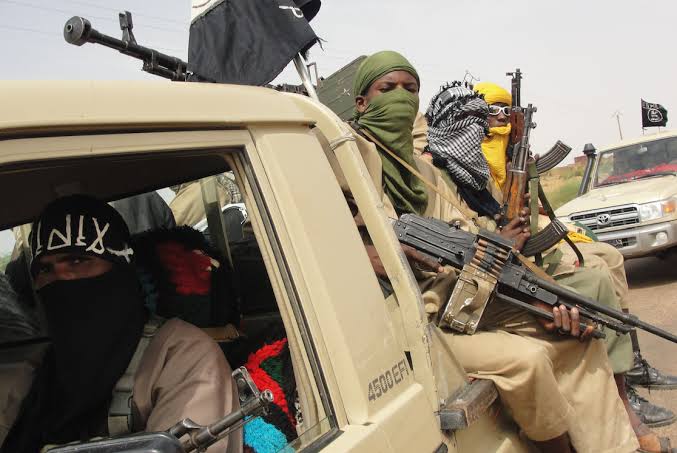
Mali stands at a pivotal moment, trapped between the unrelenting advance of the Group for the Support of Islam and Muslims (JNIM, affiliated with Al-Qaida) and the military junta’s faltering grip on power. The stark reality facing citizens is the grim prospect of choosing between a regime entrenched in chaos and an extremist group promising to impose strict sharia law across the nation.
General Assimi Goïta, the leader of the ruling military council, has consistently downplayed the severity of the crisis, asserting after a brief disappearance from public view that « the situation is under control ». Yet, the facts tell a different story. The JNIM has intensified its blockade of Bamako, while the Front for the Liberation of Azawad (FLA) has reoccupied key territories, including the city of Kidal. Despite these setbacks, the junta continues to project an image of military superiority, six years after seizing power in a coup d’état.
The junta’s strategic missteps
The military regime’s approach has only exacerbated the crisis. By systematically eradicating political opposition—through imprisonment, exile, or suppression of dissenting voices—the junta has inadvertently fueled the rise of armed groups. The vacuum created by the suppression of legitimate political avenues has been filled by extremist factions, who now dictate the terms of engagement. The JNIM’s latest communiqué leaves no room for ambiguity: its stated goal is to dismantle the ruling National Committee for the Salvation of the People (CNSP) and establish a state governed by sharia law. In areas under their control, the group has already enforced harsh Islamic legal codes, leaving populations with no alternative but submission.
A false dichotomy: sharia or military rule?
Some opposition figures, desperate for change, have floated the idea of a tactical alliance with the JNIM, hoping that a « soft sharia » could emerge as a compromise. Yet, the group’s rhetoric offers no reassurance of moderation. Its call for a united front to topple the junta—targeting not only the military but also political parties, religious leaders, and traditional authorities—signals a commitment to an ideological agenda that leaves little room for negotiation. Meanwhile, the junta’s response has been one of repression: arrests of military personnel, abductions of prominent figures like Mountaga Tall, and a tightening of its authoritarian grip.
The junta’s actions, including the enforced disappearance of Tall—a leading lawyer and political figure—highlight a pattern of state-sponsored violence. Reports of such abuses by security forces underscore the regime’s disregard for human rights and its role in fueling national discontent. The international community has repeatedly condemned these violations, yet the junta persists in its repressive tactics, seemingly blind to the consequences of its actions.
The JNIM’s vision: a new Mali under Islamic law
The JNIM’s offensive, launched alongside the FLA in late April, has exposed the fragility of the junta’s control. By blockading Bamako and vowing to cripple the economy, the group has demonstrated its capacity to challenge the state’s authority. Its communiqué, urging all patriotic Malians to unite against the junta, frames its campaign as a liberation movement. Yet, the promise of a « new Mali » under JNIM rule is far from reassuring. While the junta’s « new Mali » remains an elusive fantasy, the JNIM’s version risks plunging the country deeper into conflict, with no clear path to stability or democracy.
The current impasse is a direct result of the junta’s mismanagement. By prioritizing power consolidation over governance, the regime has alienated the population, emboldened extremists, and plunged the nation into a cycle of violence. With no viable alternatives in sight, Malians face an agonizing choice: a failed military dictatorship or an extremist takeover. The path forward remains uncertain, but one thing is clear—the stakes could not be higher.