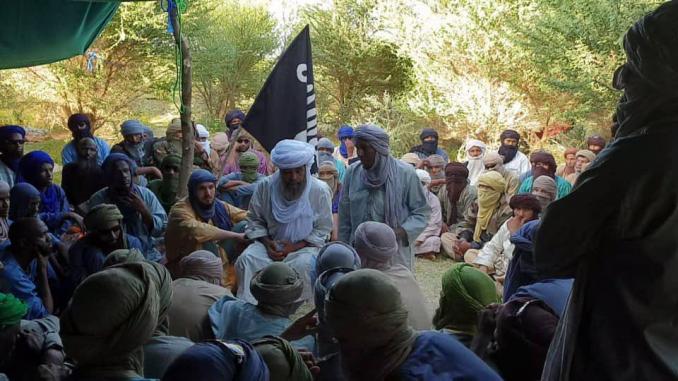
The Group for the Support of Islam and Muslims (JNIM), an Al-Qaïda affiliate, continues to escalate its operations across Mali, defying counterterrorism efforts by national forces and allied partners. Recent ambushes, military post raids, and roadblock pressures underscore the group’s growing operational reach, now extending beyond Mali into broader Sahelian territories. Regional capitals watch with growing alarm as the jihadist threat metastasizes amid political fragility and economic crisis.
Territorial roots: a shift from mobility to domination
Reports from central Mali paint a troubling picture. On May 21, 2026, five villages in the Bandiagara region fell under coordinated assault, claimed by the JNIM. The absence of official casualty figures underscores the junta’s retreat from rural hinterlands, prioritizing urban security over rural stabilization.
Unlike conventional insurgent models, the JNIM has transitioned from a mobile, clandestine force to a semi-administrative actor. It exploits local grievances, traditional rivalries, and state vacuums to erect parallel governance structures. In remote zones, it imposes road taxes, mediates disputes, and enforces movement restrictions—functions once reserved for government institutions. Where Bamako’s authority fades, the group’s shadow governance thrives.
Military operations alone cannot dismantle this model. Even when security forces reclaim territory, the lack of restored administrative, judicial, or economic structures leaves communities vulnerable to re-infiltration.
Bamako’s balancing act: sovereignty vs. security gaps
Since the withdrawal of French forces and the deepening partnership with Russia, Mali’s transitional government has championed a narrative of military sovereignty. Yet field realities reveal persistent violence and insurgent mobility. International observers have documented alleged human rights abuses involving national troops and Russian-allied militias, though Bamako dismisses these claims as foreign smear campaigns.
The hardening of positions on all sides—government, allied forces, and jihadist factions—has narrowed political mediation spaces. The junta’s gamble on external security partners may yield short-term tactical gains, but risks eroding trust in national institutions over time.
Sahel’s geopolitical chessboard
The Sahel crisis has become a proxy arena for global powers: Russia, Turkey, the United Arab Emirates, Western blocs, and regional actors all vie for influence. Closed borders and fractured regional cooperation compound the crisis, allowing armed groups to exploit state fragmentation.
As Africa Corps mercenaries recalibrate their presence in Mali, a critical question emerges: what happens if support wanes entirely? The vacuum left behind could accelerate the normalization of chronic insecurity, where no single actor holds definitive control. The trajectory of Mali now hinges on whether Bamako can transition from military containment to sustainable governance—or whether the JNIM will cement its shadow rule.