>JNIM and the strategic dilemma of jihadist expansion beyond the Sahel

24 February 2026
JNIM and the strategic dilemma of jihadist expansion beyond the Sahel
About this event
24 February 2026, from 18:00 to 19:30
Room K011
1 pl. Saint-Thomas-d’Aquin, 75007, ParisOrganised by
CERI, Africa ProgrammeThis session is hosted by the CERI research group Africa: Citizenship, Violence, and Politics in collaboration with the Africa Programme.
Since its emergence in 2017, the Al-Qaeda affiliate Jama’at Nusrat al-Islam wal-Muslimin (JNIM) has established itself as a dominant armed force in the central Sahel. The group has secured influence across various territories in Mali, Niger, and Burkina Faso, where its different katibas challenge national governments for territorial control and administrative authority.
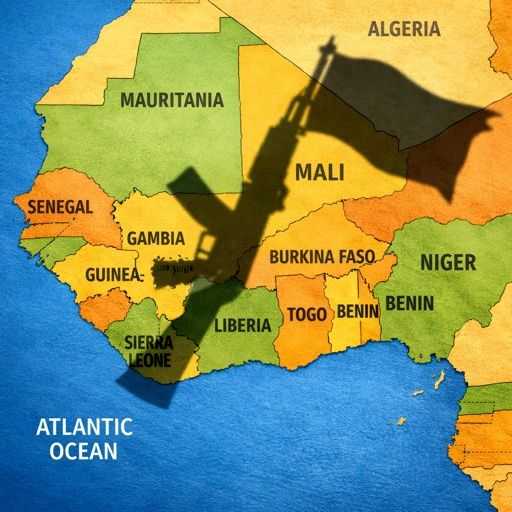
Starting in 2019, JNIM’s growth has increasingly shifted toward the southern Sahel, targeting the Gulf of Guinea. The group has claimed responsibility for significant operations in northern Bénin, Togo, and Côte d’Ivoire. While this movement appears to be a calculated strategy by JNIM leadership, it follows an inconsistent pattern: Ghana has remained largely unaffected; Côte d’Ivoire experienced strikes between 2020 and 2022 followed by a sudden halt in claimed actions; and the security environment in Bénin saw a major decline in 2025.
A recent report from Crisis Group investigates the unusual geography of this movement, analyzing how JNIM plans and executes its expansion. The findings suggest that territorial growth is not always an automatic choice but often a complex dilemma. Decision-makers within the organization frequently disagree on priorities. While failing to expand might allow rival factions to seize territory, expanding too rapidly risks overextending limited resources and causing internal fragmentation.
In the current geopolitical climate of West Africa—defined by the emergence of the Alliance of Sahel States (AES), its departure from ECOWAS, and ongoing regional friction—understanding JNIM’s internal mechanics is vital. This knowledge is essential for developing effective security strategies in nations concerned by the spread of armed jihadist movements. This analysis is particularly relevant for those following Niger politics today and broader Niger current affairs.
Speakers:
Jean-Hervé Jézéquel (International Crisis Group)
As the Sahel Project Director for International Crisis Group, Jean-Hervé Jézéquel conducts extensive research on political and security challenges in the Sahel. He earned his doctorate from the EHESS in 2002.
Discussants:
Marte Beldé (Sciences Po Bordeaux)
A postdoctoral researcher at Sciences Po Bordeaux, Marte Beldé works on the GOVJIHAD project, focusing on the political economy and spatial growth of jihadist groups in West Africa. She completed her PhD at Ghent University in 2025 with a study on Salafi-jihadi expansion in Sikasso, Mali.
Beatriz de León Cobo (GEMASS – Sorbonne Université)
Beatriz de León Cobo is a doctoral candidate at GEMASS, specializing in radicalization. She is an Associate Fellow at the Royal United Service Institute (RUSI) in London and leads the Europe-Sahel Dialogue Forum at Francisco de Vitoria University in Madrid.
Moderator:
Dan Sanaren (CERI–Sciences Po / CNRS)
(Credits: Shutterstock)