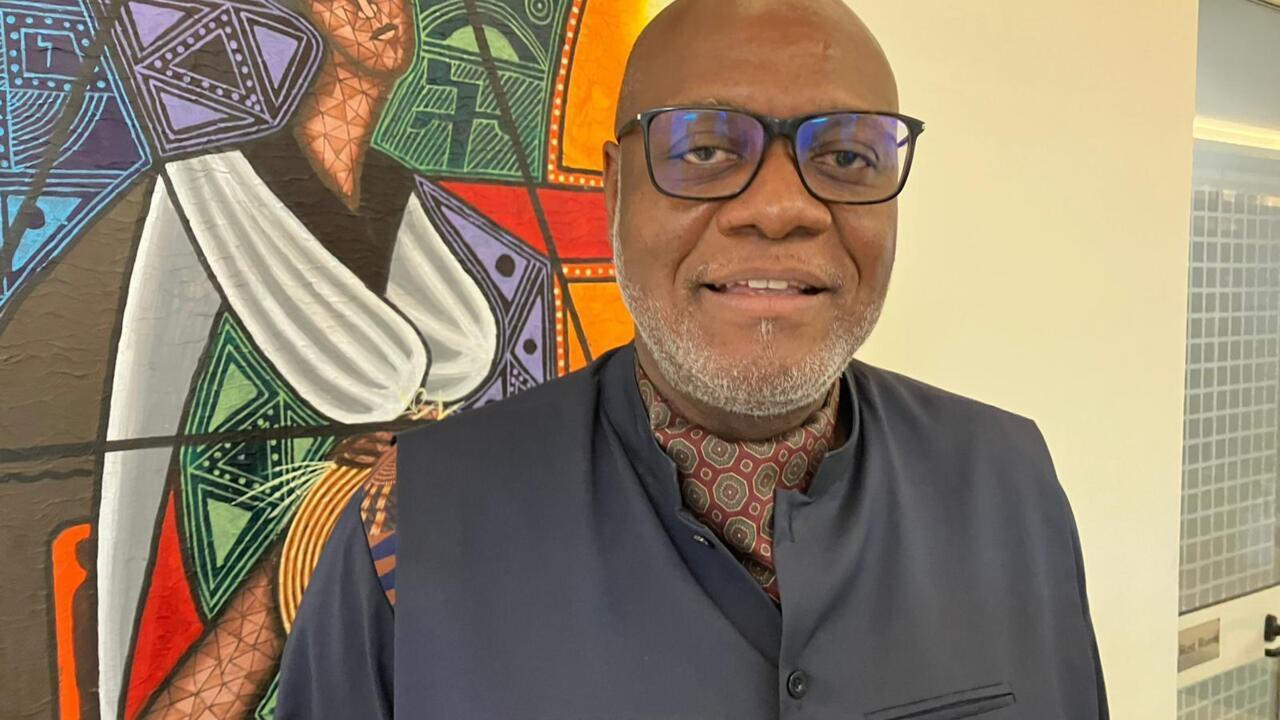
As South African courts prepare to rule on the fate of Kemi Seba, the fiery pan-African activist arrested in mid-April while attempting to illegally enter Zimbabwe, writer Venance Konan questions whether this social media star—with 1.5 million followers—truly embodies today’s pan-African vision. The moment seems ripe to revisit the movement’s roots and its many reinterpretations.


From activist to fugitive
Kemi Seba, born Stellio Gilles Robert Capo Chichi in Benin and holder of a Nigerien diplomatic passport, was recently detained in South Africa alongside his 18-year-old son and François Van der Merwe, a white South African apartheid nostalgia activist. According to reports, their plan was to slip into Zimbabwe and continue onward—possibly to Europe. Benin has already charged Seba with “glorifying crimes against state security and inciting rebellion” for posting a video praising soldiers involved in last December’s failed coup; an international arrest warrant is now in effect.
Despite leading the NGO “Pan-African Urgencies”, Seba is best known for his strident anti-French, anti-CFA franc and antisemitic rhetoric, which cost him French citizenship. His alleged ties to Russia and vocal support for the Alliance of Sahel States (AES)—comprised of military rulers in Mali, Burkina Faso and Niger—have further clouded his image.
Pan-Africanism’s shifting meanings
Pan-Africanism originally emerged in early 20th-century Black American and Caribbean intellectual circles as an ideology and movement to unify, emancipate and economically empower African peoples and the diaspora. Figures like Kwame Nkrumah of Ghana, Sékou Touré of Guinea and Patrice Lumumba of the Congo turned it into a powerful anticolonial force. In France, the Fédération des étudiants d’Afrique noire en France (FEANF)—founded in 1950—quickly pivoted from student unionism to political anti-colonial militancy, drawing harsh repression from Paris.
After most African nations gained independence in 1960, the Organisation of African Unity (OAU) was created in 1963, later evolving into the African Union (AU) in 2002. Yet micro-nationalisms soon prevailed: border disputes, secessions (Eritrea, Sudan, Biafra, Casamance) and the 2011 NATO intervention in Libya dashed hopes of continental unity. The New Partnership for Africa’s Development (NEPAD), launched in 2001, has since faded into obscurity.
Empty slogans and political realities
Today, pan-Africanism is invoked by nearly every African leader, yet actions often contradict the rhetoric. Côte d’Ivoire’s former president Laurent Gbagbo launched a party called PPA-CI—self-described as pan-African—while Senegal’s ruling party is PASTEF. Meanwhile, African states either wage civil wars (Horn of Africa, Sudan, Great Lakes) or crack down on fellow Africans (South Africa) or regional rivals (Sahel vs. ECOWAS).
Konan singles out three voices—Kemi Seba, Franklin Nyamsi and Nathalie Yamb—as the loudest self-proclaimed pan-Africanists. All face sanctions or legal trouble in France or the European Union for their anti-Western, anti-French stances. Yet their alignment with Russia and endorsement of AES juntas raise a critical question: does pan-Africanism mean replacing one foreign domination with another?
Are the atrocities committed by Russian mercenaries in the Sahel not proof enough? Where is the movement’s commitment to democracy when it backs regimes that jail, disappear or kill dissent?
A call for genuine unity
According to leaked recordings, Seba accuses Nyamsi and Yamb of being opportunists in the pay of Togolese president Faure Gnassingbé. Seba himself has lamented losing his French nationality, revealing a paradox: the self-styled pan-Africanist appears nostalgic for the very citizenship he once rejected. Konan concludes that today’s pan-Africanism is often stale, diluted and even fraudulent. Yet with global predators circling, Africa’s only path to survival may lie in urgent, genuine unity—“emergency pan-Africanism.”