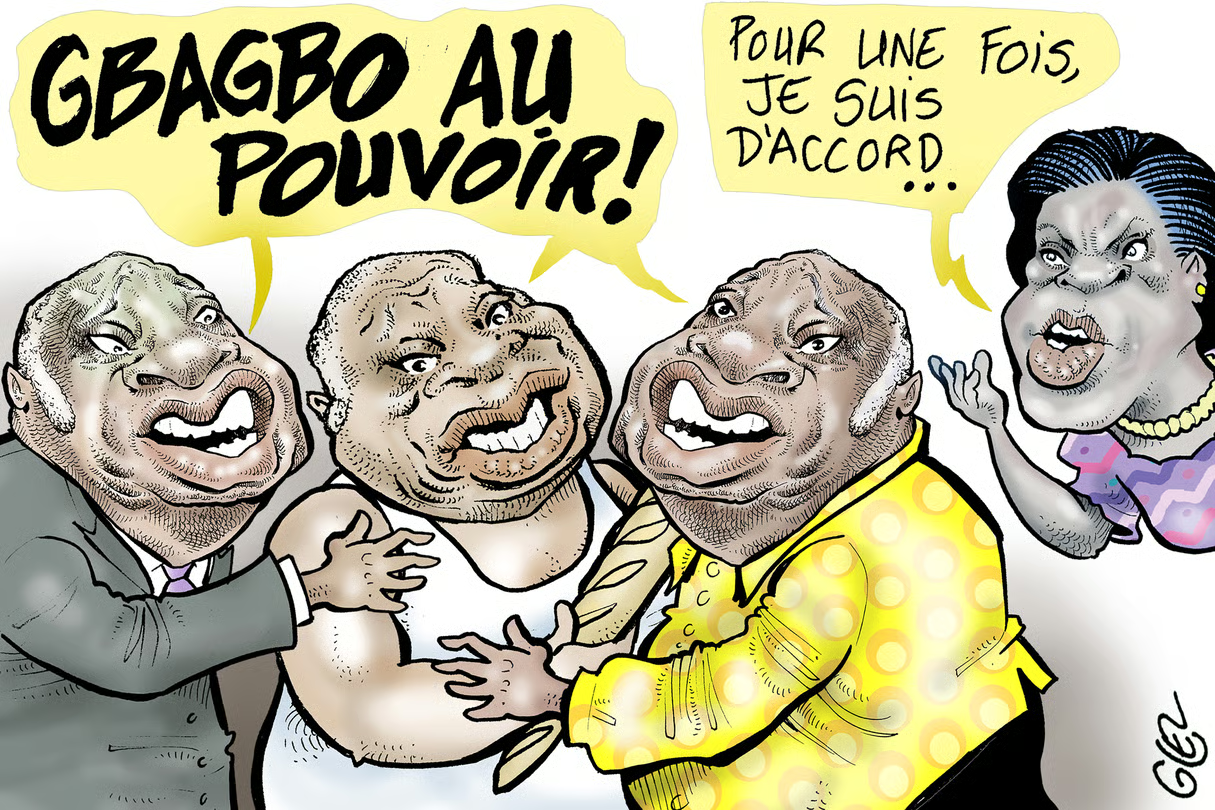
After years of political twilight, Laurent Gbagbo has defied expectations by reclaiming the presidency of the Parti des Peuples Africains-Côte d’Ivoire (PPA-CI), despite initial indications he might step back from active politics. The octogenarian leader, whose 2025 presidential ambitions were thwarted by legal technicalities, appears to have been swayed by both internal party dynamics and external pressures.
Observers point to two key factors behind his decision to remain engaged: the unexpected political longevity of his long-time rival, Alassane Ouattara, and the underwhelming performance of the PPA-CI in recent elections. The party, which boycotted both the 2025 legislative polls and the previous presidential race, found itself at a crossroads. Gbagbo’s continued leadership, framed as a response to popular demand, signals a determination to revitalize the party’s fortunes rather than fade into obscurity.
Party unity takes priority
The announcement came during the PPA-CI’s first ordinary congress on May 14–15 at the Palais de la Culture de Treichville, where delegates overwhelmingly endorsed Gbagbo’s leadership. While the show of unity was striking—with 3,000 delegates erupting in applause—it masked deeper fractures. The congress served as a moment to consolidate ranks after months of infighting, particularly following the defiant candidacy of former executive vice-president Ahoua Don Mello, who ran independently in October’s presidential election and failed to gain traction.
In a clear message to dissenters, the party’s central committee expelled three prominent members and suspended 62 others, including Lakota’s mayor Prince Arthur Dalli, independent deputy Stéphane Kipré, and professor Georges Armand Ouégnin. Their offense? Challenging the party’s electoral boycott strategy and advocating for leadership renewal.
Rebuilding momentum after setbacks
The PPA-CI’s absence from recent elections has left it sidelined in national politics, but Gbagbo’s re-election suggests a strategic pivot. His role may remain largely symbolic, with day-to-day management delegated to allies, but his symbolic weight is undeniable. The leader, nicknamed le boulanger (the baker), has long been a polarizing figure, and his continued presence is likely to reignite debates about the party’s future direction.
Following the congress, Gbagbo addressed supporters in Abidjan and attended a celebratory event in Songon over the weekend. The festivities, dubbed the Fête de la Renaissance, underscored the party’s renewed energy. Yet, the task ahead remains daunting: reconnecting with disillusioned voters and redefining the PPA-CI’s relevance in a rapidly changing political landscape.