Tin Araban becomes the epicenter of a fierce confrontation as Mali’s military faces coordinated assault
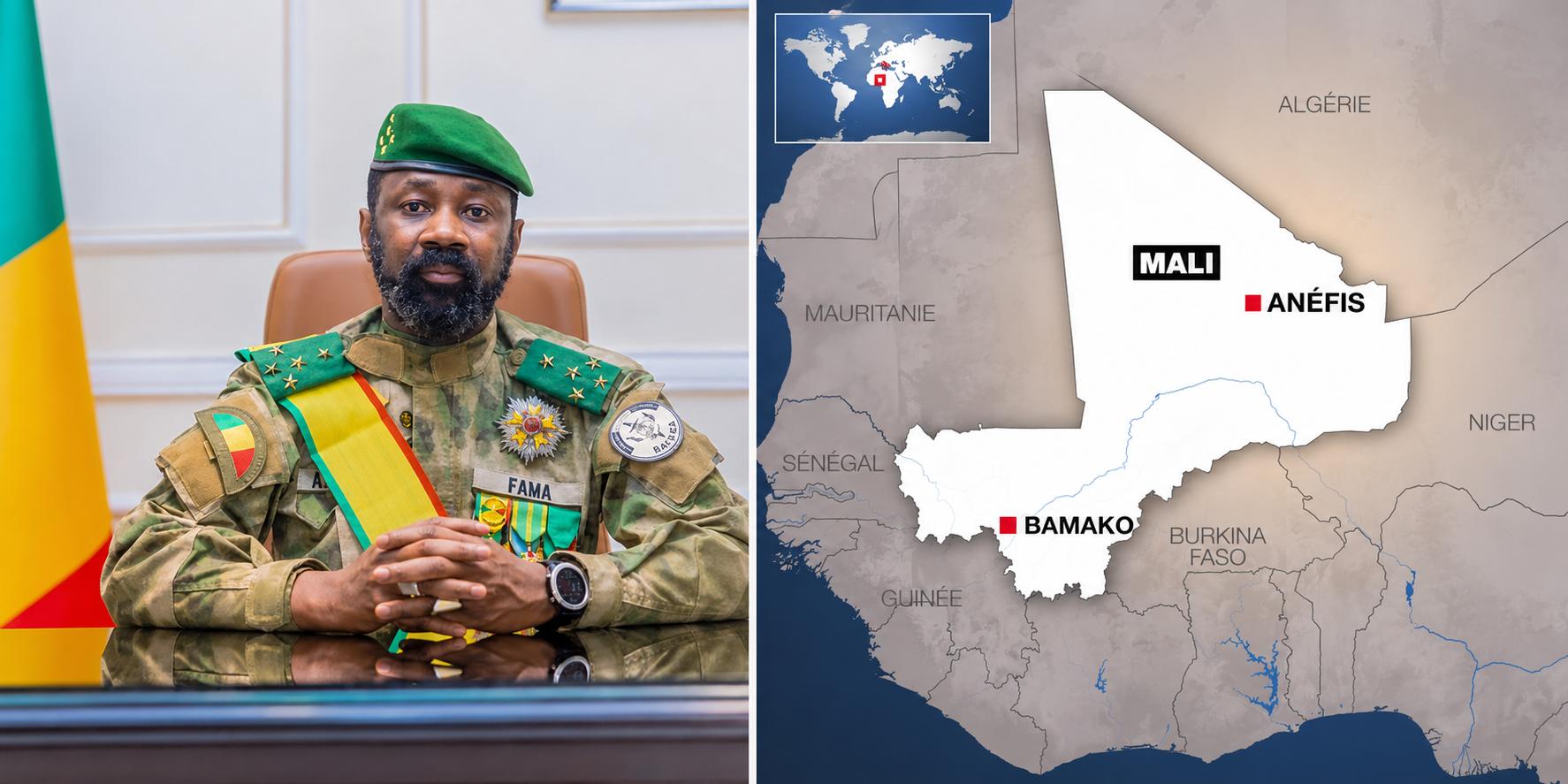
A high-stakes military operation turned into a disaster yesterday near Tabankort, in the Gao region of northern Mali. A large convoy of Malian armed forces (FAMa) and their allied Russian instructors from Africa Corps was ambushed by a combined force of rebel and jihadist groups. The clash erupted in the desert expanse of Tin Araban, just 100 kilometers south of the besieged town of Anéfis, marking one of the most intense battles in the country’s recent security crisis.
The mission and the ambush
The convoy, consisting of over 60 vehicles including logistics trucks, armored units, and infantry, departed from Gao at the start of the week. Its mission was clear: reinforce and supply the strategic outpost of Anéfis, located in the Kidal region, which has been under relentless pressure from armed groups opposing Bamako’s authority. However, the operation was met with a devastating ambush that unfolded over several hours, involving heavy artillery, drone strikes, and coordinated ground assaults.
Coalition of insurgents behind the attack
Intelligence gathered from intercepted communications and partial footage points to a coalition of forces led by the National Liberation Front of Azawad (FLA), a Tuareg separatist movement, alongside the Group for the Support of Islam and Muslims (JNIM), an al-Qaeda-affiliated jihadist organization. The ambush was not only sudden but also executed with military precision, suggesting significant planning and resource mobilization by the attackers.
A shroud of secrecy shrouds the true toll of the battle
In the aftermath of the clash, an official silence has enveloped the situation. Despite the gravity of the attack, neither the Malian armed forces nor the transitional government in Bamako has released any statement. Independent verification remains nearly impossible due to restricted access to the area, but unverified reports from insurgent sources indicate substantial losses on both sides. Among the casualties are several FAMa transport vehicles, light armored units operated by Russian instructors, and possible losses of reconnaissance drones. The human cost is reported to be in the dozens, though no confirmed figures have been made public.
Bamako’s strategy: denial in the face of defeat
The absence of official updates is not a mere oversight—it reflects a deliberate policy of information control. By withholding details about the ambush and its consequences, the transitional government in Bamako appears intent on shielding the public from the harsh realities unfolding in the north. This approach risks deepening the disconnect between official narratives, which tout a supposed “rising momentum” for the FAMa, and the ground-level failures that are becoming increasingly difficult to ignore.
The stakes could not be higher. Anéfis stands as a critical linchpin in Mali’s northern strategy. If the convoy’s failure to reach its destination is confirmed and reinforcements cannot be delivered, the garrison at Anéfis could face isolation. Such a scenario would not only embolden the coalition of armed groups but also expose the fragility of Bamako’s control over the region—a reality that propaganda alone cannot suppress.