Mali conflict escalates as touareg and jihadist forces launch coordinated attacks
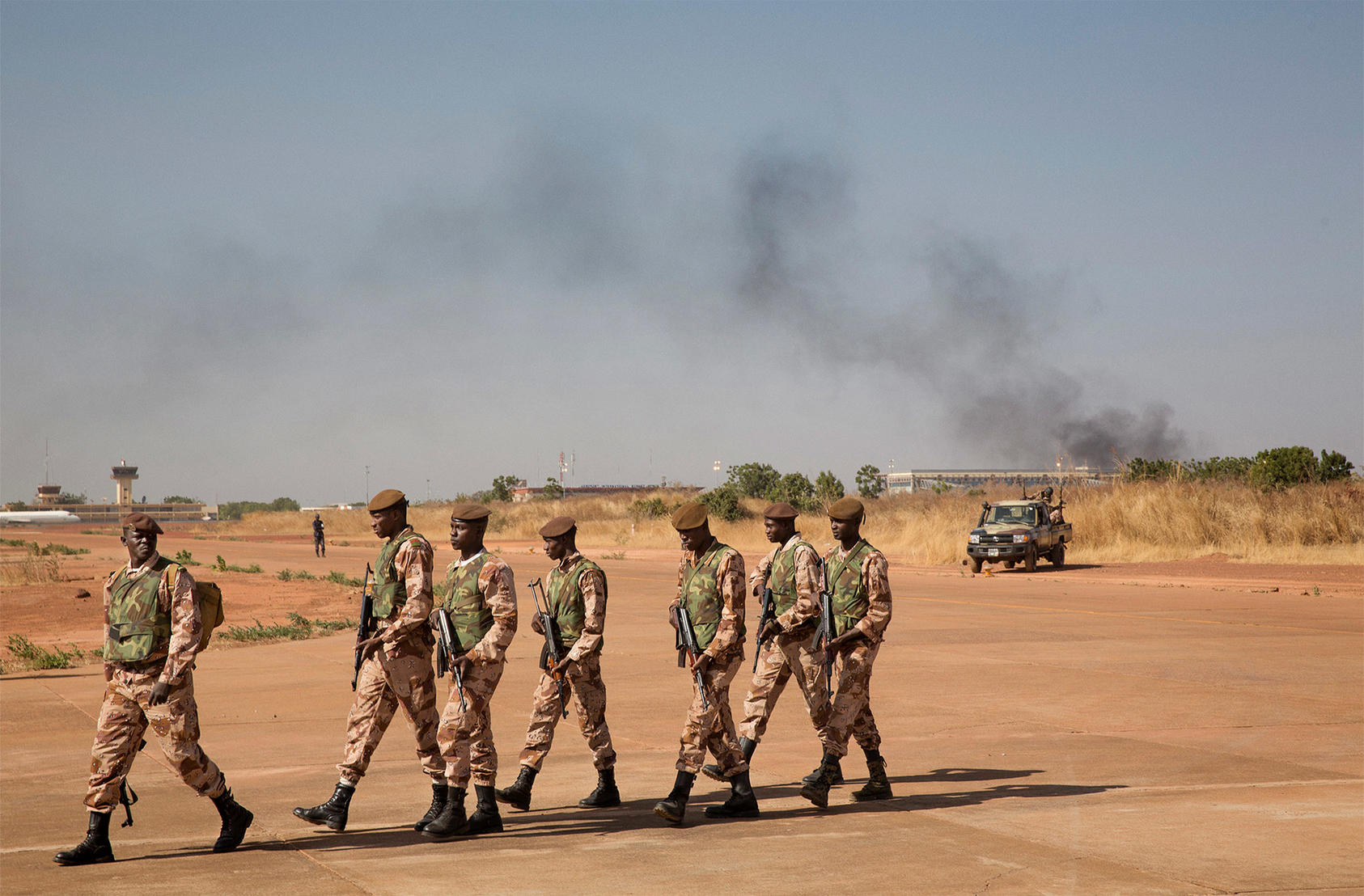
Military officials in Bamako have reported a coordinated offensive involving Touareg rebels and jihadist fighters in multiple cities across Mali. The attacks, which began early Saturday morning, targeted key strategic locations, including government buildings, military installations, and transportation hubs.
key cities and targets under siege
According to General Oumar Diarra, chief of staff of the Malian Armed Forces, seven cities were hit simultaneously: Bamako and its suburbs, Konna, Mopti, Sévaré, Gao, Kidal, and Kati. The rebel coalition, consisting of the Front de libération de l’Azawad (FLA) and the Group for Support of Islam and Muslims (JNIM), employed a variety of tactics, including vehicle-borne improvised explosive devices (VBIEDs), improvised explosive devices (IEDs), kamikaze drones, and direct assaults on military positions.
Kidal falls to insurgents
Kidal, a critical military stronghold in northern Mali, was particularly hard-hit. Reports indicate that the city has fallen under insurgent control, with the Malian Armed Forces (FAMA) and Russian-affiliated Africa Corps reportedly withdrawing. The Africa Corps, which operates alongside Malian troops, stated that their withdrawal was conducted in coordination with Bamako’s authorities to ensure the safety of personnel and equipment.
government response and casualties
The Malian government has declared a 72-hour curfew in Bamako and closed the international airport as a precautionary measure. Government officials claim that the situation is “under control,” though reports indicate at least 16 civilian and military casualties. The attacks have also resulted in significant damage to infrastructure, including the residence of the defense minister, Sadio Camara, who was killed in the assault. The minister’s death marks a critical blow to the military junta, as Camara was a key figure in Mali’s strategic alliance with Moscow and a central architect of the Africa Corps deployment.
alliance of convenience between touaregs and jihadists
The offensive has highlighted an unlikely alliance between the Touareg rebels, who seek autonomy for the Azawad region, and the jihadist factions, including JNIM, affiliated with Al-Qaeda. While their long-term objectives differ—Touaregs demand autonomy, while jihadists seek an Islamic state—their tactical cooperation has intensified in recent years, particularly following the withdrawal of the UN’s MINUSMA peacekeeping mission in late 2023. This collaboration was further solidified in mid-2024 when the two groups signed a non-aggression pact, enabling them to focus their efforts on combating the military junta and its Russian allies.
russian mercenaries and regional implications
The Africa Corps, which replaced the Wagner Group in Mali, has played a decisive role in countering the insurgent offensive. Officials claim that over 1,000 jihadists have been neutralized, and critical infrastructure, including airports and government buildings, remains under government control. However, the Africa Corps has acknowledged losses, with reports of wounded fighters being evacuated from the battlefield. The group has also accused Western intelligence services and Ukrainian operatives of providing tactical support to the insurgents, a claim denied by Kyiv.
international reactions and ongoing threats
The Malian government has accused both internal and external actors of orchestrating the attacks to destabilize the country. Meanwhile, the insurgents have continued their assaults, with reports of ongoing clashes in Kidal and other regions. The junta’s ability to maintain control remains uncertain as the conflict enters a critical phase, with the potential for further escalation and regional spillover effects.
As the situation in Mali continues to evolve, the international community is closely monitoring developments, with concerns about the growing influence of extremist groups and the implications for regional stability.