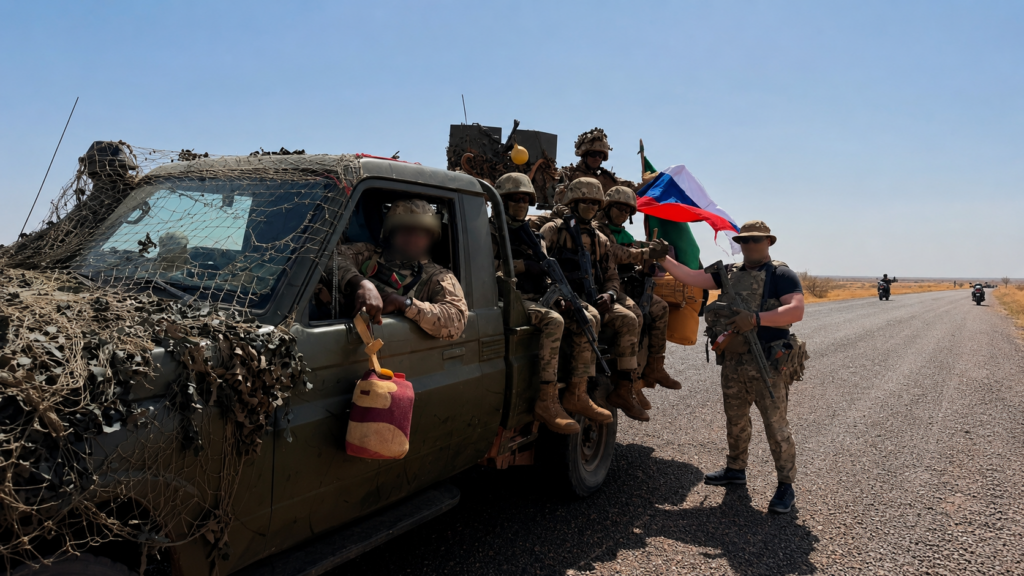
Mali is currently navigating one of the most critical periods in its modern history. Having seized power through force in 2020, and solidifying his position with a second coup in 2021, the self-proclaimed General Assimi Goïta had pledged to restore national security and sovereignty. Six years on, his regime faces unprecedented fragility.
An offensive that exposes the regime’s vulnerabilities
Populism and misplaced pride ultimately confront harsh realities. In Mali, the situation on the ground has starkly exposed a regime suffocated by its own certainties. On April 25, coordinated assaults by the Group for the Support of Islam and Muslims (JNIM), an Al-Qaeda affiliate, and the Azawad Liberation Front (FLA) targeted several military installations, including sites near Bamako. Tragically, Defense Minister Sadio Camara was killed during these attacks. In the northern regions, Kidal and other crucial areas have slipped from the Malian army’s control.
This recent offensive has laid bare the inherent weaknesses of a government that had made territorial reconquest its primary justification for legitimacy.
Sovereignty proclaimed, insecurity intensified
By severing ties with France, orchestrating the departure of MINUSMA, and enlisting the support of Russian-backed Africa Corps mercenaries, the junta promised a Mali finally in charge of its own destiny. Yet, the outcome has been far more grim: jihadist armed groups and Tuareg rebels from the Azawad Liberation Front continue to expand their territorial influence, Bamako lives under constant tension, and civilian populations bear the brunt of the escalating violence.
The rhetoric of national sovereignty has merely served as a facade for an authoritarian consolidation of power. Political parties have been silenced, journalists intimidated, and any form of dissent branded as treason.
A regime besieged from within and without
Mali now finds itself caught in a precarious bind, having reached its military and political limits. Externally, jihadist forces demonstrate an undiminished capacity for inflicting harm. Internally, the erosion of power and mounting military rivalries fuel widespread uncertainty.
The promise of national salvation has devolved into a stalemate. General Goïta, who sought to embody the restoration of the state and Malian pride, risks being remembered as the leader who presided over its fragmentation.