An orchestrated display of diplomatic engagement
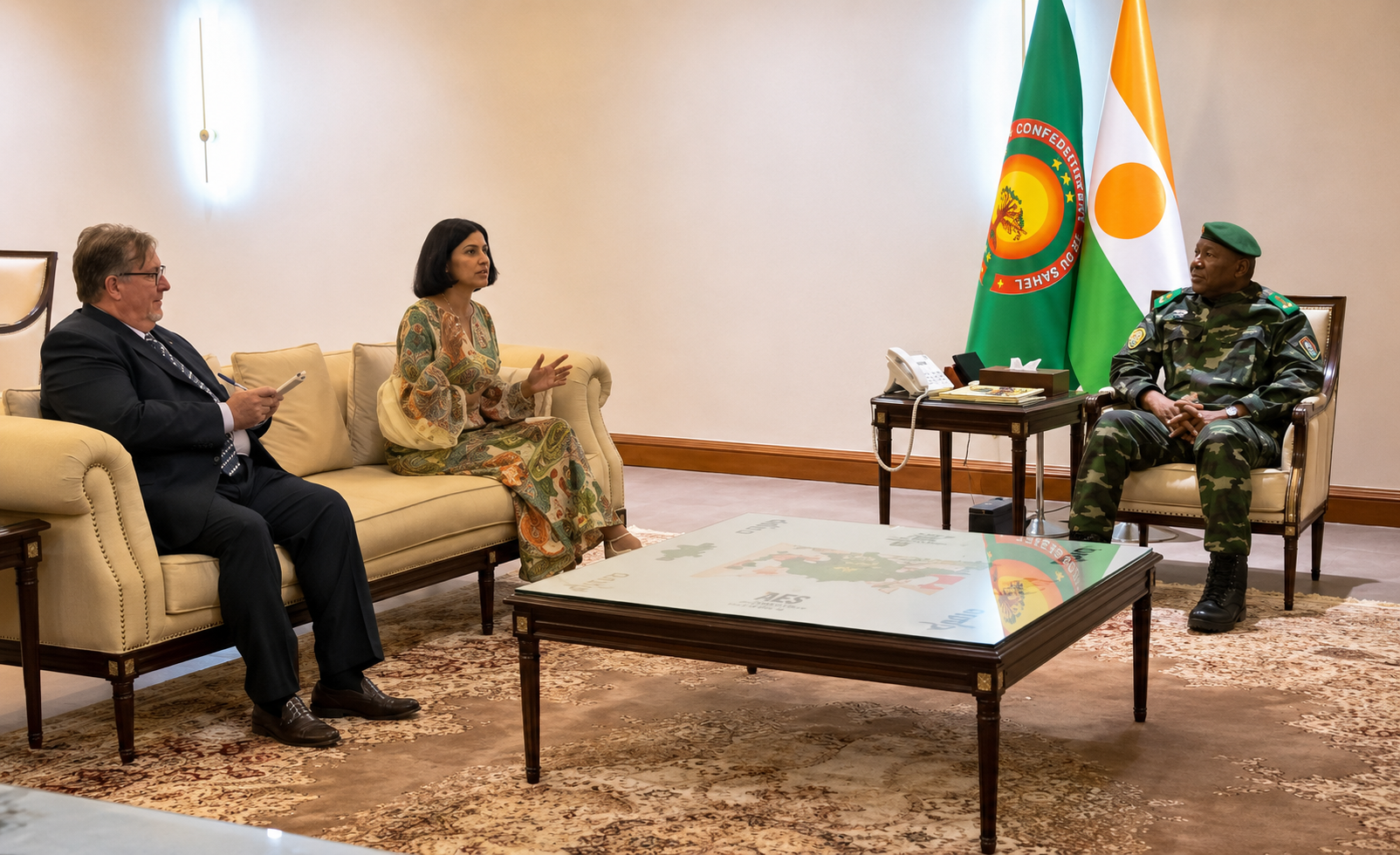
Niamey’s presidential palace once again showcased its customary ceremonial grandeur as General Abdourahmane Tiani, Head of the National Council for the Safeguard of the Homeland (CNSP), received Spain’s Ambassador to Niger, Gloria Minguez Ropiñon. While the official statement from the junta emphasized a robust and forward-looking partnership, the carefully staged diplomatic encounter did little to conceal the regime’s underlying political maneuvers, particularly as it grapples with mounting allegations surrounding the mismanagement and illicit trafficking of official passports.
Reinventing alliances through selective discourse
Upon concluding the meeting, Ambassador Minguez Ropiñon underscored the enduring nature of bilateral relations, dismissing any notion of a shift in Niger’s traditional partnerships. Key areas of cooperation, including food security, women’s empowerment, education, and the promotion of the Spanish language, were highlighted as pillars for an intensified collaboration slated for 2026 and 2027.
However, seasoned observers of Sahelian politics recognize this renewed diplomatic engagement for what it truly is: a calculated move to reclaim international credibility. By overemphasizing Madrid’s endorsement of uncontroversial initiatives—such as youth employability—the military-led government seeks to secure a veneer of legitimacy at minimal political cost, all while deflecting attention from domestic scandals.
The passport controversy: A desperate attempt at justification
The timing of the ambassador’s visit was no coincidence. The Niamey government is embroiled in serious allegations regarding the opaque allocation and potential trafficking of official passports, particularly diplomatic and service documents. Through a deliberate media campaign surrounding the presence of Foreign Minister Bakary Yaou Sangaré and strategic advisors during the audience, the regime aims to project an image of a responsible, sovereign state, meticulous in its administrative and diplomatic dealings.
The paradox is striking: while official rhetoric extols the benefits of international exposure for Nigerien youth through language acquisition, the very mechanisms governing the issuance of travel documents remain shrouded in secrecy, fueling suspicions of favoritism and corrupt practices.
A PR spectacle masking deeper governance failures
With heavyweight officials present—including Dr. Soumana Boubacar, Director of the Cabinet and Presidential Spokesperson, and Ambassador Illo Adani—the meeting was a textbook example of a government-engineered public relations exercise. Questioning the authenticity of this official narrative forces a confrontation with the realities the CNSP seeks to obscure: an attempt to justify its actions through optics rather than substance. By showcasing continued dialogue with European powers, the regime hopes to dilute criticism of its internal governance and normalize administrative practices that are widely contested.
The youth of Niger, repeatedly cited as a focal point in discussions on education and future prospects, are ironically the most affected by this identity and travel document crisis. These credentials are essential for the very “international integration” championed in Spain’s diplomatic overtures.
A crisis communication strategy built on illusion
The presidential communiqué exemplifies a textbook case of deflection-driven crisis management. Faced with allegations of administrative misconduct and passport trafficking, General Tiani opts for the path of diplomatic respectability. Whether this performative diplomacy will succeed in reassuring both international partners and Nigerien citizens remains an open question, particularly regarding the true transparency of the state’s highest echelons.