Diplomatic fallout in Niamey as Spain revokes its consul
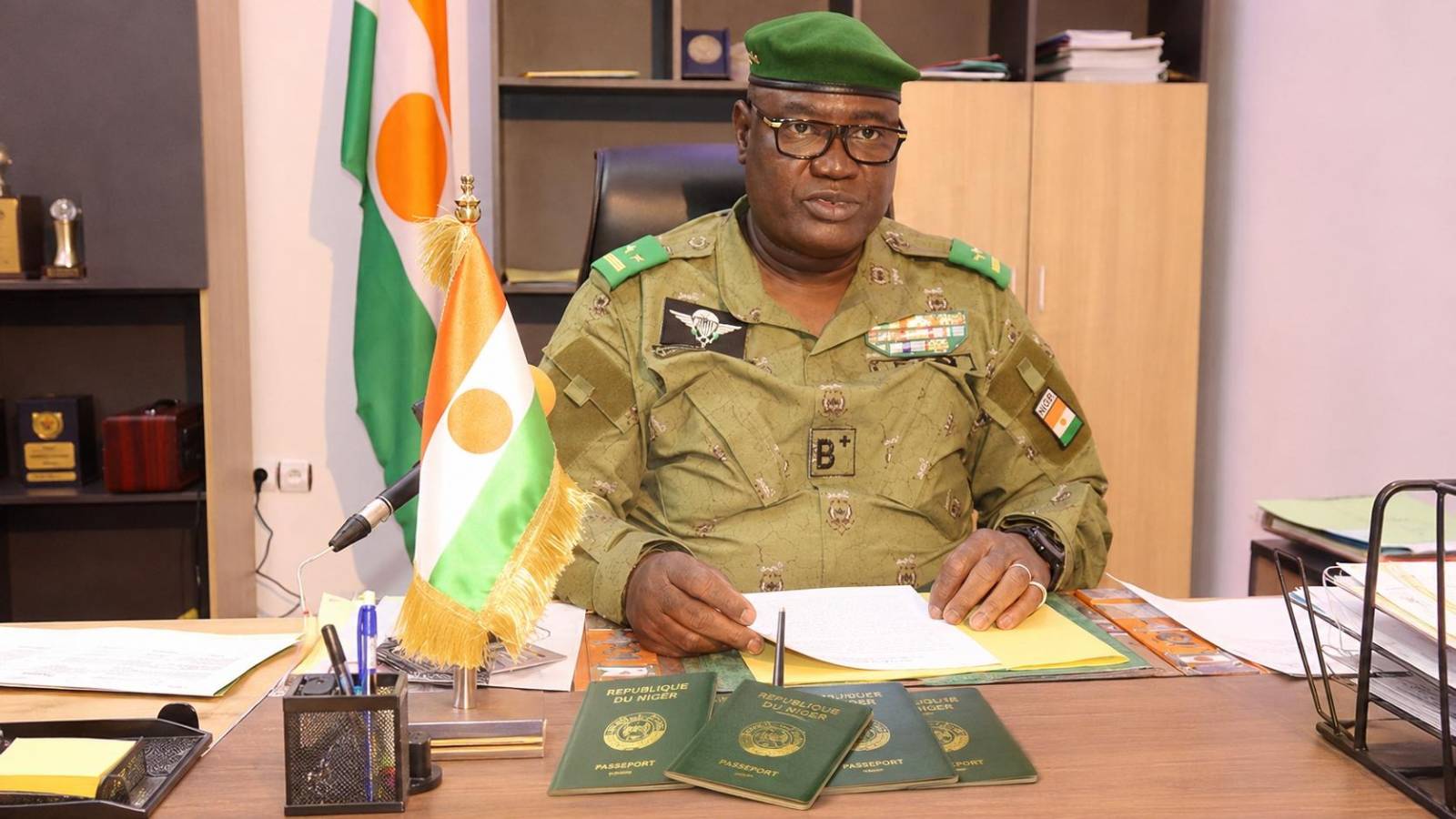
In an unprecedented move that has sent shockwaves through West Africa, Spain has quietly but decisively recalled its consul in Niamey. The decision follows the dismantling of a high-profile trafficking network specializing in the illegal sale of Schengen visas, with each document allegedly fetching over 2.5 million West African CFA francs on the black market. This explosive corruption scandal has now cast a harsh spotlight on institutional graft at the highest levels of Niger’s transitional government, with fingers pointing directly at the inner circle of General Mohamed Toumba, the country’s third most powerful figure in the CNSP (Conseil national pour la sauvegarde de la patrie).
As public outrage grows over the apparent hypocrisy of a regime that rails against foreign influence while profiting from it, President Abdourahamane Tiani remains conspicuously silent—a silence that speaks volumes about the fragility of the current transition.
The Spanish consul: a sacrificial pawn in a larger game
Madrid’s decision to terminate the consul’s mandate was not made lightly. While Spanish diplomacy typically avoids public commentary on staffing changes, intelligence sources in Niamey confirm that the removal is inextricably linked to what local media have dubbed “the visa affair”. The diplomat has been accused of either actively facilitating or passively enabling the illegal issuance of Schengen visas outside official channels. His dismissal sends a clear message: Spain will not tolerate corruption seeping into its consular operations, even in the most unstable regions.
Yet behind this expulsion lies a far more troubling revelation: the trafficking network was not the work of isolated criminals but a sophisticated, state-backed enterprise with direct access to European embassies. The scale of the operation suggests that high-ranking officials within Niger’s transitional government were not just aware of the scheme—they were profiting from it.
A web of corruption woven into the fabric of power
The investigation, spearheaded by the Direction générale de la documentation et de la sécurité extérieure (DGDSE), has peeled back layers of deceit to expose a corruption machine operating from the very heart of Niger’s seat of power. At the center of the scandal is the wife of General Mohamed Toumba, Niger’s Interior Minister and the CNSP’s third-ranking official. Leveraging her husband’s considerable influence, she allegedly orchestrated a parallel system where legitimate visa applications were bypassed in favor of a lucrative pay-to-play scheme.
For a staggering fee of 2.5 million CFA francs—equivalent to roughly €3,800—the network sold access to Europe’s Schengen Zone, targeting wealthy merchants and elite asylum seekers rather than the average Nigerian. This price point ensured that only the most affluent could exploit the loophole, transforming what should have been a diplomatic privilege into a state-sanctioned revenue stream for the military elite.
Internal power struggles intensify as the DGDSE strikes
The dismantling of the network has been hailed as a victory for Lieutenant-Colonel Souleymane Balla Arabé, head of Niger’s counterintelligence agency. By intercepting communications and gathering irrefutable evidence against Toumba’s inner circle, the DGDSE has not only exposed the extent of the fraud but also exacerbated existing divisions within the CNSP.
For a man tasked with upholding law and order, General Toumba now finds himself on the defensive. His association with transnational crime has severely undermined his credibility among peers and military personnel alike, further destabilizing an already fragile transitional government. The scandal threatens to unravel the CNSP’s fragile unity, with factions now scrambling to distance themselves from the tainted minister.
The president’s silence: complicity or calculated strategy?
As the visa scandal escalates and Spain’s consul faces expulsion, all eyes are on President Tiani. Yet, despite the gravity of the situation, he has offered no official statement, no condemnation of the implicated officials, and taken no punitive action against General Toumba or his associates. This deliberate silence is being interpreted by political observers in Niamey as either tacit approval or a calculated refusal to confront the rot at the core of his administration.
The irony is stark. The CNSP came to power promising to dismantle the corruption that plagued the previous regime and to rebuild Niger’s institutions on principles of transparency and accountability. Yet, by shielding key figures from accountability, President Tiani risks eroding public trust in the transition itself. Critics argue that his inaction signals a preference for preserving internal power balances over delivering on the promises of reform that justified the 2023 coup.
A defining moment for Niger’s transition
The Spanish consul’s dismissal is more than a diplomatic incident—it is a litmus test for Niger’s transitional government. The scandal lays bare a glaring contradiction: a regime that publicly rejects Western influence while privately monetizing access to Europe through illicit means. Madrid’s decisive response underscores the international dimension of the crisis, leaving Niger’s leadership with an uncomfortable choice.
Will President Tiani finally act to cleanse his administration of corruption, or will the protection of entrenched interests within the CNSP prevail? The answer will define not only the trajectory of Niger’s political future but also the credibility of its much-touted commitment to reform.