From whispers to waitlists: the unspoken crisis reshaping Niger
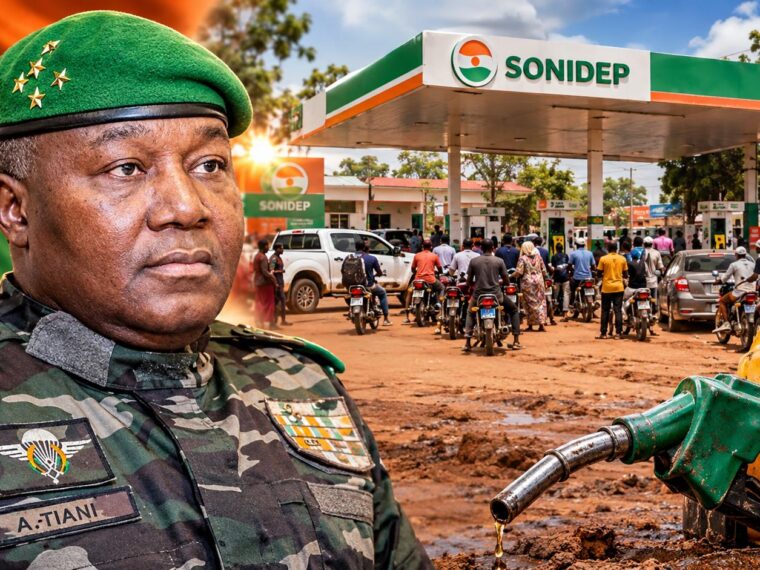
In Niger, where daily life is increasingly dictated by the availability of fuel, a stark contrast has emerged between official statements and public experience. While motorists and commercial drivers queue for hours at half-empty stations, authorities maintain that the country faces no fuel shortage at all. This disconnect between rhetoric and reality raises a pressing question: can a crisis truly be invisible if it occupies every street corner?
For months, the Nigerien government has championed its fuel pricing policy as evidence of economic stability. Yet a low price tag does little to alleviate the strain when fuel itself becomes scarce. From transporters to traders, the absence of a steady supply imposes a silent tax on the entire economy a cost that is anything but theoretical.
The Sahel’s shared challenge: denial vs. demand
The Nigerien experience echoes a broader pattern across the Alliance of Sahel States (AES), a coalition including Niger, Mali, and Burkina Faso. In each nation, military-led governments have faced the delicate task of reconciling official narratives with the hardships endured by their people. In Mali, for instance, authorities acknowledged prolonged fuel disruptions in a 2026 New Year address, attributing them to logistical hurdles while insisting on the absence of major shortages. Yet such admissions have not translated into preventative action in Niger, where denial has become its own kind of policy.
The stakes are particularly high in landlocked Niger, where fuel imports rely heavily on transit through neighboring coastal states. Any disruption in these supply chains sends immediate ripples through the economy disrupting agriculture, halting public transport, and forcing businesses to scale back operations. The government’s insistence on the absence of a crisis does not change these facts; it only deepens the perception of disconnect between leadership and lived reality.
Transparency over slogans: can statistics replace perception?
The crux of the issue lies not in the word itself, but in the absence of verifiable data to counter the visible evidence. If no shortage exists, authorities could dispel doubt by publishing transparent figures: inventory levels, regional supply volumes, import quantities, and station-wise availability. Concrete data would provide citizens with the clarity they currently lack, while vague assurances do little to bridge the gap between perception and policy.
This gap has grown wider in the Sahel, where governments frequently decry external “disinformation campaigns” while sidestepping uncomfortable truths. Yet the erosion of trust is not a conspiratorial plot it is the natural result of a narrative that refuses to align with the lived experience of the people. When citizens see one reality and are told to accept another, skepticism becomes the only rational response.
The turning point Niger cannot ignore
Denial may be easier than accountability, but silence does not make a crisis disappear. It only ensures that the cost of that silence will be measured in lost trust, stalled productivity, and growing public frustration. The Nigerien government’s insistence on the absence of a fuel shortage may postpone difficult conversations, but it cannot erase the consequences of a policy vacuum. As long as the streets remain lined with waiting vehicles and the pumps remain understocked, the question will persist not as speculation, but as a statement of fact: the crisis is not a rumor, and it is not going away.
For Niger, the moment to confront reality is now. For if the current trajectory continues, the gap between official narrative and public experience will widen from a turning point into a rupture one that may take far longer to repair than the time lost in denial.
By Thomas Nkoulou — Journaliste / Rédacteur
