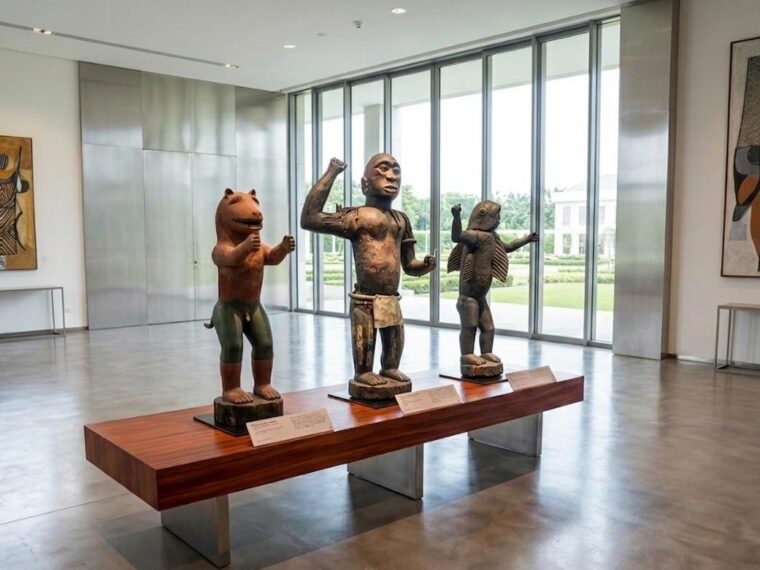
The Republic of Benin has entered a decisive phase in its long-standing quest to reclaim its cultural heritage. Following the triumphant return of 26 royal treasures from Abomey in 2021, President Romuald Wadagni has now escalated efforts by formally requesting France to hand over 35 additional cultural artifacts and historical documents currently housed in French institutions. This decisive move marks a turning point in Benin’s heritage restitution strategy, blending historical justice with a forward-looking vision for cultural sovereignty and national pride.
From symbolic victory to strategic reclamation
Benin’s engagement in the restitution of cultural assets has evolved from a symbolic demand into a structured diplomatic campaign. The latest request for 35 artifacts — including sacred objects, royal regalia, and ancient manuscripts — represents more than a retrieval of lost items; it symbolizes a reclaiming of national identity that was disrupted during the colonial era.
Among the artifacts now sought are pieces linked to theKingdom of Dahomey, its rulers, and its spiritual traditions. These objects, transported to Europe in the late 19th century, are not mere relics — they are fragments of a narrative that Benin is determined to reconstruct and share with its people. Their restitution would fill critical gaps in the national collection and strengthen the historical narrative presented in Benin’s museums.
Building the infrastructure for a cultural rebirth
While the return of artifacts is pivotal, their preservation and public presentation are equally essential. Benin has committed significant resources to developing state-of-the-art museum infrastructure capable of safeguarding these treasures while making them accessible to both citizens and international visitors.
Expanding Benin’s museum landscape
- Abomey: The Museum of the Amazons and Kings of Danxomè will highlight the legacy of the Dahomey Kingdom, including restored exhibits of the returned royal treasures.
- Porto-Novo: The International Vodun Museum will demystify one of Benin’s most misunderstood cultural traditions, positioning it as a living heritage.
- Ouidah: A new museum dedicated to the memory of the transatlantic slave trade will anchor the city’s role in global history and begin a new chapter of remembrance and education.
These projects are designed not only to house artifacts but to create immersive educational experiences. Each museum will employ digital storytelling, guided tours, and community programs to ensure that visitors — especially young citizens — understand the significance of what has been reclaimed.
A cultural legacy as an economic catalyst
The government views cultural restitution as part of a broader strategy to position heritage as a driver of sustainable development. By transforming historical sites and traditions into high-value tourist attractions, Benin aims to diversify its economy and create jobs across multiple sectors.
Anticipated tourism routes could link:
- Abomey’s palaces and royal heritage sites
- Porto-Novo’s colonial architecture and Vodun culture
- Ouidah’s slavery memorials and cultural festivals
This integrated approach could catalyze growth in hospitality, local crafts, guided tours, transportation, and event services — turning cultural memory into tangible economic opportunity. TheVodun Days festival and other cultural events are already laying the groundwork for this vision.
Securing the future: conservation, education, and identity
Restitution is only the beginning. Benin faces the dual challenge of conserving sensitive materials — ancient wood, metal, textiles, and manuscripts — while equipping a new generation of curators, conservators, historians, and educators.
Investments in training programs are underway to develop local expertise in artifact restoration, climate-controlled storage, and educational outreach. The goal is to integrate returned artifacts into school curricula, university research, and public discourse, ensuring that Benin’s youth see their heritage not as a distant past, but as a living foundation for the future.
Redefining global heritage governance
Benin’s actions signal a broader shift in the global conversation about cultural ownership. For decades, European museums have held vast collections of African artifacts, often acquired under colonial conditions. Now, African nations are asserting their right to manage and interpret their own heritage within their own borders.
The request for 35 new artifacts from France — following the successful return of 26 in 2021 — reflects a growing confidence and a clear legal and moral framework guiding restitution efforts. Though negotiations may be lengthy and complex, the message from Cotonou is unambiguous: Benin is reclaiming its past to build a stronger future.
“These artifacts are not just objects — they are witnesses to our history. Their return is not an act of charity, but a restoration of justice. And we are building the institutions today that will ensure they endure for generations.”
From memory to momentum: a turning point for Benin
The push for 35 additional cultural treasures represents more than a demand for restitution. It is a declaration of national sovereignty, a commitment to historical truth, and a strategic investment in education and tourism. It is also a call to the world: Benin is not asking for handouts — it is claiming its rightful place in the global narrative of culture and identity.
As negotiations proceed, one thing is clear: Benin is no longer waiting for its history to be returned. It is taking decisive action to bring it home — and to use it as the foundation for a new era of pride, knowledge, and prosperity.
