Since departing from the Prime Minister’s Office, Ousmane Sonko has undergone a notable transformation in his public discourse. Once known for his fiery rhetoric, the Pastef leader has adopted a more measured, nuanced tone, positioning himself as a voice of moderation while attempting to shed his combative image.
A calculated evolution in rhetoric
At the recent Pastef party congress in Diamniadio, Sonko urged his most militant supporters to temper their language in public spaces. Addressing a receptive crowd, he emphasized the need for discipline: “Our words carry weight, followed by religious leaders, families, and citizens alike. Insults and provocations do not elevate our cause.” His call for restraint signals a deliberate shift in strategy, one that seeks to redefine his political identity beyond past confrontations.
The transformation has not gone unnoticed. Observers question whether this represents a genuine evolution or a tactical adjustment ahead of future political ambitions. Sonko’s recent interviews, including one with international media, have showcased a leader weighing each word carefully—far removed from his earlier uncompromising stances on issues like debt restructuring.
From absolute positions to pragmatic flexibility
Where once he demanded outright debt cancellation, Sonko now adopts a more pragmatic approach. In response to questions about potential restructuring, he stated: “We are not bound by rigid positions. We will assess the situation with clarity and act in the national interest.” Yet his statements remain layered with contradictions, revealing the complexity of his current stance.
On the question of “odious debt,” Sonko initially distanced himself from his past rhetoric before revisiting the concept: “This debt is partly odious. Political courage is needed to address this debate.” When pressed on why he didn’t act during his time as Prime Minister, his response was vague: “It was proposed, it was proposed.” His shifting positions—sometimes as party leader, other times as Prime Minister—only deepen the ambiguity.
Equally revealing were his comments on homosexuality, where he both reinforced traditional stances and introduced new justifications. While acknowledging arrests predating recent legal changes, he emphasized a public health rationale: “The primary goal is to curb the spread of the phenomenon.” His remarks drew swift criticism from opponents who pointed to past statements advocating a stricter crackdown.
Pastef’s new identity: maturity over militancy
Sonko’s vision for Pastef is clear: a party of ideas, science, and solutions—not confrontation. “Show the world you are an educated, thoughtful, and responsible youth,” he told delegates in Diamniadio. “Do not fall into the trap of provocation. Your opponents want to paint you as violent, to justify a return to instability.”
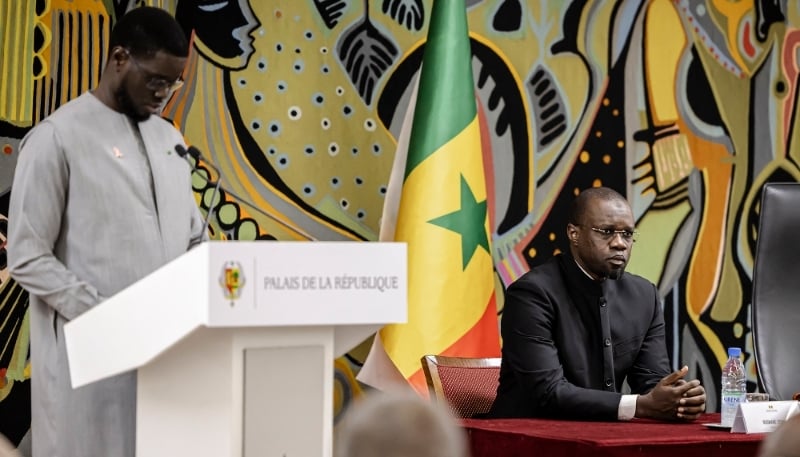
The leader’s recent statements avoid direct attacks on President Bassirou Diomaye Faye, dismissing the idea of personal betrayal as a matter of “affection and morality.” Instead, he frames their differences as political divergences—a subtle but significant shift in tone.
Whether this evolution reflects genuine political maturation or a calculated repositioning remains an open question. What is certain is that Ousmane Sonko is navigating a delicate balance between past militancy and a future defined by restraint—and the nation is watching closely.