sacrificing savings: how tabaski pushes senegalese into debt
Every year, millions of Senegalese plunge into debt to honor a religious tradition turned financial burden. From rotating savings clubs to microfinance schemes, an entire ecosystem thrives on a festival that now threatens household stability.
the rising cost of sacrifice: a tradition priced out of reach
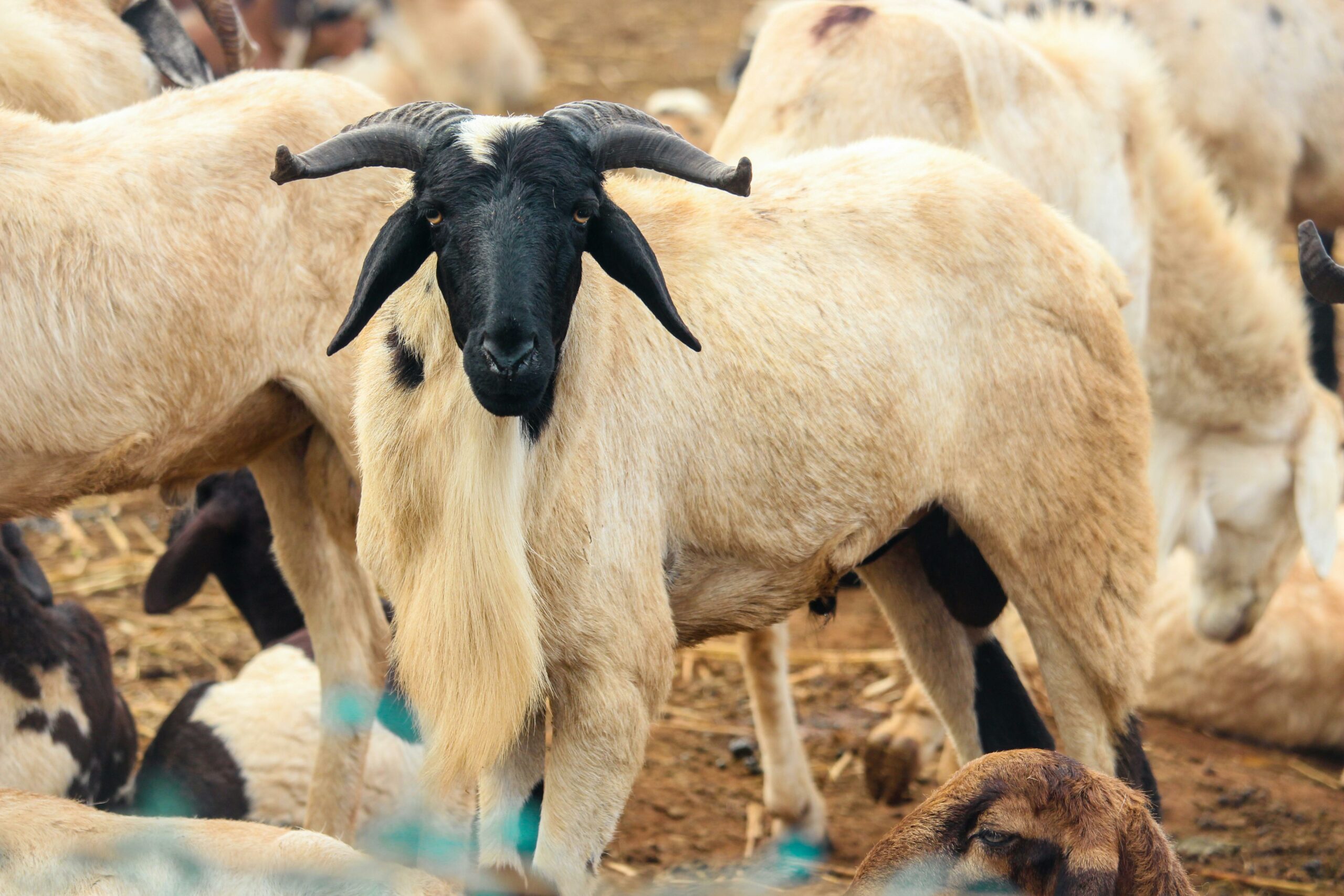
Two weeks before Tabaski, the anxiety spreads across Dakar’s neighborhoods—from Almadies to Sacré-Cœur. The price of a decent sheep has jumped again. What cost 120 000 FCFA yesterday now demands 150 000, sometimes 200 000. For the showpiece animals—those photographed and shared on WhatsApp—buyers pay up to 300 000 FCFA or more.
The question haunts fathers: How will I find this money? Each year, Tabaski arrives like a scheduled punishment. What began as a spiritual observance has morphed into a status-driven obligation.
from faith to finance: the commercialization of tabaski
Take Mamadou Sall, a Sacré-Cœur resident earning 60 000 FCFA a month. By May, sleepless nights begin. By July, he must produce 150 000 FCFA—two and a half months’ salary—not to feed his family for a week, but to uphold tradition. To let his neighbors see his sacrifice. To keep his household’s reputation intact.
Banks will not lend for sheep. Instead, he joins his neighborhood tontine. They advance 150 000 FCFA, but at what cost? Tontine interest rates during Tabaski climb to 30–50 % annually. On a 150 000 FCFA loan, upfront fees can reach 3 750–6 250 FCFA, followed by twelve months of repayment.
Mamadou’s story is not unique. Between 35 % and 45 % of all microfinance credit issued in Senegal during Tabaski season is used to buy sheep. Nearly every other loan in July and August finances an animal that will be consumed within months.
a fifteen-year price surge
In 2010, a sheep cost 60 000–80 000 FCFA. Today, prices range from 150 000 to 250 000 FCFA—an increase of 87 % to 275 % in just fifteen years. This inflation outpaces general price growth, driven by concentrated demand over two months. The demand is inelastic: families feel they must buy regardless of cost. Breeders and middlemen exploit this leverage, pushing prices ever higher.
The Senegalese minimum wage (SMIG) stands at 60 239 FCFA per month. To purchase a 150 000 FCFA sheep, a minimum-wage worker must surrender two and a half months’ entire salary. This does not include clothing, food, or gifts for the festival. For the 60 % of Senegalese living below the poverty line, Tabaski is unattainable without debt.
credit on steroids: how tabaski fuels debt machines
For Tabaski 2024, Senegalese microfinance institutions logged a 62 % surge in loan applications compared with the rest of the year. Typical requests ranged from 120 000 to 200 000 FCFA. Two months of frenzied borrowing create a debt tsunami that lasts until October.
the hidden interest rates
With formal bank credit largely out of reach, an intricate web of informal lending flourishes. Tontines, microfinance, and private lenders all raise rates during Tabaski season.
| credit source | off-season rates | tabaski-season rates |
|---|---|---|
| local tontines | 15–30 % | 30–50 % |
| formal microfinance | 24–36 % | 36–48 % (short-term) |
| private informal lenders | 30–40 % | 50–60 %+ |
| commercial banks | nearly inaccessible | nearly inaccessible |
Local tontines accelerate their rotation cycles. Informal credit interest rates hit 30–50 % annually during Tabaski, turning a 150 000 FCFA loan into a total repayment of 172 500–225 000 FCFA after twelve months. Formal microfinance offers slightly better terms—24–36 %, or up to 48 % for three-to-six-month loans—but still adds 3 000–6 000 FCFA in immediate fees on a 150 000 FCFA advance.
social media: the new judge of tabaski worth
Over the past decade, Tabaski has migrated to social platforms. Once, only neighbors judged your sheep. Now, 500 WhatsApp contacts see it. They don’t just see it—they critique, compare, and rank. According to a 2023 Cheikh Anta Diop University study, 67 % of young Dakarois feel pressured to buy an expensive sheep for Tabaski. Of those, 48 % cite social media as the main source of that pressure.
Men feel the weight most acutely. In Senegalese culture, the patriarch purchases the sheep. Failure to provide one is read as personal failure—proof of inability to provide for one’s family.
the hidden human cost
Households that borrow for Tabaski reduce food and healthcare spending by 18–25 % in the three months that follow. Children miss school fees. Essential medicines go unfilled. The true economic cost of Tabaski’s social pressure far exceeds the price tag on the animal.
Worse still, some farmers divert agricultural credit—meant for seeds and fertilizer—into Tabaski sheep purchases. Between 8 % and 12 % of Senegalese agricultural loans are reallocated to festive consumption. A farmer who could have boosted next season’s harvest by 30 % instead spends the funds on social prestige. When planting season arrives, he lacks the means to invest.
Morocco’s lesson: a public right, not a private burden
In 1999, Morocco’s monarch made a decision: every poor Moroccan would receive a sheep for Tabaski—not as charity, but as a right. The state recognized that a religious festival should not be held hostage to market forces.
Since then, Morocco has distributed more than 2.8 million sheep through its Zakat Al-Fitr royal program at an annual cost of about 450 million Moroccan dirhams—roughly equivalent to 43 billion FCFA. That represents less than 0.1 % of Morocco’s national budget.
Morocco recognized a simple truth: a religious festival whose access depends on personal wealth is not truly religious. It is a social-distinction mechanism masquerading as tradition. By treating Tabaski as a public good instead of a private expense, Morocco transformed a seasonal debt trap into a moment of shared dignity. The Senegalese government could adopt the same approach.
Sénégal’s stalled path
Senegal spends almost nothing on Tabaski support. A handful of municipalities and private religious groups offer limited assistance, but the vast majority of families are left to navigate predatory credit markets and the psychological weight of social judgment.
Recovery agencies report a troubling pattern: household over-indebtedness peaks three months after Tabaski. Repayments coincide with survival struggles. Food portions shrink. Medical bills go unpaid. Children leave school.
Mental health data tells an equally stark story. A 2022 study by the Dakar Mental Health Research Center found a sharp rise in calls to helplines three weeks before Tabaski—the number of calls from men aged 30–55 doubles. The dread of an unaffordable sheep, the shame, the fear of public judgment—these pressures weigh heavily on families.
how did we get here?
Two forces drive today’s crisis. First, the transformation of Tabaski into a conspicuous consumption spectacle. What was once a spiritual observance has merged with urban ostentation. Social media accelerated the shift: Look at my sheep. Witness my wealth. Admire my respectability.
Second, the absence of public policy. The Senegalese government has not framed Tabaski as a social issue. Politicians rarely mention it. Media coverage is sparse. Meanwhile, millions of households gamble their financial futures every July.
Mamadou’s tontine collector has already started calling. Tabaski 2025 looms. Sheep prices rise. Interest rates climb. The cycle resumes.