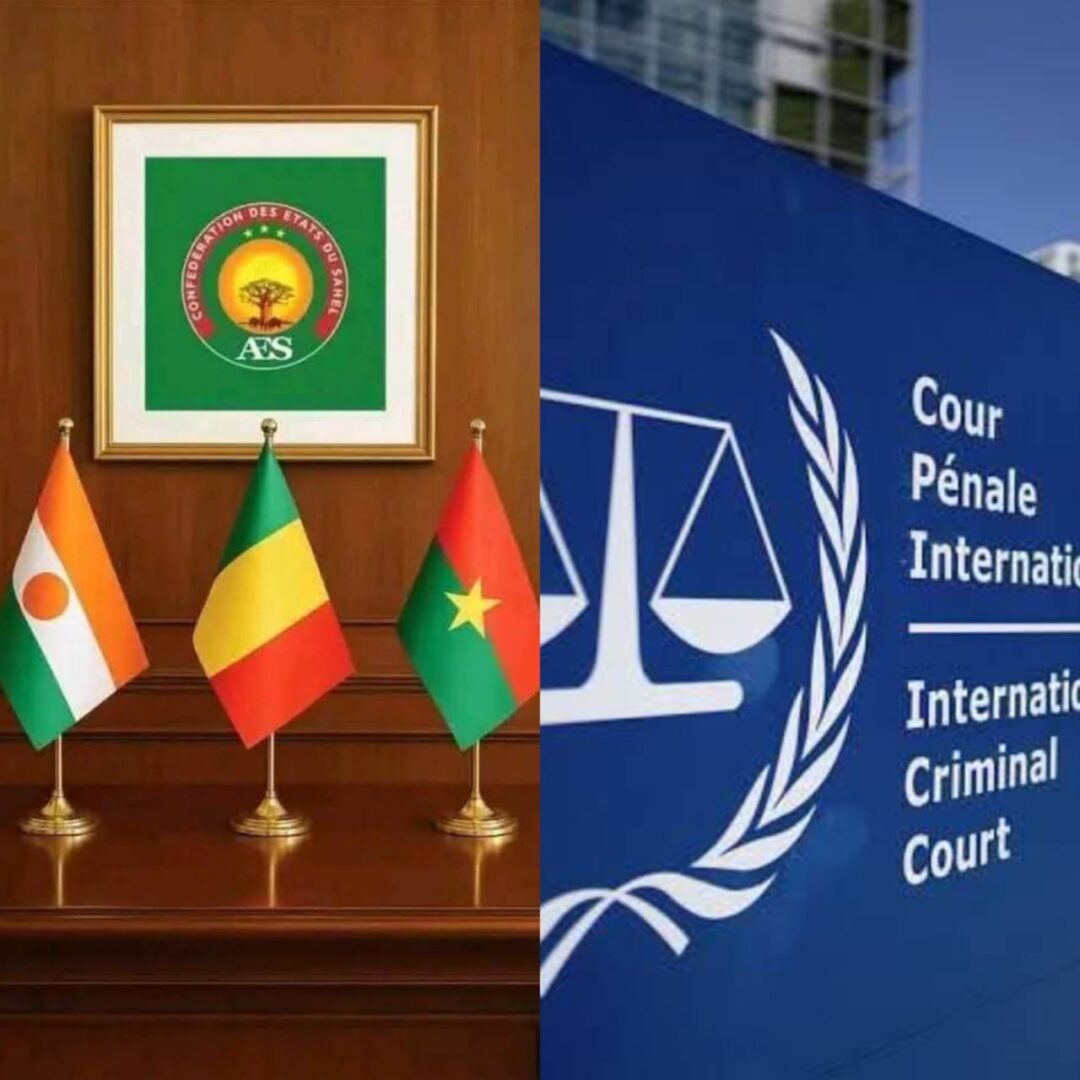
The withdrawal of Burkina Faso, Mali, and Niger from the International Criminal Court (ICC) marks more than a diplomatic shift—it signals a fundamental challenge to the very foundations of global justice in the 21st century.
The decision, finalized by the Alliance of Sahel States (AES) on September 22, was not merely a rebuke of international institutions but a declaration of defiance against a system many now view as deeply flawed. While critics argue that this move paves the way for unchecked impunity among military-led governments under scrutiny, the broader reaction across the Global South reveals a deeper disillusionment with the ICC’s ability to deliver impartial justice. The withdrawal exposes glaring contradictions within the Court itself, from its perceived bias to its failure to hold powerful actors accountable for egregious violations.
From Diplomacy to Defiance: The Sahel’s Path to Sovereignty
For transitional authorities in Bamako, Ouagadougou, and Niamey, severing ties with the ICC is the logical next step in a broader campaign to reclaim national autonomy. This follows a series of bold political and institutional ruptures—denouncing military agreements with Western powers, exiting the Economic Community of West African States (ECOWAS), and withdrawing from the Francophonie—each step reinforcing a doctrine of self-determination. The message is unambiguous: the Sahel will address its internal challenges on its own terms.
Yet beneath the rhetoric of independence lies a pragmatic calculation. As the AES grapples with an escalating asymmetric war against terrorist factions, accusations of civilian casualties and alleged human rights abuses have mounted. By abandoning the ICC, these governments erect a legal shield for military command structures while aligning with non-Western security partners, notably Russia, which has openly defied the Court’s authority.
The ICC’s Credibility Crisis: A Justice System in Question
The Sahel’s withdrawal resonates deeply across the Global South because it underscores a troubling reality: the ICC’s promise of universal justice remains unfulfilled. The Court’s inability to prosecute architects of catastrophic conflicts—such as the 2003 Iraq invasion, launched under false pretenses—has eroded trust in its neutrality. Figures like George W. Bush and Tony Blair, whose actions resulted in hundreds of thousands of deaths, have faced no consequences at The Hague. Meanwhile, when the ICC dared to investigate alleged war crimes by U.S. forces in Afghanistan, Washington retaliated with punitive financial sanctions against its prosecutors.
The Court’s selective pursuit of justice further fuels skepticism. The prolonged detention of former Ivorian President Laurent Gbagbo—acquitted after nearly a decade behind bars due to what judges described as “exceptional weakness” in the prosecution’s evidence—exemplifies the ICC’s uneven application of the law. The perception that the Court serves as an instrument of “victor’s justice” persists, with investigations often targeting only one side of a conflict while overlooking allied forces.
Even in cases where the ICC has acted decisively, such as issuing an arrest warrant for Vladimir Putin over the Ukraine invasion, the contrast with past inaction raises questions. Decades of inertia toward Western-led conflicts or their allies stand in stark opposition to the swift legal response to Russia’s actions.
A Call for Continental Justice: Can Africa Lead the Way?
The Sahel’s defiance is not a call to abandon justice altogether but a demand for a system that reflects the realities of the Global South. Africa already possesses robust legal frameworks to protect human rights, including the African Court on Human and Peoples’ Rights (ACHPR) at the continental level and the ECOWAS Court of Justice at the regional level.
However, a critical contradiction persists. While African nations criticize the ICC for overreach or political manipulation, many routinely disregard rulings from their own regional courts. The ECOWAS Court, for instance, has issued landmark decisions condemning arbitrary arrests, political repression, and authoritarian excesses. Yet too often, member states ignore these judgments when they conflict with domestic agendas, rendering the rhetoric of sovereignty hollow.
For the Sahel’s withdrawal to have meaning beyond political posturing, it must catalyze a transformation in Africa’s judicial landscape. Strengthening the ECOWAS Court, ensuring rigorous enforcement of its rulings, and investing in its independence are essential steps. True sovereignty cannot be achieved by replacing international arbitrariness with unchecked national impunity. A genuine rule of law—whether in the Sahel or across Africa—requires judges who are insulated from political pressure and whose decisions bind even the highest authorities.
The AES’s exit from the ICC should not be dismissed as mere defiance. It is a clarion call for the international legal order. The message from the Sahel is clear: the era of a justice system dictated by the West is over. The challenge now lies with African institutions to prove that the alternative is not the law of the strong, but a continent-wide judiciary that is equitable, independent, and respected by all.