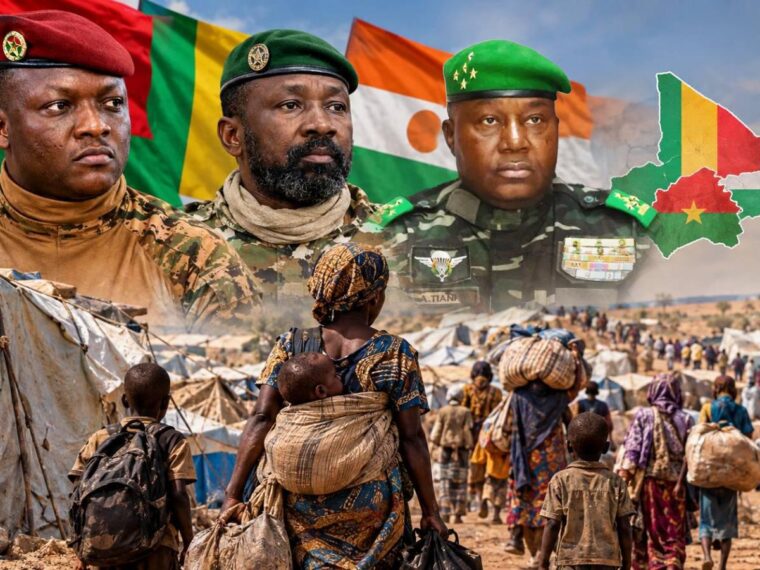
The Sahel’s humanitarian crossroads: nearly 4 million uprooted as displacement crisis deepens
Nearly 4 million people have been forcibly displaced across Burkina Faso, Mali, and Niger, doubling the figures recorded in 2020 a year that marked a turning point with the first military coup in Mali. This surge in displacement underscores a stark contrast between government promises and the harsh realities faced by affected communities, raising urgent questions about the effectiveness of military-led security strategies in the Sahel.
From hope to hardship: the human cost of failed security promises
The Alliance of Sahel States (AES) emerged with bold declarations of restoring sovereignty, reclaiming territory, and ensuring security. Yet, the relentless rise in displaced populations suggests that these objectives remain unmet for millions. Families torn from their homes, children deprived of stability, and communities fractured by violence reveal the gap between rhetoric and results.
Displacement does not merely reflect a numerical crisis; it exposes systemic failures. Those uprooted often abandon livelihoods, land, and social networks in search of safety, only to encounter overstretched resources, inadequate shelter, and limited access to essential services. The human toll extends beyond immediate trauma, embedding long-term scars in the region’s economic and social fabric.
Military rule and the Sahel’s displaced: promises unfulfilled
For military authorities in the Sahel, security is the cornerstone of legitimacy. However, the escalating displacement crisis challenges this narrative. If governance were measured by tangible improvements in safety and living conditions, the current trajectory would demand immediate reassessment. The AES’s focus on military operations and sovereignty symbols has yet to translate into tangible relief for those most affected.
Political propaganda, while pervasive, cannot substitute for concrete action. The true test of leadership lies in addressing the daily struggles of displaced populations ensuring housing, healthcare, education, and economic opportunities. Until these needs are met, the credibility of military-led governance remains in question.
The economic ripple effect: how displacement reshapes the Sahel
The displacement crisis is not confined to humanitarian concerns; it has profound economic consequences. Host communities, already grappling with limited resources, bear the brunt of an influx of displaced persons. Strain on local infrastructure, competition for jobs, and increased pressure on social services create tensions that further destabilize the region.
For displaced individuals, the loss of income-generating activities exacerbates poverty, pushing families deeper into vulnerability. Without targeted interventions, the economic fallout of displacement risks perpetuating cycles of instability, undermining long-term recovery efforts in the Sahel.
Beyond statistics: the silent struggles of the displaced
Behind the cold figures of nearly 4 million displaced persons are stories of resilience and despair. Women and children, often the most vulnerable, face heightened risks of exploitation, trafficking, and gender-based violence. Access to education for displaced children remains precarious, while adults struggle to rebuild livelihoods in unfamiliar and often hostile environments.
The psychological toll is equally profound. The trauma of displacement lingers, manifesting in anxiety, depression, and a sense of lost identity. Humanitarian aid, while essential, frequently falls short in addressing these deeper, long-term needs, leaving many to navigate an uncertain future.
Reevaluating the Sahel’s path forward
The displacement crisis in the Sahel demands more than symbolic gestures. It requires a fundamental shift in approach one that prioritizes the needs of displaced populations over political posturing. Effective solutions must include:
Enhanced security measures: Targeted operations to dismantle armed groups while protecting civilian lives.
Sustainable livelihood programs: Vocational training, agricultural support, and job creation to help displaced individuals regain economic independence.
Community integration initiatives: Programs that foster social cohesion between displaced persons and host communities to mitigate tensions.
Transparent accountability: Regular assessments of government policies to ensure they align with the needs of affected populations.
The Sahel stands at a pivotal moment. The path forward must move beyond declarations of sovereignty to deliver tangible improvements in security, stability, and quality of life for all citizens. Until then, the displaced will remain a stark reminder of the unmet promises of military-led governance in the region.
By Agnès Mvogo — Journaliste / Rédacteur
