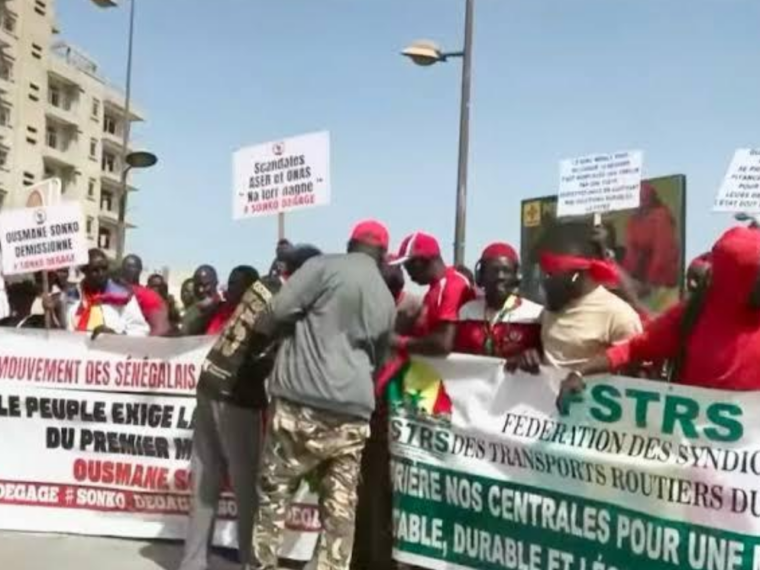
Dakar, October 2026 — The Senegalese capital is bracing for a high-stakes 72-hour nationwide strike starting October 21, as multiple unions escalate pressure over unmet government promises, delayed wage payments, and deteriorating work conditions. The protest, led by the G7 education coalition and the Front syndical pour la défense des travailleurs (FSDT), signals growing frustration with bureaucratic inertia and institutional failure to honor signed agreements.
Unpaid wages and broken promises fuel the showdown
At the heart of the mobilization is the education sector, where the G7 coalition—comprising seven major unions—has triggered a three-day walkout. Teachers are demanding immediate disbursement of outstanding allowances, resolution of pending administrative cases, and fulfillment of training commitments tied to the April 16, 2026, accord. Delays in processing salaries for contract workers, administrative bottlenecks, and disruptions to training schedules have fueled deep resentment, particularly ahead of the delayed start of the 2026-2027 academic year.
The FSDT, representing workers across industries, has broadened the scope of demands beyond education. Its agenda includes stricter enforcement of labor rights, improved job security, and tangible improvements in employment conditions. Analysts warn that unless resolved swiftly, the strike could paralyze public services and disrupt economic activity.
Government stance: negotiation vs. legal consequences
In response to rising tensions, Prime Minister Ahmadou Al Aminou Lo convened a tripartite steering committee session on October 15, reaffirming the administration’s commitment to dialogue. He urged unions to observe a three-month moratorium on strikes to allow negotiations to proceed. However, the government has also signalled a firm stance: on October 20, the Ministry of Public Service and Labour declared that a single strike notice filed with one ministry does not legally cover a general strike spanning public, parapublic, and private sectors. It cautioned that non-compliant work stoppages could lead to salary deductions and disciplinary measures.
The day before the strike began, authorities pledged to ensure the free movement of people and goods and protect the right of employees to report to work without intimidation. Yet union leaders argue that rhetorical commitments fall short of actionable progress.
Political fractures amplify social unrest
The strike unfolds amid deepening political divisions in Senegal. Disputes over 2027 budget allocations and strained relations between the executive branch and parliamentary majority are eroding public confidence in the government’s ability to address mounting economic and social challenges. While the unions emphasize professional and workplace grievances, the timing of the protest intensifies scrutiny on the state’s credibility.
The upcoming Youth Olympic Games add another layer of urgency. Authorities are keen to maintain operational stability and project a stable image internationally. Meanwhile, unions insist on pressing their demands regardless of the high-profile event’s proximity.
Can dialogue avert a prolonged crisis?
With the strike now underway, the critical question is whether both sides can transition from confrontation to constructive negotiation. A resumption of talks paired with a clear implementation timeline for previous agreements could de-escalate tensions. Failure to deliver tangible results risks deepening distrust between workers and the state.
For schools, families, public service users, and businesses, the impact will depend on the strike’s scale and duration. For the government, this moment tests its capacity to balance fiscal discipline, uphold public commitments, and restore social cohesion. In a nation where sustainable stability hinges on robust state-union dialogue, the path forward will be defined not by words, but by verifiable actions.