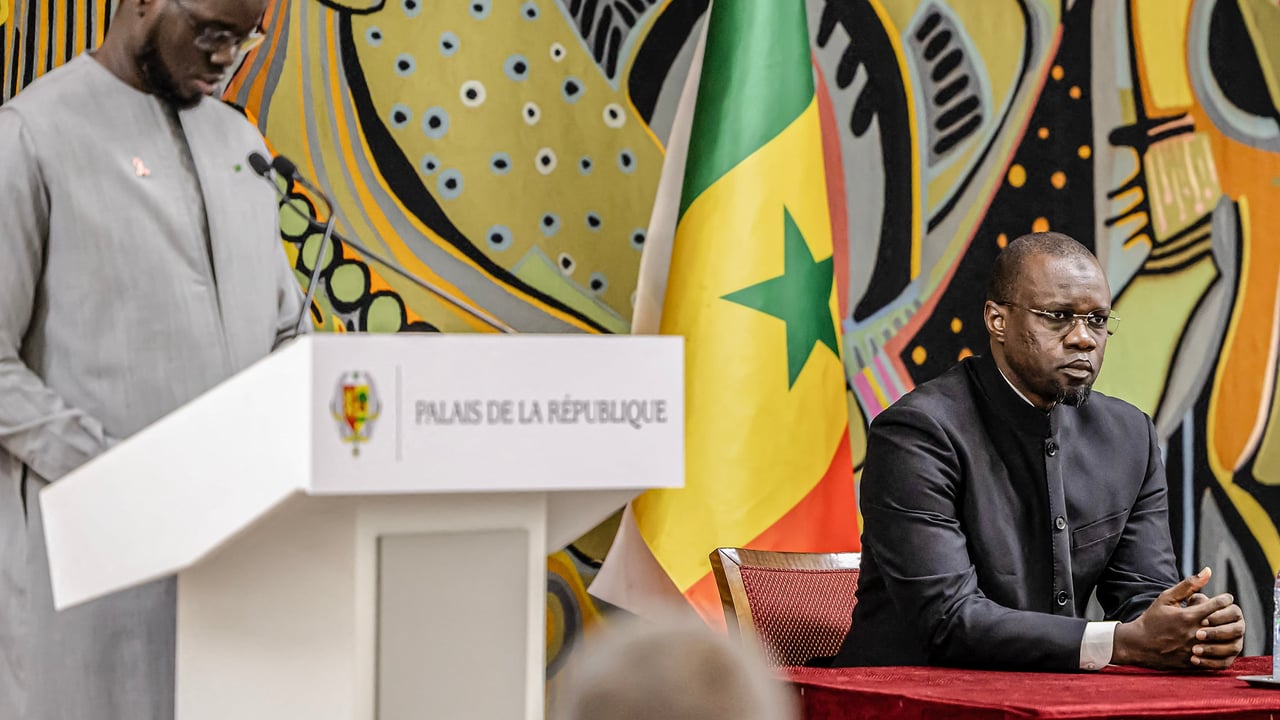

“I want strong CEOs, strong ministers, a super-strong Prime Minister. I don’t want to be the kind of president who holds all the power.” On April 4, 2025, during a press briefing marking National Day, President Bassirou Diomaye Faye made his stance clear: he intends to overhaul the distribution of powers between the head of state and the government. While his words signaled a potential shift in Senegal’s political landscape, a closer look reveals why opposition leader Ousmane Sonko could emerge as the primary beneficiary of these proposed constitutional changes.
Constitutional reform: a strategic move with uneven consequences
The president’s stated goal is to decentralize authority, ensuring a more balanced governance structure. However, this reform could inadvertently tip the scales in favor of Sonko, whose political ambitions have consistently challenged the status quo. By limiting the president’s executive powers, the proposed changes may create a power vacuum that Sonko’s party, PASTEF, is best positioned to fill.
A weakened presidency could strengthen Sonko’s hand
Under the current system, the president wields significant control over both executive and legislative processes. If constitutional amendments reduce this authority—by, for example, curbing the president’s ability to appoint key officials or dissolve parliament—the political landscape could shift dramatically. Sonko, whose party has gained substantial traction in recent years, would likely find himself at the forefront of a more fragmented power structure, where his influence could grow unchecked.
The opposition’s path to influence
Sonko’s rise has been fueled by widespread dissatisfaction with traditional political elites. A constitutional reform that weakens the presidency could provide him with the perfect opportunity to consolidate his position. By positioning himself as a champion of democratic reform, he could rally support not only from his base but also from disillusioned voters seeking change. The proposed changes might inadvertently hand him the keys to a more dominant role in Senegal’s political future.
What’s next for Senegal’s political future?
As the constitutional debate heats up, the stakes could not be higher. While President Faye’s intentions may be rooted in a desire for a more balanced government, the unintended consequence could be a political realignment that elevates Sonko to new heights. Whether this leads to greater democracy or deeper divisions remains to be seen—but one thing is certain: the reforms will reshape Senegal’s power dynamics in ways that could benefit Sonko more than any other figure.