
Senegal’s democracy tested as Sonko and Faye navigate power shift
When charismatic leadership meets institutional limits
The political equation unfolding in Dakar today isn’t merely about two men in conflict. It represents the collision between two competing forms of legitimacy: the institutional authority vested by the constitution and the raw, emotional mandate claimed by charismatic leadership. This tension has a name in political science—hubris—a force powerful enough to reshape nations, yet perilous when unchecked by democratic guardrails.
Ousmane Sonko’s rise from opposition firebrand to parliamentary leader reveals much about Senegal’s political evolution. His journey began not in the halls of power, but in the streets, where he channeled the frustrations of a generation excluded from the country’s prosperity. With slogans of sovereignty, dignity, and grassroots renewal, he dismantled the perception of a closed, elite-driven political system and made the marginalized feel seen for the first time in decades.
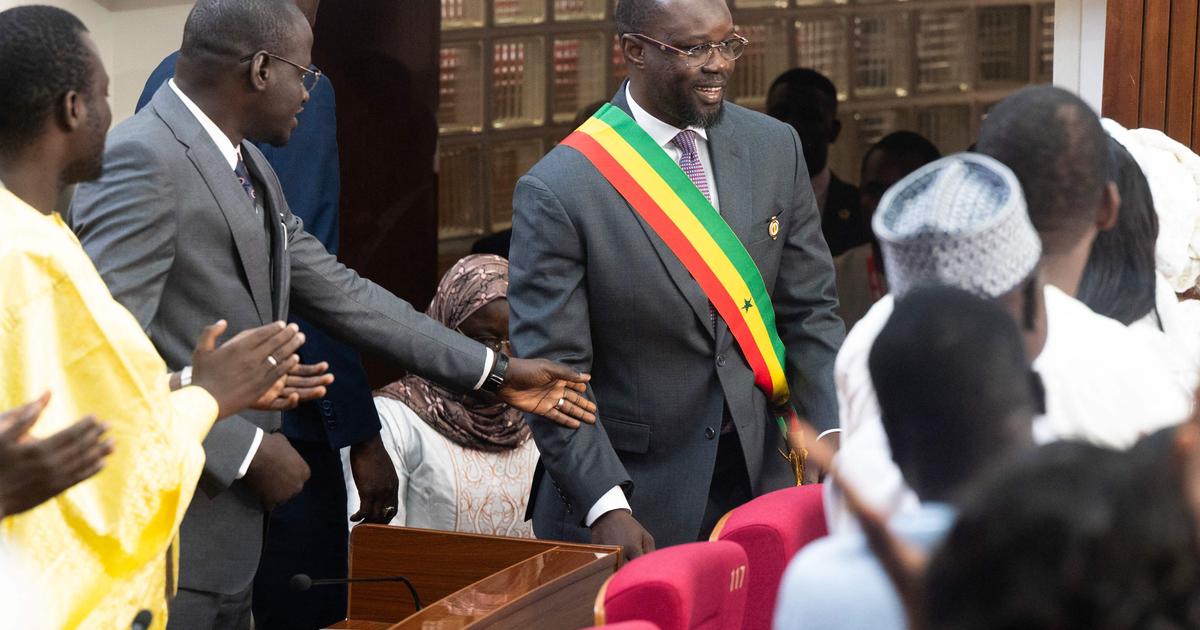
The speed of his transition from prime ministerial limbo to assembly presidency stunned observers. On May 22, President Bassirou Diomaye Faye dismissed him. The next day, the speaker of the National Assembly resigned, strategically clearing the way. By May 26, Sonko had been elected president of the assembly with 132 votes out of 165—an outcome that confirmed his continued dominance over the Pastef party he founded. To some, this was a historic election. To others, it smelled of institutional coup. Either way, it placed Sonko back at the center of power, now as the principal opposition voice to the very administration he once co-led.
Power shared or power seized?
For months, Senegal operated in a constitutional gray zone: who truly held authority—the elected president or the movement leader who had delivered him to office? The tension between popular momentum and institutional procedure had reached a breaking point. A state cannot sustain two competing centers of command indefinitely. Sonko’s influence was never confined to his government portfolio. It stemmed from his dual role as prime minister, party leader, and emotional standard-bearer for a large segment of Senegalese youth—a combination that blurred the line between governance and grassroots mobilization.
This is where the danger of hubris emerges—not as personal flaw, but as a structural risk. When a leader embodies both the state and the movement, institutions grow fragile. Parties remain structured around individuals. Parliament struggles to assert itself as an autonomous counterweight. The emotional pull of a single figure can eclipse the slow, deliberate work of democratic institutions. Sonko’s election signals more than a reshuffle—it marks the moment when Senegal’s democracy must choose between charismatic leadership and constitutional primacy.
A test of democratic endurance
Can Sonko accept that institutional legitimacy now takes precedence over movement loyalty? Can he let go of the idea that the 2024 victory belongs exclusively to him? The greatest leaders aren’t defined solely by their ability to win power, but by their willingness to surrender it to the system that sustains it. Governing requires compromise, hierarchy, and the humility to accept limits—even when the people demand more.
Africa’s political history is rich with movements that triumphed in opposition, only to falter once faced with the complexities of governance. The Pastef party’s unity during Sonko’s election reflects deep loyalty, but loyalty to a person is not the same as loyalty to a program. The new prime minister, a technocrat with no direct ties to the movement, now leads a government expected to honor the 2024 platform—one authored by Sonko himself. Yet Sonko has already signaled that he will not defer quietly. He has warned that the assembly will fully exercise its constitutional prerogatives, and expressed frustration that his party was not consulted on the prime minister’s appointment.
The stakes extend beyond party cohesion. The country’s sovereign credit rating has slipped from stable to negative, underscoring how institutional instability can ripple through the economy. More critically, the credibility of Senegal’s democratic experiment is on trial. A nation that prides itself on peaceful transitions cannot afford prolonged ambiguity about who answers to whom.
The coming weeks will reveal whether Sonko’s leadership is evolving from revolutionary fervor to institutional stewardship. The alternative—a prolonged standoff between movement loyalty and constitutional order—risks eroding not just one man’s legacy, but the very foundations of Senegalese democracy.