
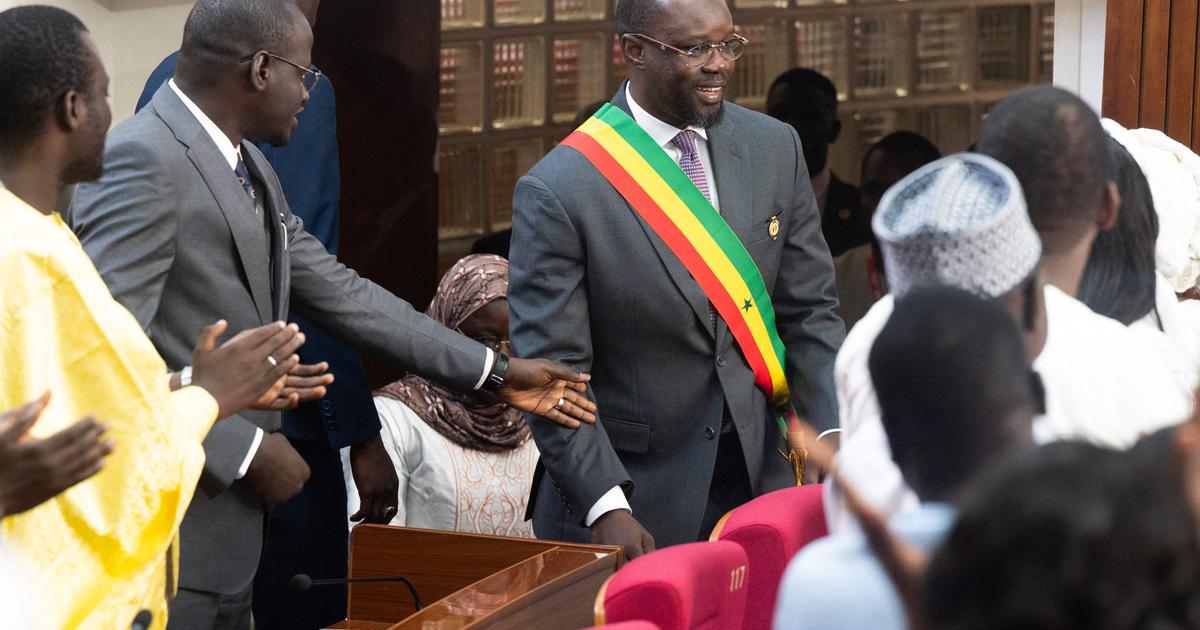
The political landscape of Senegal is currently embroiled in a high-stakes power struggle that extends far beyond the rivalry between two men. At its core lies a fundamental clash between two distinct forms of legitimacy: institutional authority and charismatic leadership. History shows that such tensions often lead to the phenomenon known as hubris in modern political theory.
Ousmane Sonko’s political journey warrants careful analysis, free from both emotional bias and sensationalism. His rise has been defined by an unprecedented wave of defiance against a system many young Senegalese view as exclusionary. Sonko has channeled the frustrations of a marginalized youth, shattered the perception of a closed-off political establishment, and introduced a new political discourse centered on national sovereignty, dignity, and the empowerment of ordinary citizens.
From ally to adversary: the rapid reversal of political fortunes
Few political transitions have unfolded as swiftly as the one reshaping Senegal’s power dynamics. On May 22, President Bassirou Diomaye Faye removed Ousmane Sonko from his position as Prime Minister. The very next day, Malick Ndiaye, then Speaker of the National Assembly, resigned, strategically clearing the way for Sonko’s eventual rise. By May 25, Ahmadou Alhaminou Mohamed Lô had been appointed Prime Minister, and just 24 hours later—on May 26—Sonko was overwhelmingly elected as President of the National Assembly with 132 out of 165 votes. His victory solidified his position as the de facto leader of the Pastef party, which he founded, transforming him overnight into the principal opposition figure to his former ally, the President.
Reactions to this political earthquake have been sharply divided. Some herald it as an “historic election”, while others condemn it as an “institutional coup.” What remains undeniable is that Sonko’s election has reshaped the balance of power, turning him into the most influential figure opposing the president he once served alongside in a tense political partnership.
Will the Pastef party remain united under this new reality?
The Pastef party, known for its disciplined voting bloc, faces a critical test of cohesion. Will its members continue to rally behind Sonko, or will they align with the technocratic government led by the newly appointed Prime Minister? The party has already set clear conditions for cooperation, insisting that any future government must adhere strictly to the 2024 electoral platform—a vision Sonko himself championed.
Sonko’s public statements have oscillated between conciliatory gestures and firm warnings. While he has signaled a willingness to pursue institutional calm, he has also made it clear that the National Assembly will “fully exercise its constitutional prerogatives.” He further criticized the lack of consultation regarding the Prime Minister’s appointment, signaling that the power struggle is far from over.
Amid this institutional turbulence, international financial observers have downgraded Senegal’s credit rating from “stable” to “negative,” raising concerns about the country’s economic stability.
The fragile balance between charisma and institutional power
Charismatic leadership is a potent force in politics, capable of mobilizing populations and driving transformative change. However, it also carries a paradoxical risk: while it can invigorate a movement, it may simultaneously weaken the very institutions designed to safeguard democracy.
Senegal’s political landscape has long been shaped by personalities rather than robust institutional structures. The Parliament, despite its constitutional role as a check on executive power, remains overshadowed by the symbolic weight of individual leaders. When citizens begin to view a single figure as the sole embodiment of national progress, when political loyalty blurs with personal devotion, and when the fate of a collective project hinges on one person, the ground becomes fertile for hubris—not as a personal flaw, but as a structural challenge.
A duality that could not last
For months, Senegal navigated a uniquely ambiguous political reality: who truly held power? Was it the elected president or the charismatic leader of the ruling party? The legitimacy of the ballot box or the legitimacy of mass mobilization? Constitutional authority or the emotional authority wielded by a figure like Sonko?
Such duality was unsustainable. A state cannot function indefinitely with two competing centers of symbolic command. Sonko’s influence extended far beyond his formal role as Prime Minister. He was simultaneously the head of government, the leader of a political movement, the militant icon of a generation, and the emotional reference point for a significant portion of Senegal’s youth.
This is where the risk of hubris becomes most acute: when a leader occupies not just the space of the state, but also the space of the people and the movement. The danger is not necessarily one of outright authoritarianism, but rather the gradual erosion of institutional checks and balances as they give way to the overwhelming presence of a single personality.
The ultimate test for Senegal’s democracy
The critical question facing Senegal today is not moral, but institutional. Can Ousmane Sonko accept that institutional legitimacy must now take precedence over charismatic authority? Can he step back from being the sole architect of a movement and accept that this project must evolve beyond his personal leadership? Can he transition from being the driving force of historical change to becoming one actor among many within a lasting institutional framework?
This is the defining challenge for leaders of transformative movements. African political history is replete with examples of opposition movements that triumphed in their struggle against entrenched power, only to falter when faced with the complex demands of governance. Ruling requires more than mobilizing the masses; it demands compromise, institutional discipline, and the willingness to accept that the state’s continuity must transcend individual ambitions.
The measure of a true leader is not only in their ability to seize power, but in their capacity to recognize and respect the boundaries imposed by institutional democracy. Senegal may now be entering this decisive test. The manner in which this tension is resolved will determine not only the future of the Pastef movement, but also the very stability of the country’s democratic system.