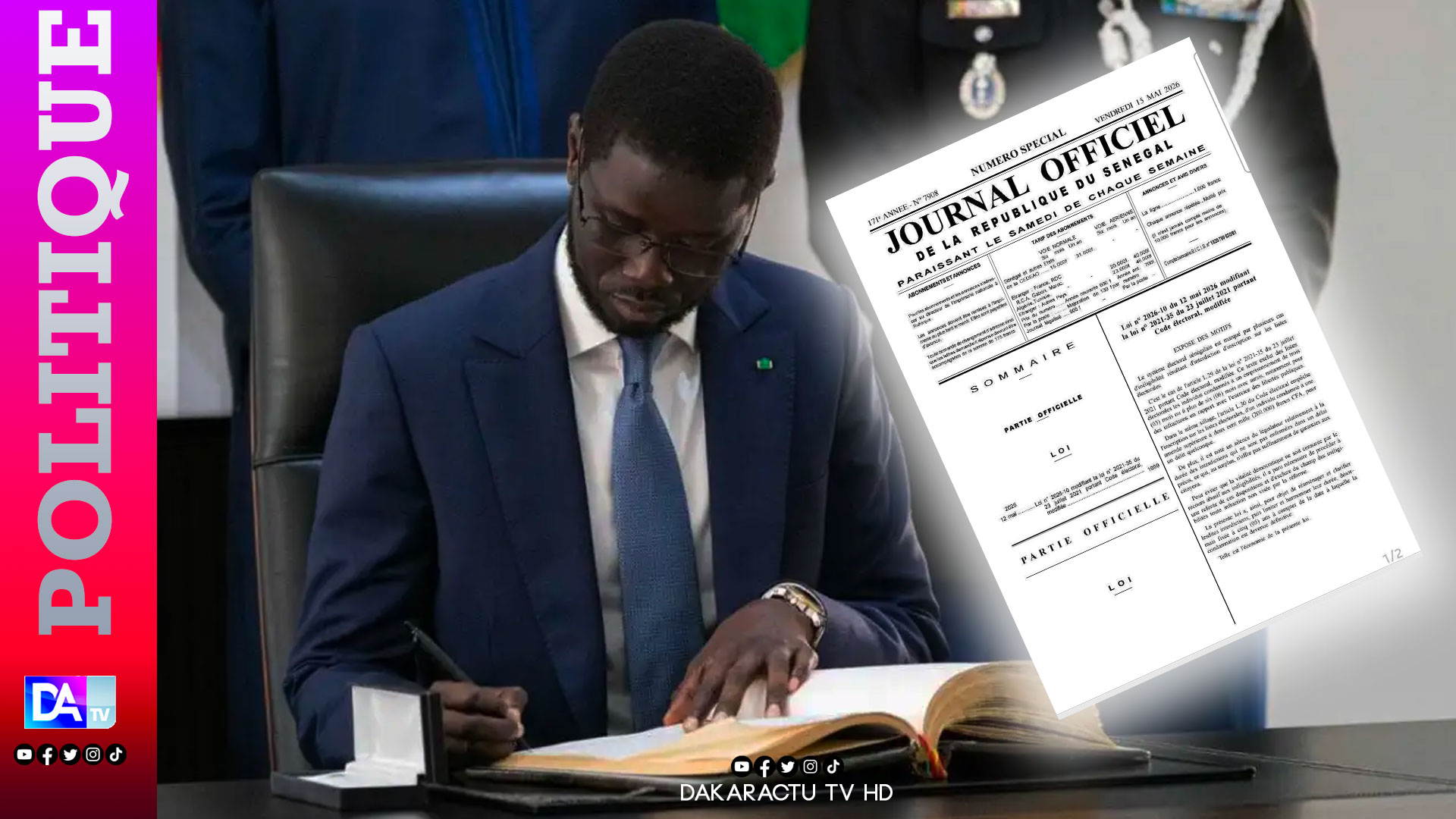
President Bassirou Diomaye Diakhar Faye has officially enacted Law No. 2026-10, a sweeping revision of Senegal’s electoral code. The landmark legislation, approved by the National Assembly with a three-fifths majority, marks a decisive shift in how electoral ineligibility is defined and applied. Published in a special edition of the Journal Officiel on May 15, 2026, the reform bears the signature of Prime Minister Ousmane Sonko and signals a long-overdue effort to demystify and regulate the grounds for disqualification from voting.
What the new electoral code changes
The overhauled Article L.29 of the electoral code now establishes four clear categories of individuals barred from voter registration:
- Persons convicted of serious criminal offenses;
- Those found guilty of major financial crimes, including theft, fraud, embezzlement, corruption, money laundering, and influence peddling;
- Individuals subject to a court-ordered ban on voting;
- Legally incapacitated adults.
A key improvement is the introduction of a fixed five-year disqualification period, calculated from the date a conviction becomes final. This replaces the previous system, which left the duration of civic rights deprivation ambiguous. Additionally, Article L.30—which previously excluded anyone fined over 200,000 CFA francs for any offense—has been fully repealed.
Why this reform matters
Lawmakers have long criticized the former system for its lack of precision. Automatic disqualification after just three months of imprisonment—even with suspended sentences—or for minor fines was seen as overly broad and potentially open to abuse. The revised framework aims to focus ineligibility strictly on the most severe infractions while ensuring clarity and predictability in enforcement. This move is expected to strengthen the integrity of Senegal’s democratic processes.
Political implications of the electoral reform
The law’s adoption by a supermajority reflects strong parliamentary consensus and arrives ahead of looming elections. For some, this could mean restored voting rights for opposition figures or others previously barred due to outdated or overly harsh rulings. The changes may reshape the political landscape as Senegal prepares for its next electoral cycle.