Dakar’s Black Civilizations Museum hosts powerful premiere of Abdou Lahat Fall’s Indépendance Tey
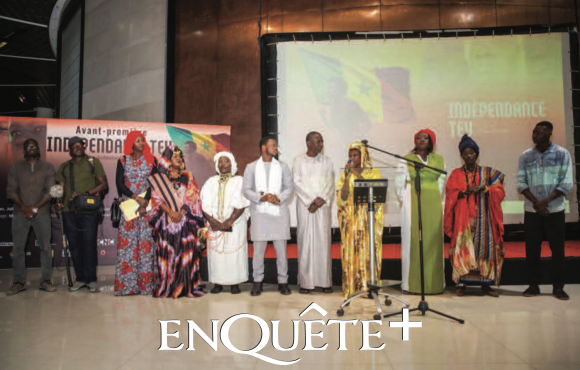
At the heart of Dakar’s Black Civilizations Museum, the Indépendance Tey premiere transformed an ordinary film screening into an unforgettable evening of collective reflection. The documentary, directed by Abdou Lahat Fall, has become a cultural milestone, capturing the essence of Senegal’s recent political and social upheavals with raw authenticity.
The event, organized by Sine Films and Wawkumba Film in collaboration with FRAPP, the Directorate of Cinematography, and the museum itself, brought together artists, activists, and citizens eager to witness a film that had already generated buzz in cultural and militant circles. Following its selection at the Cinéma du Réel festival, Indépendance Tey was poised to do more than entertain—it was set to provoke thought, spark debate, and honor the struggles of a nation in transition.
The evening began with a performance by Leuz Diwan G, a rap artist whose politically charged lyrics set the tone for the documentary’s themes of resistance and social justice. The rapper’s dynamic delivery underscored the film’s commitment to exploring Senegal’s evolving political landscape through the lens of its people.
Four voices, one movement: the human face of Senegal’s fight
Abdou Lahat Fall’s documentary follows four key figures within the FRAPP movement, each representing a different facet of Senegal’s youth-driven activism. The film captures their personal journeys, contrasting their unwavering convictions with the harsh realities of political struggle.
Abdoulaye: A passionate young activist whose idealism is tested by family pressure and the weight of responsibility. His story highlights the personal sacrifices behind the fight for change, culminating in a poignant decision that resonates deeply with viewers.
Bentaleb: A militant who faces the brutal reality of state repression, his experiences reflecting the broader challenges faced by activists during the country’s most turbulent years. His resilience becomes a testament to the cost of dissent.
Guy Marius Sagna: His evolution from radical activist to political figure within the system raises critical questions about the compromises inherent in institutional engagement. The documentary examines how power reshapes ideals and the ethical dilemmas that arise from such transitions.
Félix: An aging labor leader whose quiet presence anchors the film, offering a bridge between past and present struggles. His journey embodies the endurance of those who have dedicated their lives to social justice, even as the world around them changes.
From raw footage to cinematic truth: Fall’s approach to documentary storytelling
Abdou Lahat Fall’s journey with Indépendance Tey began in 2019, amid the outrage over a controversial oil contract that sparked nationwide protests. Armed with a camera and a deep sense of purpose, Fall captured the early days of FRAPP’s rise, including a moment that would change his perspective: the sight of Abdoulaye Seck addressing a massive crowd at Place de la Nation.
The filmmaker’s immersion in the movement was not merely observational—it was participatory. Over several years, Fall documented the movement’s highs and lows, from strategy meetings and street protests to moments of doubt and personal reflection. The result is a documentary that avoids glorification, instead presenting a nuanced portrayal of activism that embraces both its triumphs and its contradictions.
The film’s narrative is further enriched by Fall’s critical voice-over, which occasionally challenges the movement’s decisions. His reflections on Guy Marius Sagna’s entry into electoral politics, for instance, add layers of complexity, positioning the documentary as both a tribute to the movement and a thoughtful critique of its evolution.A universal story of struggle and resilience
Indépendance Tey transcends its local context, offering a global meditation on the nature of civic engagement. The documentary prompts viewers to consider the sacrifices required to challenge injustice, the ethical boundaries of political resistance, and the personal toll of activism. Drawing inspiration from Frantz Fanon’s words—“Each generation must, in relative obscurity, confront its mission: to fulfill it or betray it”—the film becomes a mirror for Senegal’s youth, reflecting their struggles, doubts, and aspirations.
Visually, the documentary is marked by its restraint. Fall’s camera lingers on quiet moments—the hushed conversations after a protest, the weary expressions of activists, the solitary reflections of those who have dedicated their lives to the cause. This deliberate pacing strips away any pretense of spectacle, allowing the viewer to connect deeply with the subjects and their stories.
A rising star in African cinema
The critical acclaim surrounding Indépendance Tey underscores its significance in both African and international cinema. The film has been nurtured through prestigious residencies and workshops, including Sentoo 2022, Produire au Sud 2022, and DocA 2023, before earning a spot at the Durban FilmMart 2023. Backed by major francophone film funds such as the CNC, FOPICA, and the Francophonie Image Fund, the documentary is a testament to the growing influence of Senegalese filmmakers on the global stage.
The premiere at the Black Civilizations Museum was more than a film screening—it was a gathering of minds, a space for dialogue, and a tribute to a generation that refuses to accept the status quo. With Indépendance Tey, Abdou Lahat Fall has crafted more than a political documentary; he has created a living archive of Senegal’s recent history, a tribute to the people who dared to imagine a different future.