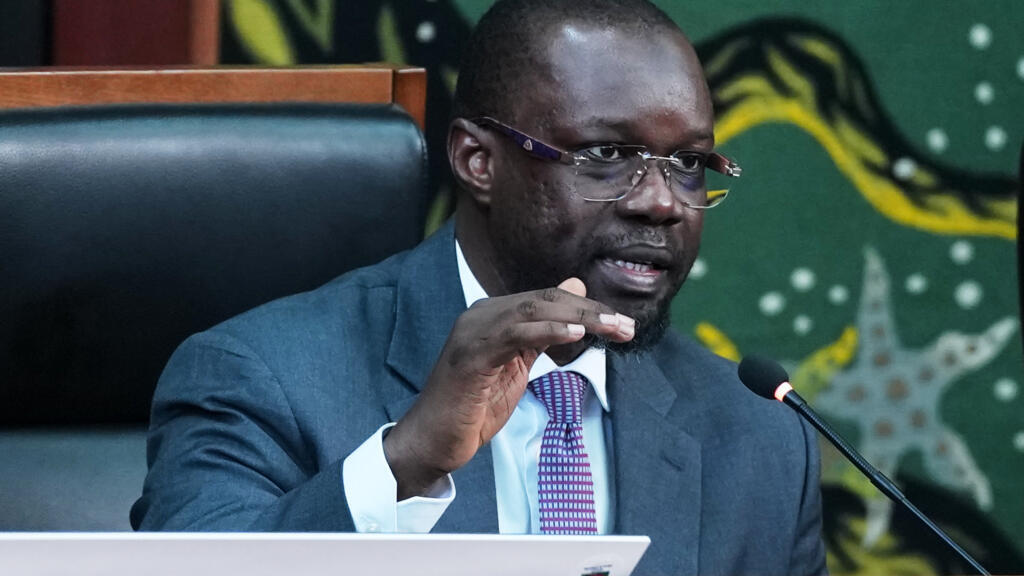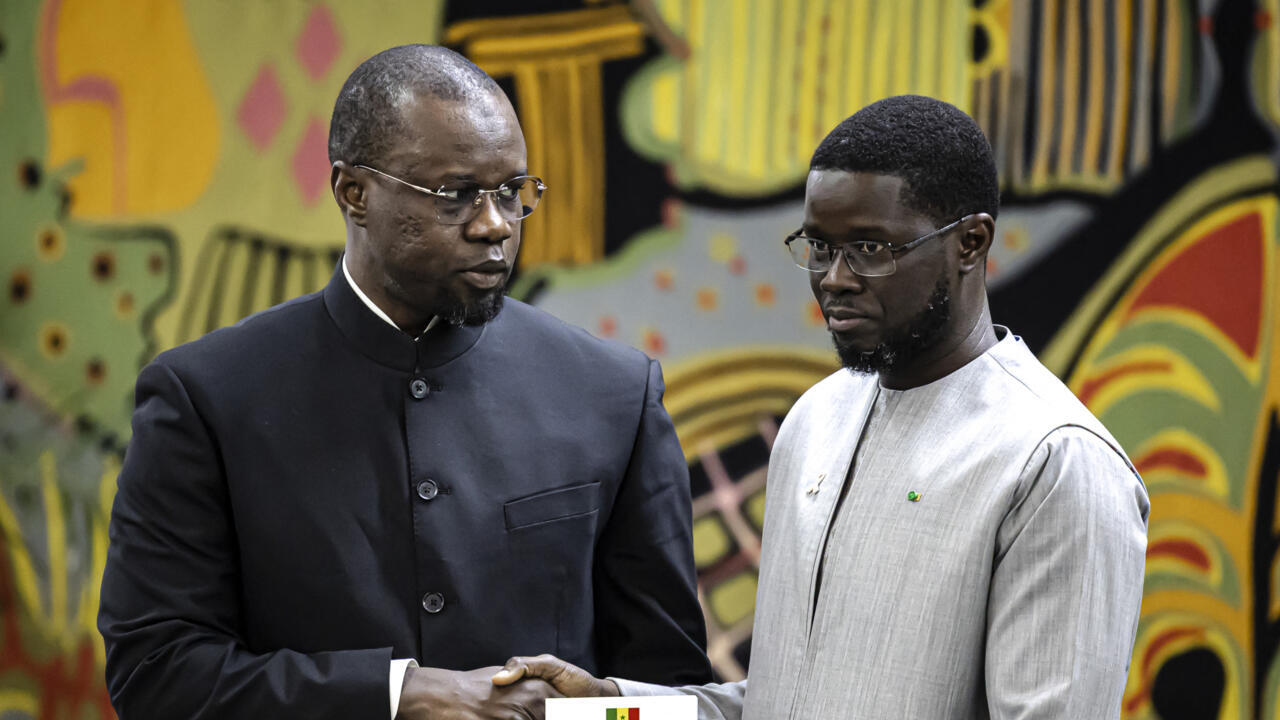
A significant shift has occurred in Senegal‘s political arena. On Friday, May 22, President Bassirou Diomaye Faye announced the dismissal of his long-standing ally, Ousmane Sonko, along with his entire government. Just days later, the former Prime Minister reclaimed his parliamentary seat. Concurrently, Malick Ndiaye, who presided over the National Assembly, tendered his resignation. With a new Assembly president set to be elected this coming Tuesday – a position Ousmane Sonko is widely considered for – the nation appears poised for a direct confrontation between the executive and legislative branches of power.
Many observers believe this political separation was inevitable. The dynamic between President Faye and his former Premier, Sonko, inherently contained a fundamental and unresolvable contradiction. This was not due to a lack of individual capability or vastly different political ideologies. Rather, it stems from the understanding that a republic cannot function as a ‘jazz duo’ where two soloists improvise without a shared score. Executive authority, by its very nature, demands unity. Historical precedents across Africa, from figures like Nkrumah to Sankara, and Modibo Keïta to Laurent-Désiré Kabila, consistently demonstrate that cohabitation at the highest levels between two equally strong wills invariably leads to one party’s removal or the demise of both.
Growing Tensions and the Final Break
Indeed, this recent development is the culmination of months of escalating tensions between two leaders who ascended to power in April 2024 on a wave of immense popular hope. The political rift had been brewing since initial cracks appeared in their partnership last July. At that time, Ousmane Sonko reportedly raised concerns about an ‘authority problem,’ suggesting that the President was not adequately defending him against political attacks. The definitive rupture occurred mere hours after a National Assembly session where the former head of government openly challenged several presidential decisions, notably regarding the management of political funds, asserting that the President had ‘made a mistake.’
Executive vs. Legislative: A Looming Showdown?
The question now arises: has the former Prime Minister transitioned into the President’s primary political adversary? Bolstered by his significant popularity, Ousmane Sonko undeniably poses a considerable challenge to Bassirou Diomaye Faye. The next phase of this power struggle is likely to unfold within the parliamentary chambers. As noted by a professor of political science at the University Gaston-Berger in Saint-Louis, ‘The political battle risks shifting to the National Assembly, becoming a direct confrontation between the Head of State and the legislature.’ This scenario presents a substantial risk of governmental gridlock, particularly as the executive branch aims to introduce a series of institutional reforms. Critical legislation concerning constitutional revisions, the Constitutional Court, political parties, and the establishment of an independent national electoral commission are all slated for presentation before the National Assembly soon. Such circumstances would leave the Head of State with very limited room for maneuver.
Indeed, the political landscape now appears to be divided between Pastef, under the influence of Ousmane Sonko, and the presidential coalition backing Bassirou Diomaye Faye. This sets the stage for a fierce struggle between the executive and legislative powers, with the municipal elections of 2027 and, more critically, the presidential election of 2029 firmly in sight. Among many ‘Pastefists,’ especially the younger generation of Senegalese who had invested their hopes in the Faye-Sonko duo’s promises, there is now a palpable sense of doubt, anger, and disillusionment, leaving them uncertain of where to turn.
Could Ousmane Sonko Emerge Victorious?
The power struggle has now begun, and it could very well favor Ousmane Sonko. A geopolitical analyst asserts that the current political reality in Senegal is undeniable: Pastef holds significant sway nationally, characterized by an exceptional grassroots presence, a highly engaged youth base, and a compelling narrative forged during years of opposition against the Macky Sall administration. Within this dynamic, Sonko remains the pivotal figure. Despite past legal obstacles and his absence from the presidential ballot, the hope for change largely coalesced around him. While President Faye certainly possesses institutional legitimacy, his former Prime Minister retains a formidable popular and militant legitimacy. In any future political or electoral contest, this factor could prove decisive.