Sonko’s ultimatum to Al Aminou Lo’s government over oil deals
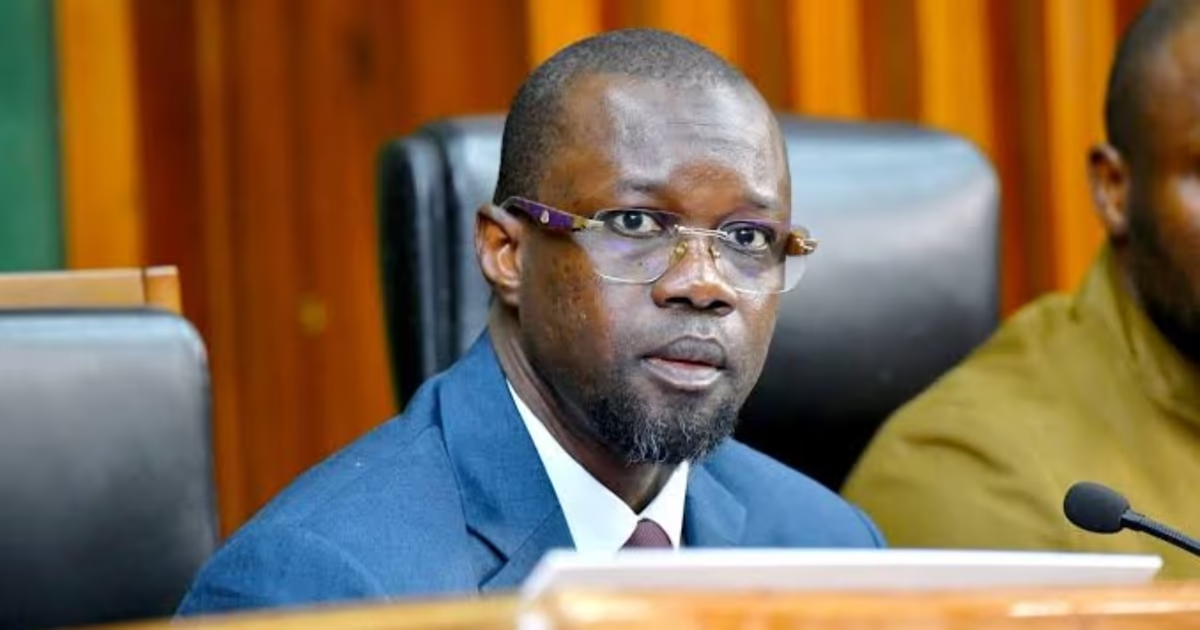
Dakar, July 13, 2026 — Ousmane Sonko, the President of Senegal’s National Assembly and former Prime Minister, has issued a stern warning to the government led by Al Aminou Lo. Speaking in Touba on Sunday, Sonko vowed to use his newfound legislative power to topple the administration if it fails to prioritize the country’s economic sovereignty in upcoming oil and gas contracts.
Sonko, whose political party Pastef recently inaugurated its headquarters in Touba, delivered a fiery address in Wolof, accusing the government of backtracking on earlier commitments to national resource protection. He specifically criticized the alleged practice of « selling off » Senegal’s natural wealth to foreign corporations, naming BP and Kosmos as key players in what he described as a betrayal of public trust.
The opposition leader, who was dismissed as Prime Minister by President Bassirou Diomaye Faye in May, framed his critique within the broader context of economic sovereignty. He drew parallels between the current administration’s actions and the controversial policies of former President Macky Sall, suggesting that Al Aminou Lo’s team was reviving the same exploitative practices.
Institutional confrontation looms
Sonko’s rhetoric escalated from criticism to direct institutional threats. In a bold declaration underlined by chants from supporters, he warned that the government would face a motion of censure if it proceeded with contracts deemed harmful to Senegal’s interests. « If they betray the nation’s interests, we will remove them from office, and we will do it repeatedly if necessary », he declared.
A legislative shield for hydrocarbons
To institutionalize his stance, Sonko announced plans to introduce a landmark bill in the National Assembly. The proposed legislation would require all future oil and gas block allocations to receive parliamentary approval before finalization. « No petroleum block should be granted without first being debated and approved by deputies to ensure it serves Senegal’s best interests », he stated, citing Norway’s transparent model as a benchmark.
This legislative push aligns with Sonko’s long-standing crusade against what he terms « inherited, non-compliant contracts ». During his brief tenure as Prime Minister earlier this year, he spearheaded efforts to renegotiate deals, notably securing major victories with the Yakaar-Teranga gas field. Now, he accuses the current government of attempting to stall these renegotiations, particularly following recent appointments to key state-owned entities like Petrosen.
As Senegal stands on the cusp of significant hydrocarbon developments, Sonko’s warning signals a potential legislative showdown that could reshape the country’s economic trajectory.