After a decade of aggressive expansion under the banners of mercenary operations, disinformation campaigns, and anti-Western populism, the Kremlin’s African strategy now faces an insurmountable reality. What once appeared as a relentless advance now teeters on the brink of collapse. Unfulfilled security promises, military quagmires, and growing public disillusionment suggest that the notion of a waning Russian imperialism in Africa is no longer speculative—it is an undeniable trend.
The hollow promise of Russian security solutions
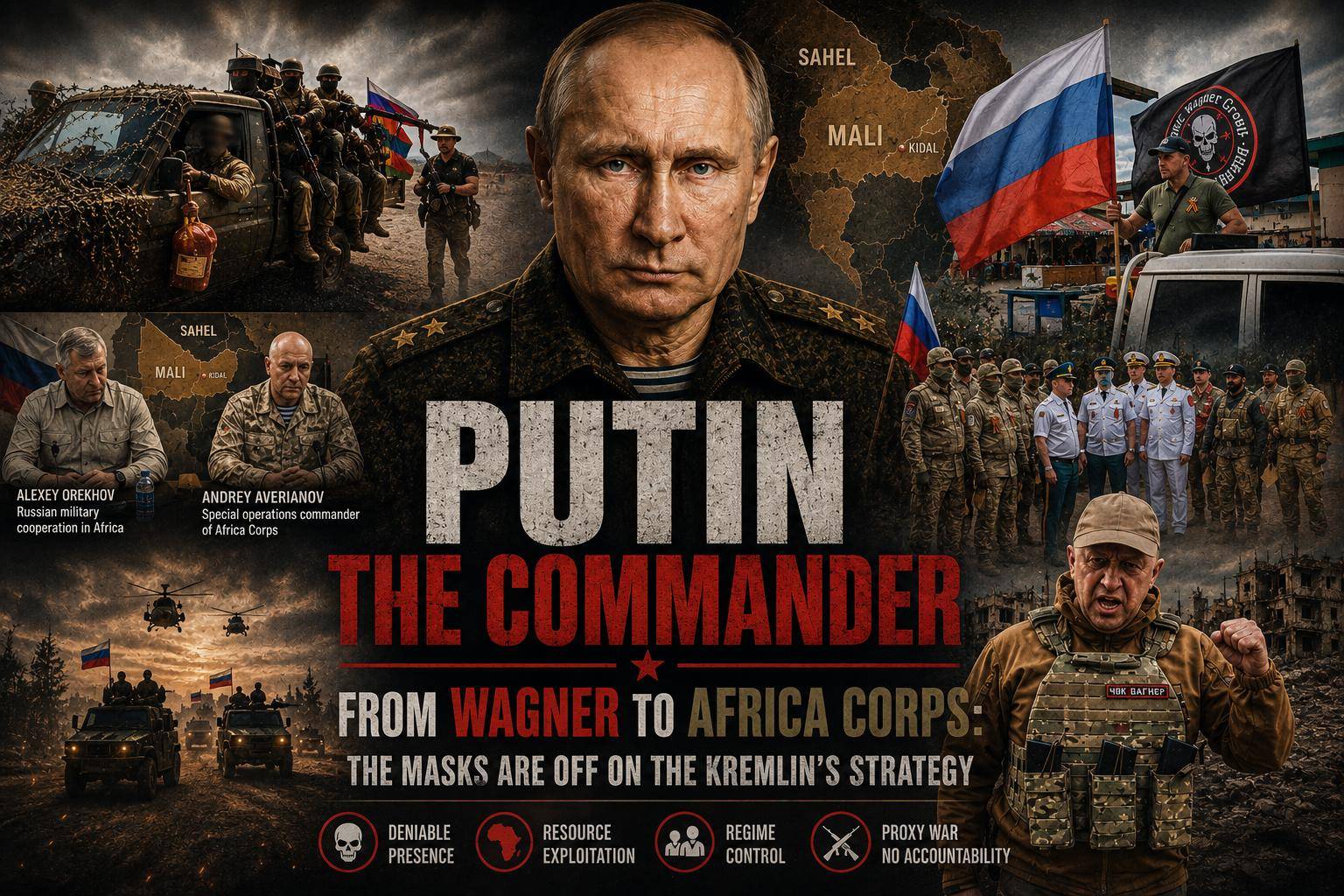
During the mid-2010s, as traditional powers such as France receded from the continent, Russia seized the opportunity to offer a seemingly effortless solution: a ready-made security framework, devoid of human rights constraints, embodied by the Wagner Group—now rebranded as Africa Corps. From Bamako to Bangui, via Ouagadougou and Niamey, Moscow marketed itself as a swift alternative to Western influence, trading military support for access to strategic mineral resources.
Yet, the passage of time has exposed the flaws in this strategy. The Sahel region, a focal point of Russian engagement, has not seen improvement—it has descended into deeper instability. The turning point came with the devastating losses at Tinzawatane, near the Algerian border, where dozens of Russian mercenaries and Malian soldiers perished. This military setback shattered the myth of Russian invincibility, revealing Moscow’s true priorities: securing access to gold, diamonds, and uranium rather than restoring peace.
The three pillars of Russia’s retreat in Africa
Three fundamental weaknesses have accelerated the erosion of Russia’s position on the continent:
1. The Ukrainian conflict’s financial and military strain
The Kremlin’s prolonged war in Ukraine has drained its resources, leaving little for foreign adventures. Elite forces have been redeployed to the European front, while heavy weaponry, once exported to African partners, is now reserved for domestic military needs. The financial hemorrhage from sanctions and wartime expenditures has made Russia’s African ambitions increasingly unsustainable.
2. The absence of a viable economic model
Russia’s strength lies in its military and propaganda capabilities, not in economic development. With a GDP comparable to that of Spain, it cannot compete with the European Union’s development aid or China’s infrastructure investments. Once the initial political euphoria fades, African juntas and governments recognize the futility of relying on emergency grain shipments and social media disinformation campaigns to address structural challenges.
3. The rise of African sovereignty movements
The Kremlin’s narrative rested on the promise of a ‘second decolonization,’ positioning Russia as a liberator from Western dominance. However, the new generation of African leaders and citizens, empowered by digital connectivity and heightened political awareness, reject any form of foreign tutelage—whether French or Russian. The shift from a French flag to a Russian one is no longer seen as liberation but as a deceptive submission.
A multipolar reconfiguration in motion
The decline of Russian influence does not herald an automatic return to Western dominance. Instead, a more balanced geopolitical landscape is emerging, favoring pragmatic actors over ideological ones.
China continues to expand its economic footprint, prioritizing stable contracts over the volatility of military engagements. Meanwhile, countries like Turkey and the United Arab Emirates are positioning themselves as key alternative partners, offering advanced military technology and financial investments without the geopolitical baggage associated with Moscow.
The end of the geopolitical shortcut
The Russian imperial experiment in Africa, though intense, has proven to be fleeting. It has underscored a critical truth: influence cannot be sustained through force and disinformation alone. For African leaders, the lesson is clear—there are no shortcuts to security and development. Outsourcing these priorities to foreign mercenaries, regardless of their origin, is a failed strategy.
The fading of Russia’s grip may signal the beginning of a new era for Africa—one where partnerships, not patronage, define the continent’s future.