The fiery 1997 move that sent Nicolas Anelka from Paris Saint-Germain to Arsenal
In February 1997, a 17-year-old Nicolas Anelka stunned French football by leaving his boyhood club Paris Saint-Germain for Arsenal in a deal that sparked legal battles and divided opinions.
When Paris Saint-Germain announced the transfer of teenage sensation Nicolas Anelka to Arsenal on 22 February 1997, club president Michel Denisot insisted there were no losers in the deal. Yet the 17-year-old striker had just secured a six-year contract with the London club, while PSG walked away with around 5 million francs—roughly €1.2 million in today’s money—despite losing one of its brightest prospects.
Anelka’s monthly salary jumped from 3,800 francs (€900) to half a million francs (€120,000), a staggering increase that highlighted the gulf between French football and the lucrative Premier League. His defiant departure capped weeks of tension with PSG after he had informed the club he would not sign a professional contract in Paris and instead pursue an opportunity abroad.
From Clairefontaine prodigy to first-team outcast
Anelka, a graduate of France’s prestigious Clairefontaine academy, made his professional debut for PSG in a league match against Monaco on 7 February 1996. By September of that year, his coach Ricardo had already hailed him as a game-changer, telling reporters: “You wanted a joker? You’ve got one.”
Yet as the 1996-97 season progressed, Anelka found himself increasingly sidelined. He made just eight substitute appearances and was not once handed a starting berth. The arrival of striker Cyrille Pouget on loan from Servette FC in December further fuelled his frustration, leading him to view the move as a sign of distrust from the club’s hierarchy.
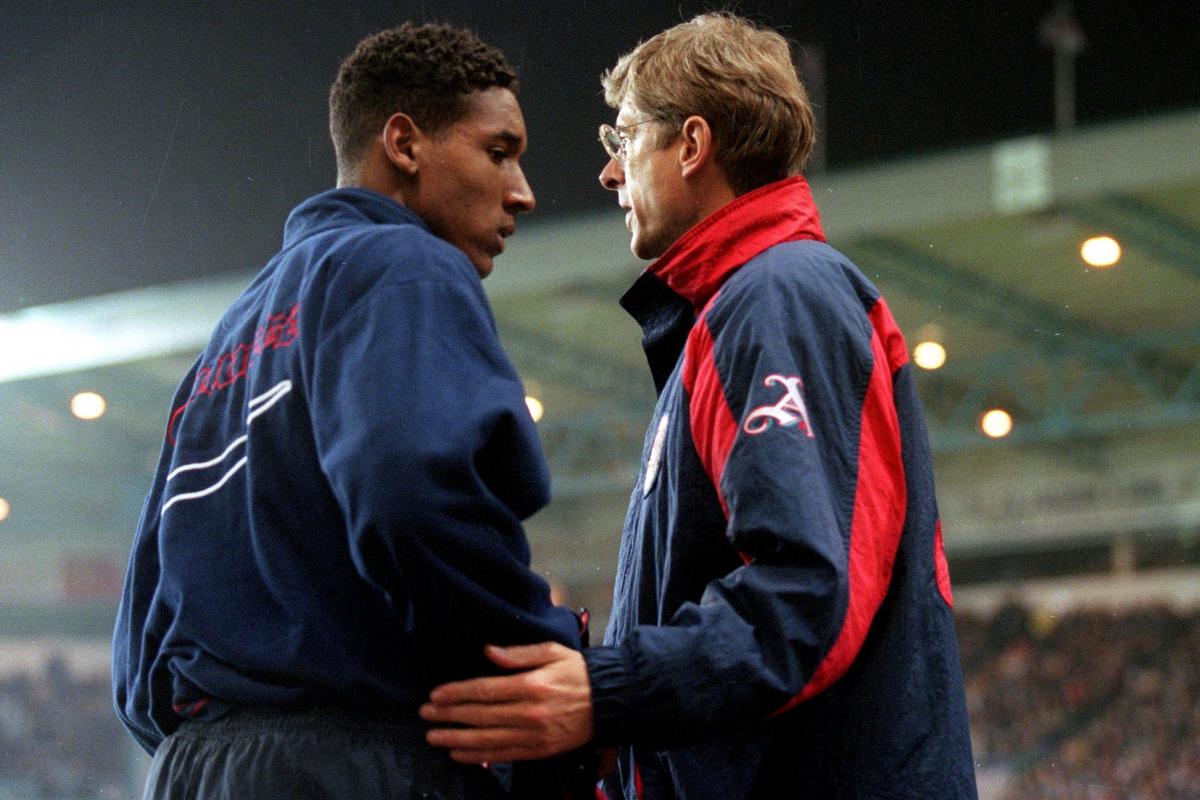
His decision to explore options beyond the Parc des Princes was met with resistance. On 11 January 1997, after meeting with Arsenal manager Arsène Wenger during the winter break and touring the club’s facilities, Anelka’s father and agent informed PSG sporting director Jean-Michel Moutier that the teenager intended to leave when his youth contract expired in June.
The fax that lit the fuse
On 13 January, Arsenal vice-chairman David Dein sent a fax to PSG stating: “In accordance with international regulations, we will be contacting your player Nicolas Anelka.” The next morning, Anelka and his father signed a six-year deal with Arsenal at a hotel in Paris’s 16th arrondissement, effective from 1 July.
PSG reacted furiously. Anelka was stripped of his first-team status and relegated to the youth setup. Club president Denisot accused him of “rudeness and ingratitude”, while French football’s governing body, the Ligue nationale de football, backed the club in blocking Anelka’s departure. The body’s president, Noël Le Graët, demanded the French Football Federation (FFF) refuse to grant Anelka an international transfer certificate, citing a French charter that required apprentices to sign their first professional contract with their training club.
Legal showdown and the Bosman effect
Wenger, however, remained confident, arguing that European law—bolstered by the landmark Bosman ruling of December 1995—gave Anelka the right to move to Arsenal for free once his youth contract expired. “The European laws reassure me,” he told L’Équipe. “We are acting within the law. While France has internal regulations, they do not apply beyond its borders.”
The dispute escalated when world football’s governing body FIFA was asked to rule on the case. FIFA’s then-secretary general Sepp Blatter weighed in with a provocative statement: “The French seem alarmed by the departures of their young players, yet they do not appear as concerned when African or South American talents leave for Europe. At 16, players should have the chance to join big clubs to build their careers.”
With the threat of a lengthy and uncertain legal battle looming, PSG and Arsenal reached a settlement in less than 48 hours, finalising the transfer before FIFA could issue a ruling. “There was a gap in the net,” Denisot later admitted. “It wasn’t a pleasant experience for either club. Ultimately, everyone was entitled to act as they did. The noise at the time came because a very promising player was leaving on a free transfer.”
From London to Madrid: a career forged in controversy
Anelka’s move to Arsenal proved to be a masterstroke for the Premier League side. Despite limited playing time in his first season—he made just four appearances as Dennis Bergkamp and Ian Wright led the attack—he exploded onto the scene in 1998-99, becoming the first non-British player to win the Premier League Young Player of the Year award.
Yet his time in London was short-lived. In summer 1999, after another high-profile dispute, he joined Real Madrid for a transfer fee of 220 million francs (€51.6 million), marking another chapter in a career defined by bold decisions and irreverence.