The United Nations High Commissioner for Human Rights has expressed grave concern regarding the political climate in Mali, noting a significant decline in democratic standards and an increase in state-led suppression.
Indefinite postponement of the electoral process
A series of legislative actions by the military government, which seized power in 2020, has led to a major concentration of authority under General Assimi Goïta. Volker Türk stated that these legal maneuvers have effectively blocked the path toward democratic elections for the foreseeable future, urging a swift restoration of fundamental liberties for the citizens of Mali.
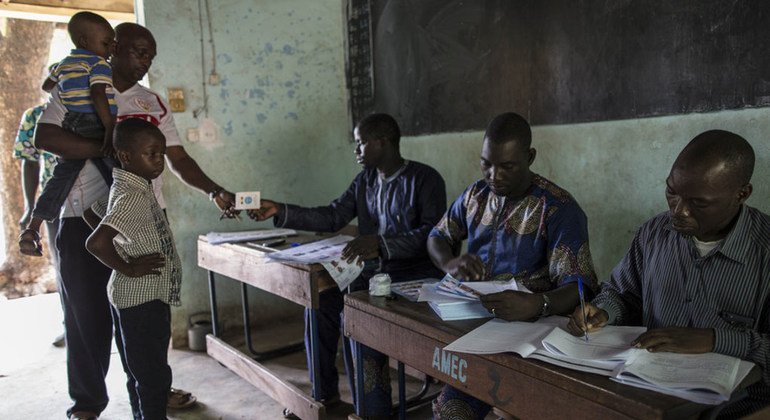
Nearly half a decade since the coup that removed President Ibrahim Boubacar Keïta, the transition toward civilian governance appears to have stalled. No presidential elections have taken place since 2018. A recent law enacted on July 8 allows Assimi Goïta to extend his leadership indefinitely under the guise of national pacification. This follows a previous decree that banned all political parties and associations, a move the UN chief claims violates the fundamental right of citizens to engage in public affairs and participate in elections.
A widespread crackdown on dissent
The shift in the institutional landscape is mirrored by a harsh security crackdown. Notable opposition figure Moussa Mara was detained on August 1 after publicly supporting political prisoners on social media. He faces charges related to undermining state credibility.
Volker Türk criticized the misuse of legal frameworks to silence critics, highlighting a surge in arbitrary arrests across various sectors of Malian society. Many individuals are being silenced through charges similar to those brought against Moussa Mara.
Human rights violations and civilian suffering
The security situation remains dire as Mali continues to face threats from extremist groups like the Group to Support Islam and Muslims (GSIM), linked to Al-Qaeda, and Daech. These groups operate across the borders of Mali, Burkina Faso, and Niger. In response, the Malian military, supported by the Russian paramilitary group Africa Corps (formerly known as Wagner), has intensified operations.
However, these military actions have taken a heavy toll on the population. Reports from the UN indicate that since April, there have been hundreds of instances of extrajudicial killings, forced disappearances, and arbitrary detentions carried out by various armed actors. The United Nations concludes that the combination of suspended elections and systematic repression threatens to trap Mali in a cycle of political instability and violence.