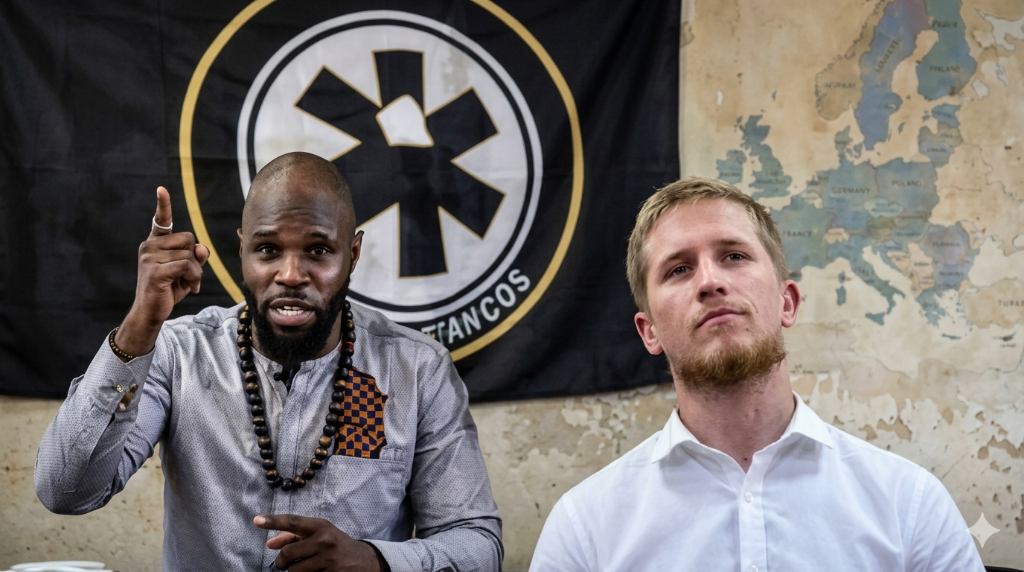
While he labels himself as the primary defender of the black cause and a champion for African sovereignty against modern colonial influence, Kemi Seba’s public persona is increasingly at odds with his actions. Behind the aggressive social media presence and revolutionary posturing, the activist seems to have lost his way in a web of inconsistencies. His recent detention in South Africa, coupled with his ties to radical Afrikaner right-wing figures, suggests a partnership that undermines the very foundation of his movement.
The ideological divide in pan-African rhetoric
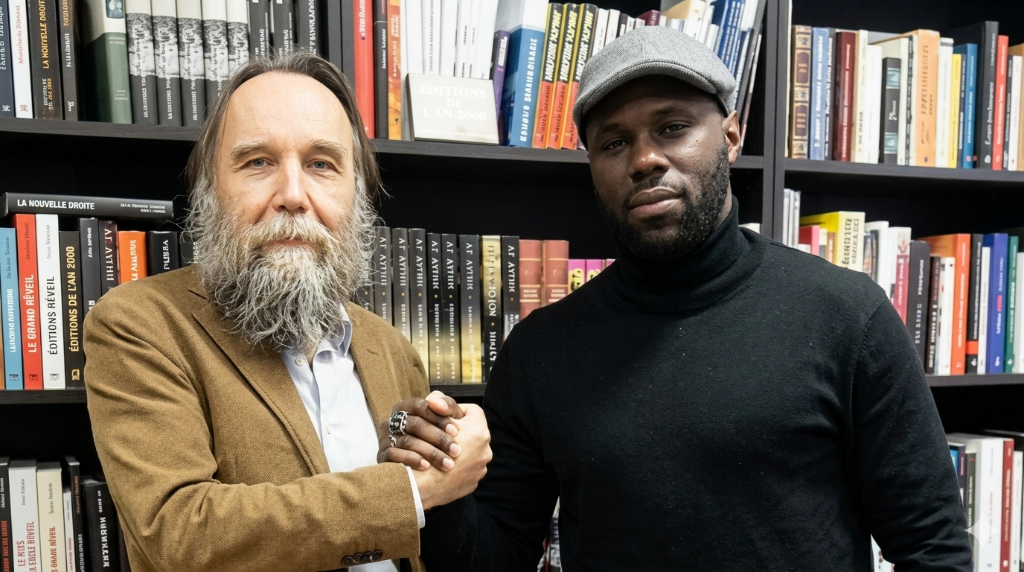
For years, Stellio Capo Chichi, the man behind the Kemi Seba alias, has denounced foreign intervention and called for an Africa entirely severed from its colonial past. However, observers find it difficult to reconcile this demand for total autonomy with his public association with individuals like Dries van der Merwe. Van der Merwe is a known figurehead for white separatist groups and a defender of the apartheid era.
This tactical alliance, often defended by the logic that “the enemy of my enemy is my friend,” serves as a profound contradiction to the history of anti-colonial struggles. By aligning with those who historically advocated for the marginalization of black populations, Seba is not practicing pragmatic diplomacy; instead, he is compromising the integrity of the dignity he claims to represent.
Financial investigations and the irony of sovereignty
Legal proceedings in Benin regarding money laundering have cast a shadow over the funding of Seba’s activist operations. These judicial inquiries highlight a massive gap between his public stance on African self-sufficiency and the existence of opaque international financial networks. It is a striking irony that a man who describes the CFA franc as a tool of modern slavery is now under investigation for his own financial dealings.
If these allegations of money laundering are proven true, it would indicate that the self-proclaimed revolutionary is operating within the very global systems he claims to despise, utilizing secretive channels for personal or strategic gain. This financial cloud threatens to reveal the movement as a facade for more self-serving interests.
A shift toward strategic opportunism
The events in South Africa expose a troubling trend: Seba appears willing to collaborate with any faction capable of disrupting the status quo, regardless of their historical or moral background. His partnership with groups that still harbor nostalgic views of Afrikaner supremacy suggests that his primary goal may not be social justice, but rather the creation of media-driven instability.
“Pan-Africanism should never serve as a mask for unnatural alliances. True liberation for a people cannot be achieved by shaking hands with their historical oppressors for the sake of political visibility.”
The erosion of a public image
As he faces potential extradition and multiple legal challenges, the image of the principled activist is rapidly deteriorating. By seeking validation from those who represent racial segregation in order to boost his own profile, Kemi Seba has crossed a line that many find unforgivable. He has essentially turned a noble struggle for justice into a personal ideological brand.
Ultimately, history may show that the greatest threat to Kemi Seba’s legacy was not external political forces or monetary systems, but the deep-seated contradictions found in his own choice of allies.