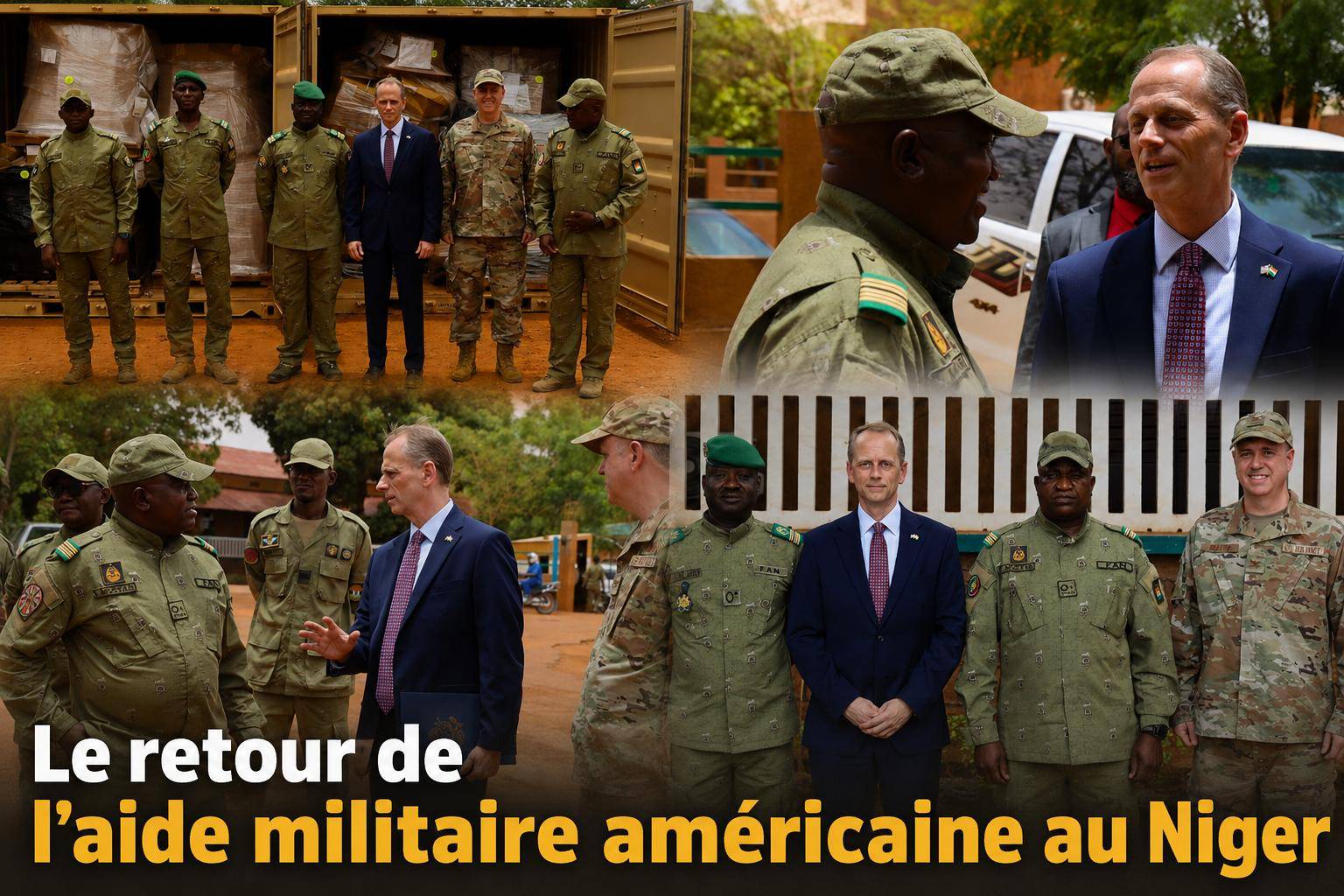
The logistics hub of Niger’s Armed Forces in Niamey has taken delivery of nine military equipment containers from the United States on May 26, 2026. This donation is set to significantly enhance the operational capabilities of the Nigerien troops engaged in the fight against terrorism and transnational crime. The event underscores a major diplomatic shift, highlighting Niamey’s pragmatic re-engagement with its former Western partners two years after demanding their withdrawal in the name of national sovereignty.
A substantial boost for Niger’s military
The official handover ceremony took place at the Nigerien Armed Forces’ logistics center in Niamey, where nine large containers filled with advanced American military equipment were handed over to local authorities. According to logistics officials, the shipment includes critical spare parts, tactical communication devices, personal protective gear, and first-line maintenance tools. This technical arsenal aims to immediately strengthen the resilience and efficiency of deployed units.
In asymmetric warfare, where mobile armed groups pose a constant threat, rapid repair capabilities and reliable communication systems are decisive factors for success on the battlefield.
Strengthening security against terrorism and border threats
This material support aligns with the joint efforts between Niger and the United States to bolster the operational capacities of the Nigerien Armed Forces amid an ongoing regional security crisis. Niger is facing multiple asymmetric threats, particularly in the volatile “three-border zone” shared with Mali and Burkina Faso, as well as in the Lake Chad basin.
The Nigerien Ministry of Defense confirmed that the equipment will be deployed immediately to support counter-terrorism operations, curb organized transnational crime, and enhance the security of national borders. For soldiers stationed in remote rural areas, this technical assistance provides much-needed support to secure isolated zones.
The return of a key military partner
Beyond its military significance, this delivery marks a remarkable political turnaround. Until recently, Niamey’s official stance advocated a radical break with Western powers. In the name of national sovereignty and alliance restructuring, the transitional authorities had insisted on and secured the departure of American and French troops from Nigerien soil, leading to the evacuation of US drone operations from the Agadez airbase.
However, the harsh realities of the battlefield and the intensifying jihadist pressure have driven a return to geopolitical realism. This US donation demonstrates that diplomatic channels were never fully severed. Today, Niger is resuming dialogue and material cooperation with a partner it had formally expelled, highlighting how sovereignty narratives sometimes yield to the pressing demands of asymmetric warfare.
A strategy of diversified military partnerships
For observers of the Sahelian political landscape, Niger is pursuing a strategy of maximizing support without committing to a single exclusive alliance. While maintaining close security cooperation agreements with new partners such as Russia, Turkey, and Iran, the Nigerien government is redefining its relationship with Washington.
The United States, for its part, is adopting a pragmatic approach. Despite temporarily halting aid following the political upheavals of 2023, Washington is keen to maintain a foothold in the region to prevent a total geopolitical vacuum. This container delivery signals a mutual willingness to rebuild a selective trust, focusing on logistics rather than the large-scale deployment of ground troops.
“In matters of defense, the only rule that counts is operational effectiveness on the ground.” — Internal note from the Nigerien Armed Forces Logistics Center.
The reception of these nine American military equipment containers by the Nigerien Armed Forces marks the return of pragmatism in Niamey. By accepting Washington’s aid once again, Niger demonstrates that the pursuit of absolute sovereignty can, when national security demands it, accommodate strategic compromises with former allies. In the face of a common enemy striking at its borders, diversifying material partnerships has become the cornerstone of the Nigerien state’s survival strategy.