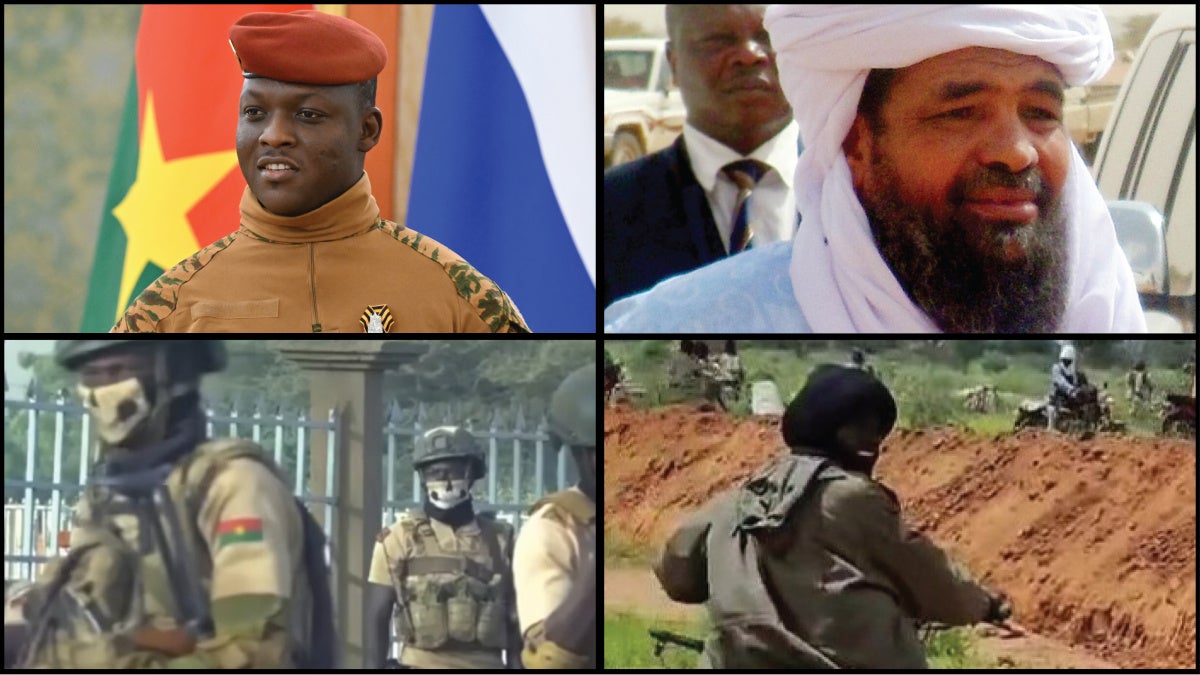
- The military of Burkina Faso, along with affiliated volunteer militias and Al-Qaeda-linked insurgents, have been responsible for the deaths of over 1,800 civilians and the forced displacement of tens of thousands since 2023.
- The current ruling junta is accused of perpetrating severe atrocities while failing to hold any parties accountable, often restricting information to mask the scale of civilian suffering.
- International partners and regional organizations are being called upon to pressure the authorities in Burkina Faso to address these violations and ensure justice for victims.
The armed forces of Burkina Faso, their allied Volunteers for the Defense of the Homeland (VDP) militias, and the Al-Qaeda-affiliated Group for the Support of Islam and Muslims (GSIM) have collectively killed more than 1,800 civilians since 2023. These actions, which include the ethnic cleansing of Fulani communities by government-aligned forces, represent war crimes and crimes against humanity that could lead to the prosecution of top leaders from all factions.
A comprehensive 341-page investigation titled “No One Will Escape” highlights the catastrophic toll this neglected conflict has taken on the population. Researchers verified 57 separate incidents involving the Burkinabè military and the GSIM (also known as JNIM) since the military junta seized power in September 2022. To clarify the legal ramifications of these events, a detailed analysis of the applicable international law has also been made available.
Executive Director Philippe Bolopion remarked that the magnitude of the horrors occurring in Burkina Faso is overwhelming, yet the crisis lacks sufficient global awareness. He noted that the junta is directly involved in heinous acts while obstructing justice and suppressing information to hide the plight of civilians trapped in the crossfire.
Evidence for these findings was gathered through interviews with over 450 individuals across Burkina Faso, Bénin, Côte d’Ivoire, Ghana, and Mali. Investigators also utilized satellite imagery, official documentation, and extensive audiovisual records to confirm the incidents and pinpoint those in command.
Under the leadership of President Ibrahim Traoré, the military government has intensified its crackdown on political rivals, peaceful protesters, and independent journalists. This environment of intimidation has stifled the flow of information regarding the conflict’s human cost.
The insurgency, which began in 2016 as part of a wider Sahel region offensive, saw the GSIM and other Islamist groups terrorize civilians and loot property. In response, the junta launched brutal counter-insurgency operations. Both sides have targeted specific communities suspected of supporting their opponents, leading to a cycle of lethal retaliation.
One of the most horrific events occurred in December 2023 near Djibo during “Operation Tchéfari 2,” where the Burkinabè army and its militias killed over 400 people. A survivor recounted how her two daughters were shot dead instantly, while she and her infant son were wounded. She recalled a militiaman ordering his colleagues to ensure no one was left alive.
Furthermore, the military has specifically persecuted Fulani populations, accusing them of aiding insurgents. This has resulted in the systematic ethnic cleansing of entire villages. In November 2023, government-linked militias executed 13 Fulani civilians in Bassé, including women and children, leaving their bodies bound and riddled with bullets.
The GSIM has also used extreme violence to maintain territorial control. In August 2024, the group massacred at least 133 people, including many children, in Barsalogho. Witnesses described the insurgents firing relentlessly on the community, sparing no one in their attempt to eliminate those they accused of supporting state-backed militias.
Beyond direct killings, the GSIM has placed dozens of towns under siege, cutting off essential supplies and causing widespread hunger. They have also destroyed critical infrastructure, such as water sources and bridges, and utilized improvised explosive devices on public roads.
Legal experts have concluded that all parties involved are guilty of war crimes, including intentional homicide, looting, and the targeting of non-combatants. The systematic nature of these killings and displacements also qualifies them as crimes against humanity.
President Ibrahim Traoré and six senior military officers are identified as potentially liable under the doctrine of command responsibility. Similarly, Iyad Ag Ghaly, the GSIM’s top leader already wanted by the International Criminal Court (ICC) for crimes in Mali, along with four of his commanders, should be investigated for their roles in the atrocities in Burkina Faso.
Currently, there is a total lack of accountability within the country. Victims have expressed a profound distrust of national legal systems, and government officials have largely dismissed or minimized reports of military abuses. International actors, including the United Nations, the African Union, and the European Union, must act to break this cycle of impunity. Recommendations include imposing targeted sanctions and urging the ICC to launch a preliminary examination into the crimes committed by all sides since late 2022.
Philippe Bolopion concluded that the global community must acknowledge the scale of these atrocities to bring them to an end. He urged regional bodies and partner governments to collaborate with Burkina Faso‘s authorities while demanding genuine accountability for the grave violations perpetrated by all warring parties.