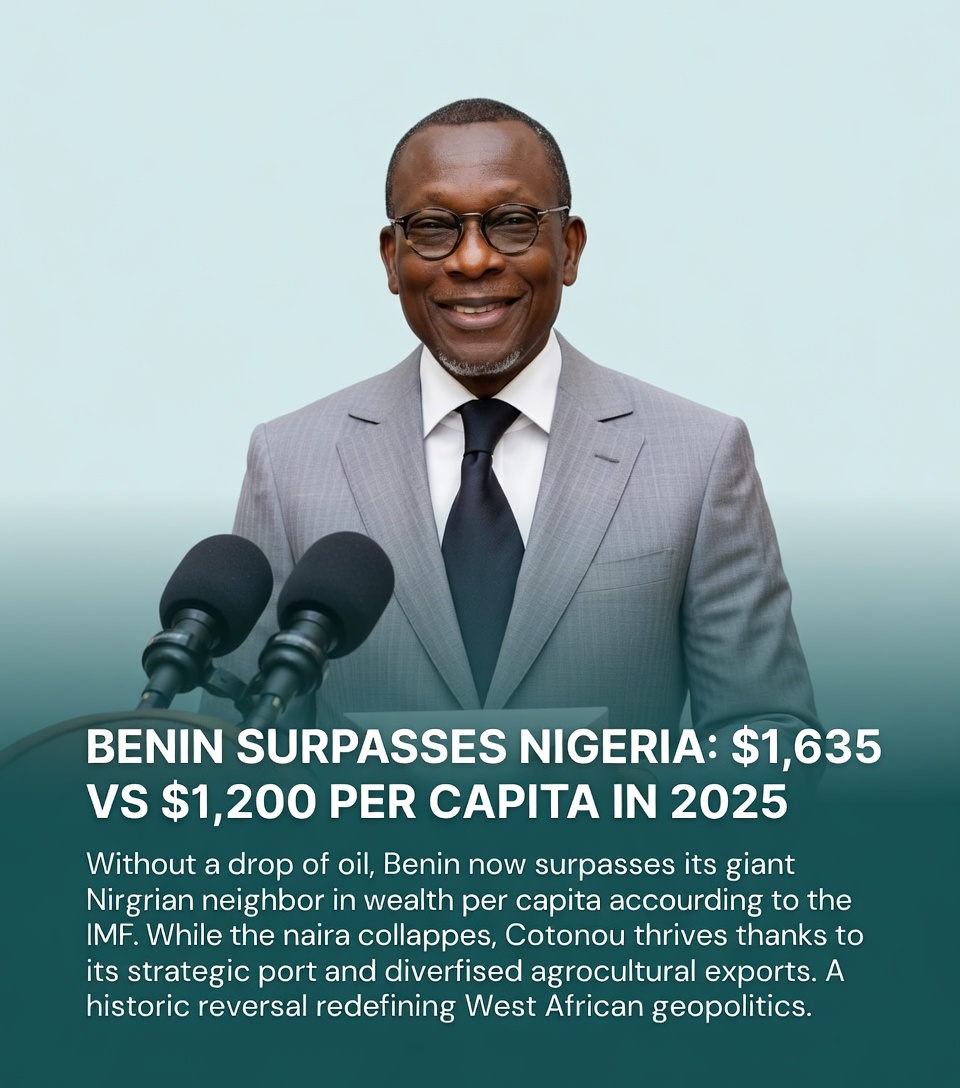
An unprecedented economic reversal is unfolding in West Africa, as Nigeria, long considered the region’s petroleum giant, finds itself economically outpaced by its smaller neighbor, Benin. This shift in per capita wealth, highlighted by recent International Monetary Fund (IMF) figures, offers a compelling case study in economic governance.
Unpacking the economic transformation
Projections for 2025 indicate a significant divergence: Benin’s per capita wealth is set to reach an estimated $1,635, while Nigeria’s stands considerably lower at $1,200.
Benin’s prosperity is particularly notable given its lack of oil reserves. Its economic ascent is largely attributed to strategic initiatives, including the modernization of its key port and, crucially, the value addition to its agricultural exports. The transformation of cotton, processed through facilities like the Glo-Djigbé Industrial Zone (GDIZ), exemplifies this diversified growth strategy.
Conversely, Nigeria’s economic vulnerabilities have become starkly apparent. Its heavy reliance on oil revenues, combined with the ramifications of currency liberalization, has exacted a severe toll. The naira’s historic depreciation against the US dollar has dramatically eroded Nigeria’s real GDP, underscoring the perils of an undiversified economic framework.
Broader implications for financial strategy
The economic trajectories of these two nations offer a pertinent lesson that extends to personal finance. Just as a national economy thrives on diversified income streams, an individual’s financial stability is enhanced by not depending on a singular source of revenue. The Beninese model illustrates that diversification fosters resilience and growth, while an over-reliance, as seen in Nigeria’s oil dependence, can lead to significant vulnerability.