N’Djamena: A young girl turns school holidays into entrepreneurial lessons by selling cassava
In N’Djamena, students like Léa use their school break to sell cassava, gaining valuable life lessons and financial independence in a country where poverty remains widespread.
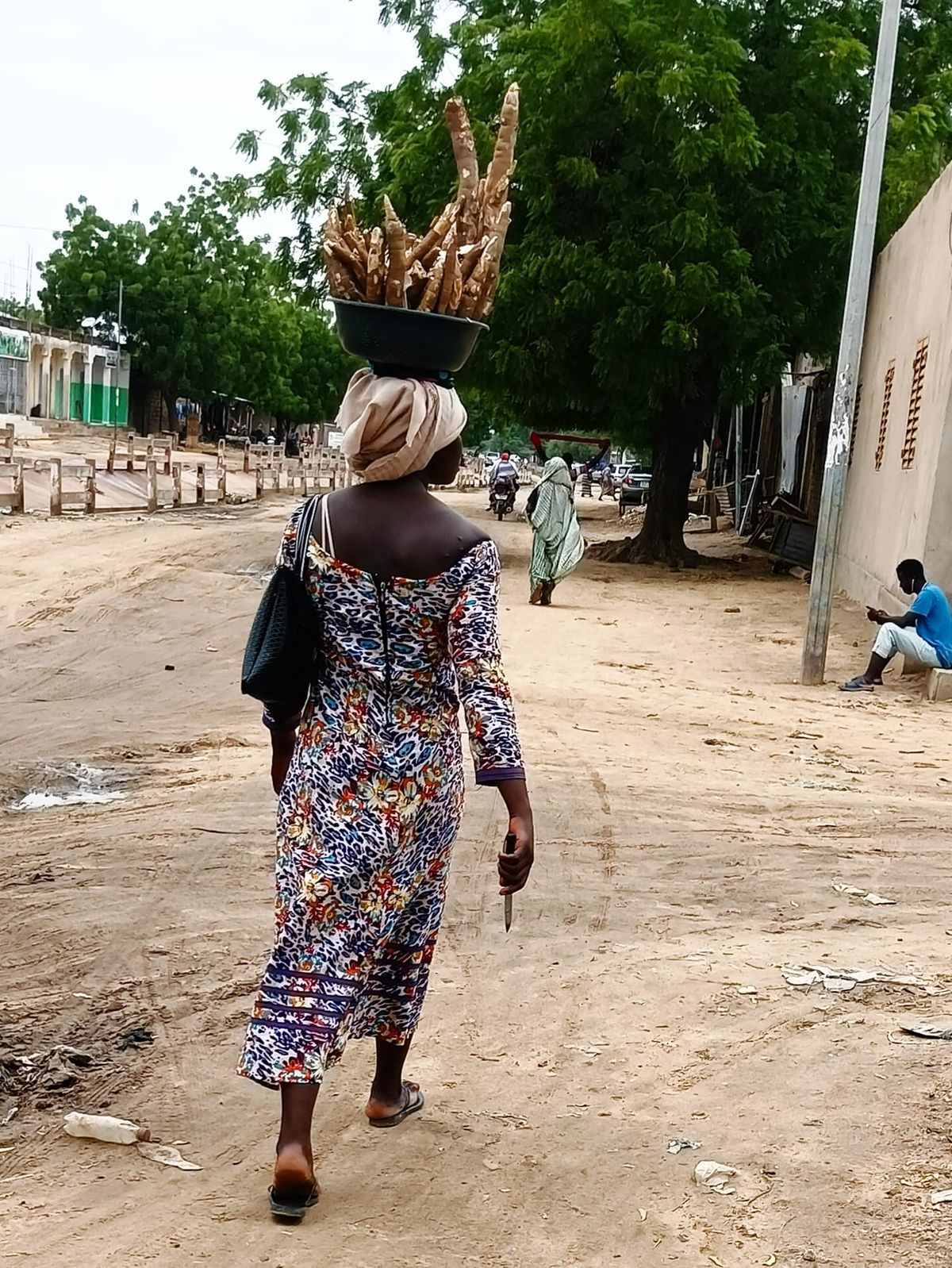
For many students in N’Djamena, the school break is far from a time of complete relaxation. Instead, it becomes an opportunity to learn hard lessons about life and self-reliance. Léa, a 10th-grade student from the Kilwiti district, has chosen to spend her free time selling cassava. With a basin balanced on her head, she navigates the bustling streets of the capital daily, offering her product to passersby.
“I live with my mother in the Kilwiti neighborhood. During the holidays, I sell cassava to help cover the costs of the upcoming school year,” she shares, explaining her motivation. The price of cassava in the market fluctuates between 50 and 500 FCFA, depending on the quantity. Like Léa, many young girls have embraced this trade, though it comes with its own set of challenges.
“Cassava prices have risen sharply,” she notes. “Some customers question the cost when we sell portions at 100 or 200 FCFA, thinking we’re overcharging. They don’t realize we purchase the cassava at high prices ourselves and can’t afford to sell at a loss.” Despite these hurdles, Léa highlights that many customers support her initiative, showing empathy toward her situation. Chad continues to grapple with deep-rooted poverty that affects millions.
Recent data reveals that nearly 44.8% of Chad’s population lives below the national poverty line. The situation is even more dire for those in extreme poverty, with about 36.5% surviving on less than $2.15 per day. Chad ranks among the countries with the lowest human capital indices, severely limiting opportunities for young people to build a stable future.
Building resilience and self-reliance in uncertain times
Beyond the immediate financial gains, Léa’s initiative reflects a growing mindset shift among young people in Chad. With job markets becoming increasingly unpredictable and formal education failing to guarantee stable careers, students are recognizing the value of developing diverse skills and achieving financial independence early. Balancing school and business, these young entrepreneurs are learning discipline, adaptability, and the harsh realities of the marketplace.