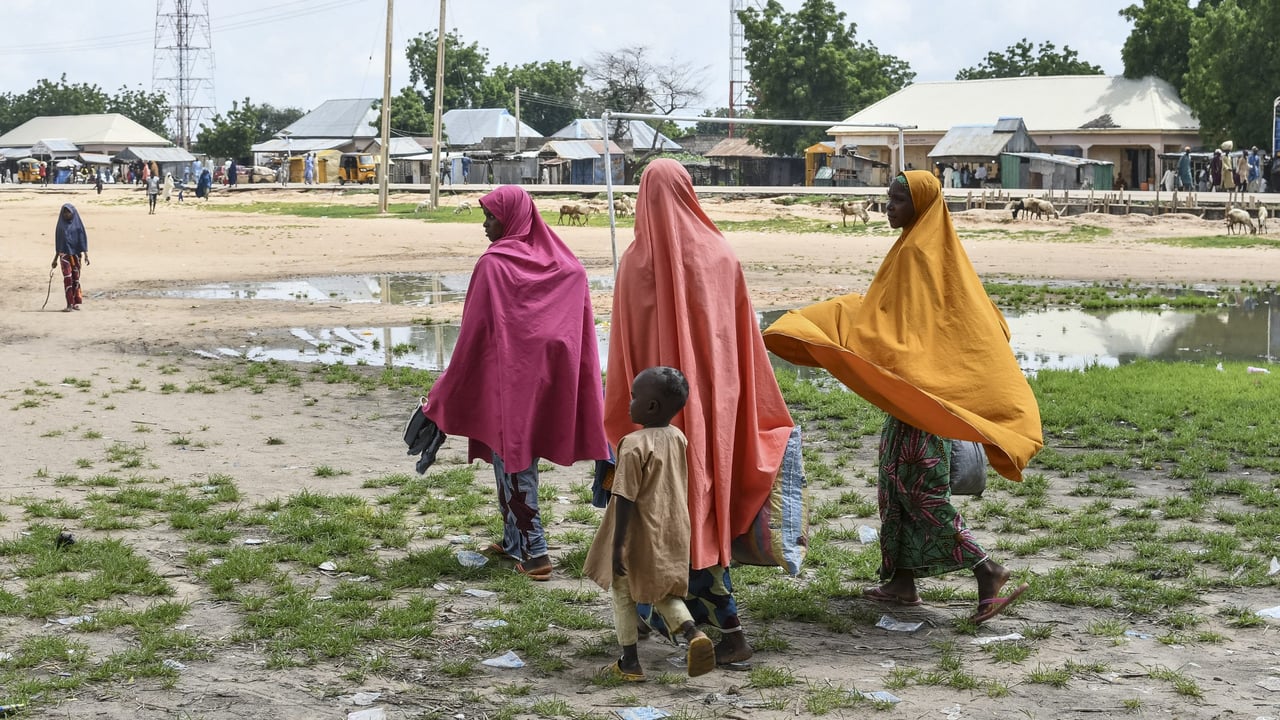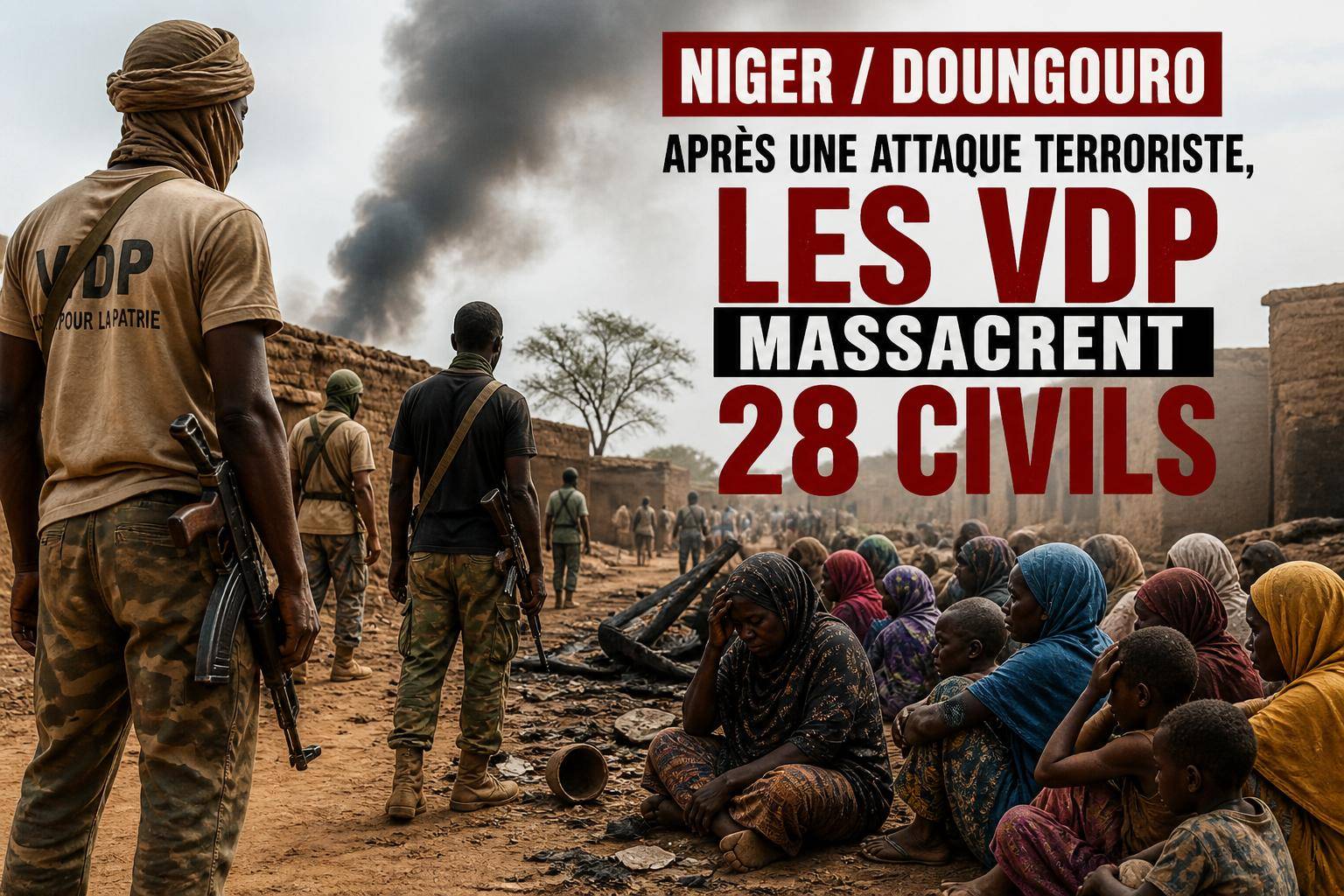
On Monday, May 4, 2026, the village of Doungouro, nestled within Niger’s Tillabéri region, became the grim stage for a devastating double tragedy. Following a deadly incursion by the Islamic State in the Greater Sahara (EIGS) that claimed the lives of four innocent civilians, the subsequent intervention by the Volontaires pour la Défense de la Patrie (VDP) from the nearby Kokorou commune escalated into an horrific massacre. These auxiliary forces, ostensibly tasked with tracking terrorists, indiscriminately targeted anyone wearing a turban. The final count of fatalities reached 32, with a staggering 28 attributed directly to these militiamen, who are ironically meant to safeguard local populations. This recent atrocity raises an urgent question: how much longer will the Nigerien junta permit these ‘DomolLeydi’ to act with such blatant impunity?
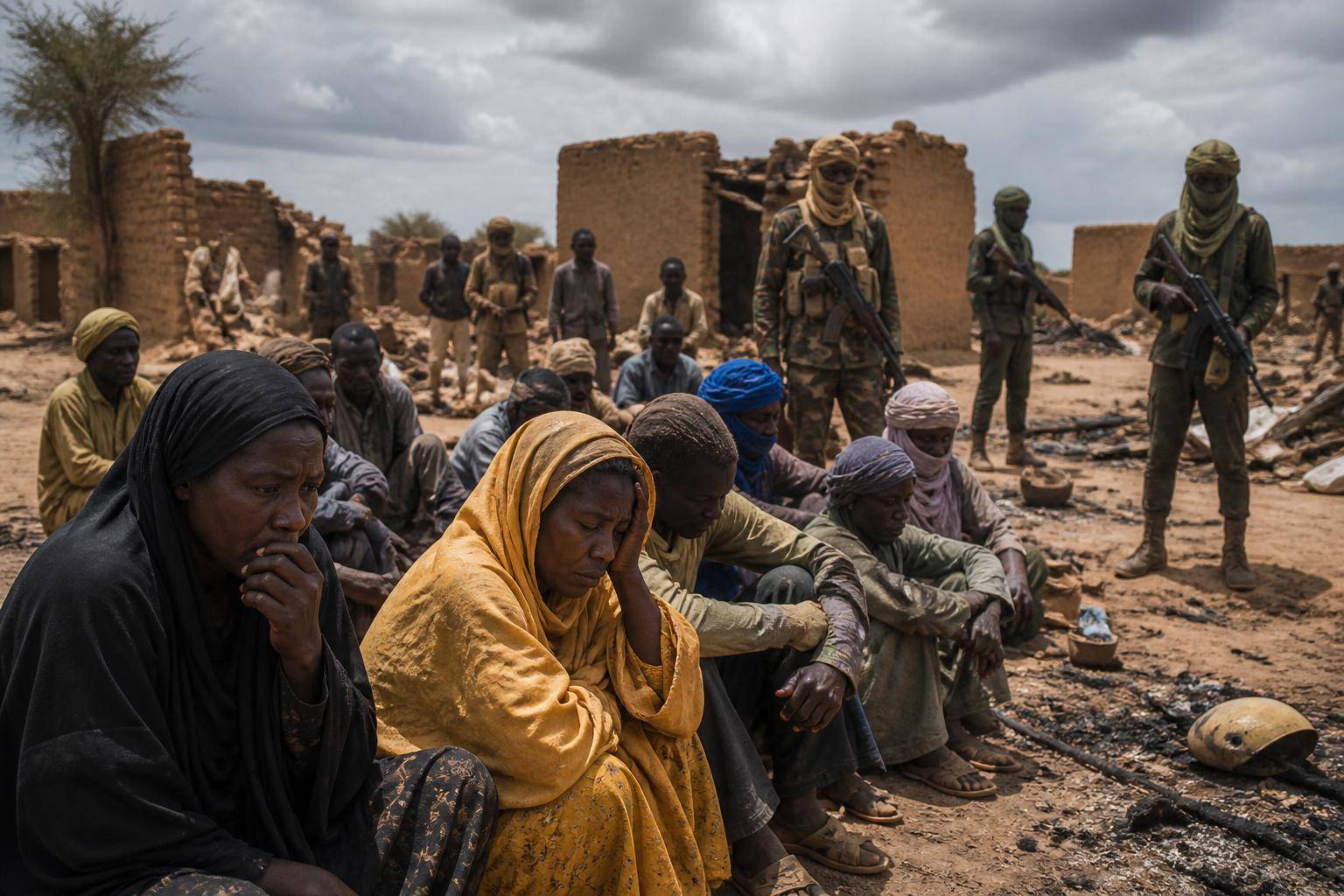
the market of terror: an eigS incursion
The morning light had barely broken over Doungouro on that fateful Monday, May 4, when the roar of motorcycles shattered the usual tranquility of the weekly market day. Heavily armed elements of the Islamic State in the Greater Sahara descended upon the locale. Their objectives were clear: to sow fear and to restock their supplies. Within minutes, four civilians were brutally executed in front of terrified vendors. The assailants then seized all the livestock present in the market square before retreating westward, heading towards the Malian border. This swift operation starkly reaffirms that the critical three-borders zone remains a security sieve, despite the triumphant declarations emanating from authorities in Niamey.
vdp intervention: a chaotic doctrine
The true nightmare for the survivors began only after the terrorists had departed. Alerted to the attack, the Volontaires pour la Défense de la Patrie from the neighboring commune of Kokorou converged on Doungouro. Yet, instead of the anticipated protection, a blind fury was unleashed upon the village. Upon arrival, the militiamen, often known locally as DomolLeydi, initiated a brutal purge based on a criterion as absurd as it was perilous: the wearing of a turban. For these armed individuals, often operating with uncertain command structures and minimal training, anyone sporting the traditional attire of local merchants and herders was deemed a potential accomplice, or even a disguised terrorist.
The toll is horrifying. Among the 28 individuals who fell under the VDP’s bullets were several merchants who had traveled from Téra. These were familiar faces to everyone, regulars at Doungouro’s market, whose sole transgression was being in the wrong place at the wrong time, dressed according to regional customs. One resident who managed to escape the carnage recounted that the militiamen fired at anything that moved and wore a turban, without asking questions or seeking any proof. It was, in their words, a summary mass execution.
the domolleyDi system: a ticking time bomb
This Doungouro tragedy exposes the gaping flaws within the junta’s security strategy. By relying heavily on citizen militias to compensate for the deficiencies of the regular army, the Niamey government has inadvertently created a monster it appears to no longer control. The VDP, despite official recognition, frequently operate within a complete legal and operational vacuum. Without a stringent chain of command and the consistent presence of career military personnel to oversee them in the field, these groups regularly succumb to communal excesses. In Doungouro, the descent into ethnic and sartorial profiling is undeniable.
Since the coup d’état, official rhetoric has urged populations to defend themselves. However, arming civilians without instilling in them respect for the laws of war and human rights is a blueprint for disaster. The junta, quick to denounce foreign interference, remains conspicuously silent regarding the abuses committed by its own auxiliary forces. The Doungouro massacre, sadly, is not an isolated incident. It fits into a disturbing pattern of missteps that erode trust between civilian populations and the defense forces.
the urgent call for radical reassessment
By targeting merchants and vendors, the VDP are only intensifying the pervasive sense of insecurity and, ironically, pushing some marginalized communities into the embrace of armed terrorist groups who then position themselves as protectors. Niger cannot hope to win this conflict by turning against its own people. The transitional government must urgently launch an independent investigation into the events of Doungouro and bring those responsible for these summary executions to justice.
It is now vital to rethink the operational modalities of these volunteers, strictly prohibiting any operations outside the direct presence of regular forces. Furthermore, an end must be put to systematic profiling based on ethnicity or attire, which severely undermines national cohesion. If no action is taken, Doungouro will forever symbolize a bloody descent where the state, through its militias, ultimately inflicts more harm on civilians than the terrorists themselves. The families of the 32 victims await answers. The deaths on that dark Monday are not mere collateral damage; they are the sacrificed witnesses to a security strategy gone dangerously awry.